
Cool Greek yogurt popsicles bring a creamy frozen snack with a smooth texture and mild tang. The base relies on thick yogurt blended with fruit, honey, or natural sweeteners, then frozen in molds until firm. Each bite delivers a chilled creaminess with a light fruity note that works well during warm afternoons or after meals.
This frozen snack fits a wide range of flavor directions, from berry blends to tropical fruit mixes. The creamy base holds structure well during freezing, creating a firm yet smooth bite instead of an icy texture. The process stays straightforward, using basic kitchen tools and short preparation steps.
Greek yogurt serves as the foundation, giving thickness and protein content while supporting flavor additions without separating. Fruit purees add natural sweetness and color, while a small amount of sweetener balances tartness. Milk or juice can be added for a softer texture if desired. The mixture freezes evenly when properly blended, forming a consistent popsicle shape.
These popsicles work well for snack trays, after-meal frozen treats, or simple warm-weather desserts. The flavor options allow flexibility, so each batch can follow a different fruit combination or creamy variation depending on available ingredients.
Ingredients Overview
Greek yogurt acts as the main structure for these popsicles. Its thick consistency supports freezing without forming large ice crystals. Full-fat yogurt produces a creamier result, while low-fat versions create a lighter texture. Both options hold flavor well when blended with fruit or sweeteners.
Fruit puree provides natural sweetness and color. Strawberries, blueberries, mango, or peaches work well due to their soft texture after blending. Fresh or frozen fruit can be used, as long as it is blended until smooth. Straining the puree removes seeds for a cleaner finish, though it is optional depending on preference.
Sweeteners such as honey or maple syrup help balance tart fruit notes. The amount depends on fruit ripeness. Very ripe fruit requires less added sweetness. Sugar alternatives can also be used for different dietary preferences.
A small amount of milk or juice can loosen the mixture if it becomes too thick. This adjustment helps the mixture pour smoothly into molds and creates a softer frozen texture. Vanilla extract can be added for depth, while citrus zest introduces brightness.
All components combine into a balanced mixture that freezes evenly. The yogurt provides creaminess, fruit adds flavor and color, and sweetener rounds out the profile. Once frozen, the mixture holds shape while remaining smooth when bitten.
Ingredients
2 cups Greek yogurt
1 1/2 cups strawberries, hulled and blended
1/3 cup honey
1 teaspoon vanilla extract
1/4 cup milk
1/2 cup blueberries, blended (optional swirl layer)
1 tablespoon lemon juice
Popsicle molds
Popsicle sticks
Step-by-Step Instructions
Start by preparing the fruit base. Place strawberries into a blender and process until smooth. If a seed-free texture is preferred, pass the puree through a fine sieve. Set aside the blended fruit in a bowl.
In a separate mixing bowl, add Greek yogurt. Stir until smooth and creamy. Add honey and vanilla extract, mixing until fully combined. The mixture should appear uniform without streaks.
Pour half of the yogurt mixture into a second bowl. Add strawberry puree into the first portion and mix until evenly colored. This creates a fruit layer. The second portion remains plain or can be combined with blueberry puree for variation.
If using blueberries, blend them until smooth and mix with the reserved yogurt portion. Lemon juice can be added to brighten flavor and balance sweetness.
Begin filling popsicle molds. Spoon the strawberry mixture into each mold, filling halfway. Tap gently to remove air pockets. Add the second layer on top, either plain yogurt or blueberry mixture, depending on chosen variation.
Insert sticks into each mold. Place molds into a flat freezer space to maintain even shape. Allow freezing until firm. The structure should feel solid when touched lightly at the top.
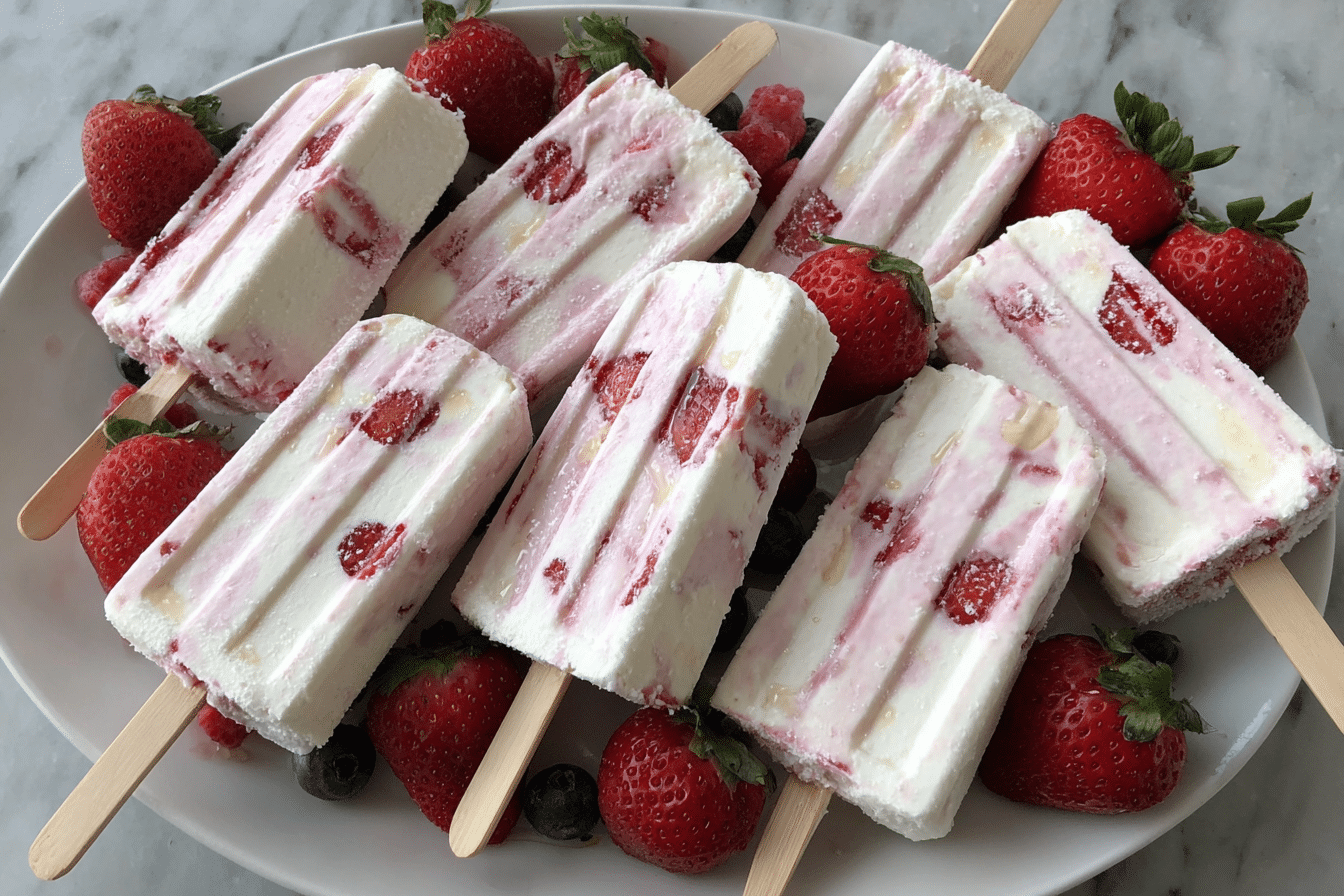
Once frozen, briefly run warm water over the outside of the mold to loosen popsicles. Gently remove each piece. The texture should appear smooth with visible layers depending on assembly style.
Avoid overfilling molds, as expansion during freezing can cause uneven tops. Also avoid skipping blending steps, as uneven fruit texture can lead to icy sections.
Tips, Variations & Substitutions
Different fruit combinations can be used depending on preference. Mango creates a creamy tropical profile, while raspberry adds a sharper fruit note. Banana blends produce a thicker, dessert-like texture.
For a dairy-free version, coconut yogurt can replace Greek yogurt. This option adds a mild coconut flavor that pairs well with tropical fruits. Almond milk yogurt also works for a lighter base.
Natural sweeteners can be adjusted based on fruit ripeness. Very ripe fruit may require little added sweetener. For stronger tart fruits, slightly higher sweetening balances flavor.
Layering different fruit purees creates visual contrast inside molds. Swirling mixtures together instead of layering produces a marbled effect with mixed flavor in each bite.
Adding small fruit pieces into molds before freezing creates texture variation. This works well with berries or finely diced soft fruits.
For creamier popsicles, increase yogurt ratio slightly. For fruit-forward versions, increase puree content while reducing yogurt proportion.
Serving Ideas & Occasions
Greek yogurt popsicles work well as chilled snacks during warm weather. They pair nicely with fresh fruit platters or light baked goods. Their creamy texture also fits after-meal dessert servings.
These popsicles can be served at casual gatherings or outdoor meals. They hold shape well when kept frozen until serving, making them convenient for prepared dessert trays.
For flavor pairing, citrus-based drinks or light herbal teas complement the creamy yogurt base. Fruit-forward variations also pair well with sparkling water or chilled juice blends.
Their layered appearance makes them visually appealing on serving plates. Different fruit combinations allow color variation across batches, creating variety in presentation.
Nutritional & Health Notes
Greek yogurt provides protein and calcium, supporting a balanced snack option. The frozen format offers portion control and a lighter alternative to heavier desserts.
Fruit puree contributes natural sugars along with vitamins and fiber. Using whole fruit rather than flavored syrups helps maintain a more balanced nutritional profile.
Sweetener levels can be adjusted to reduce overall sugar content. Natural fruit sweetness often provides enough flavor without heavy additions.
Milk or dairy alternatives adjust fat content and texture. Full-fat yogurt creates a richer profile, while low-fat versions reduce calorie density.
FAQs
Can frozen fruit be used for these popsicles?
Frozen fruit works well for these popsicles. It should be thawed slightly before blending to achieve a smooth puree. Excess liquid can be drained if mixture becomes too thin. Frozen fruit often provides strong flavor and consistent color, making it suitable for blending into yogurt bases.
What yogurt type works best?
Greek yogurt with a thick consistency works best because it holds structure during freezing. Full-fat yogurt produces a creamier texture, while low-fat versions create a lighter result. Both options freeze evenly when properly mixed with fruit and sweeteners.
Can these popsicles be made without sweetener?
Yes, sweetener can be omitted. Very ripe fruit often provides enough natural sweetness. Strawberries, mango, and bananas are especially suitable for unsweetened versions. Taste balance depends on fruit selection and ripeness level.
How long should they freeze before serving?
Popsicles typically require several hours in a standard freezer until fully firm. Texture should feel solid throughout before removal from molds. Leaving them overnight often produces the most stable structure.
Can different layers be added?
Different layers can be added using separate fruit blends or plain yogurt. Each layer should be slightly thick to prevent mixing during pouring. This creates visible sections and varied flavor in each bite.
What prevents icy texture?
A smooth mixture and proper yogurt ratio help reduce icy texture. Thick yogurt and blended fruit create a more uniform freeze. Avoiding excess liquid also supports creamier results.
Can plant-based yogurt be used?
Plant-based yogurt can replace dairy yogurt. Coconut, almond, or oat-based options work depending on preference. Texture may vary slightly, but freezing results remain stable when mixture is properly blended.
PrintGreek Yogurt Popsicles with Honey & Berries (Healthy Frozen Treat)
Creamy Greek yogurt popsicles with fruit layers and smooth texture, a simple frozen snack for warm days.
- Prep Time: 15 minutes
- Cook Time: 0 minutes
- Total Time: 6 hours
- Yield: 6 popsicles 1x
Ingredients
2 cups Greek yogurt
1 1/2 cups strawberries, hulled and blended
1/3 cup honey
1 teaspoon vanilla extract
1/4 cup milk
1/2 cup blueberries, blended (optional swirl layer)
1 tablespoon lemon juice
Popsicle molds
Popsicle sticks
Instructions
- Blend strawberries into smooth puree.
- Stir yogurt until creamy, then mix with honey and vanilla.
- Divide mixture into two bowls.
- Add strawberry puree to first portion.
- Blend blueberries with second portion and add lemon juice.
- Fill molds halfway with strawberry mixture.
- Add second layer on top.
- Insert sticks and freeze until firm.
- Remove from molds using warm water rinse.
Notes
Adjust fruit types based on preference. Texture improves with thick yogurt. Avoid excess liquid for smoother freezing.