
Grilled seafood skewers bring together a mix of ocean flavors and smoky grill character in a format that is easy to cook, serve, and share. Each skewer combines tender pieces of seafood with light seasoning, cooked over high heat until lightly charred on the edges while staying juicy inside.
This dish is often associated with warm outdoor cooking, where skewers are prepared quickly and served straight from the grill. Shrimp, scallops, firm white fish, and squid are commonly used because they cook fast and hold texture well under direct heat. The result is a balanced combination of tender seafood and subtle smoky flavor.
The skewers are typically brushed with oil and simple seasonings before grilling. This keeps the seafood moist and helps achieve light caramelization on the surface. A squeeze of citrus at the end adds brightness that complements the grilled notes.
Grilled seafood skewers work well as a main dish, shared platter, or part of a larger spread with vegetables, rice, or salads. The cooking process is fast, making it practical for gatherings where food is prepared in batches and served immediately.
Ingredients Overview
Shrimp is one of the most common choices for seafood skewers. It cooks quickly and develops a firm yet tender texture when exposed to high heat. Medium to large shrimp are ideal because they hold shape on the skewer without overcooking too quickly. Peeled and deveined shrimp are preferred for ease of eating.
Scallops add a soft, slightly sweet seafood flavor. They become lightly golden when grilled and maintain a delicate interior. Dry-packed scallops work best because they sear more effectively without releasing excess moisture.
Firm white fish such as cod, halibut, or mahi-mahi can be cut into chunks and threaded onto skewers. These fish types hold structure well and absorb seasoning easily. Their mild flavor allows other ingredients like citrus and herbs to stand out.
Squid or calamari can also be used. When cooked briefly over high heat, it becomes tender with a slight chew. Overcooking should be avoided to prevent toughness.
Olive oil is used to coat seafood before grilling. It helps prevent sticking and supports even browning. It also carries seasoning across the surface of each piece.
Garlic, salt, and black pepper form the base seasoning. These ingredients enhance natural seafood flavor without overpowering it. They can be adjusted depending on preference.
Lemon or lime juice is often added after grilling. The acidity lifts the flavor and balances the smoky notes from the grill.
Fresh herbs such as parsley or cilantro add aroma and color at the end. They provide freshness that contrasts with the grilled surface.
All ingredients come together to create a balanced skewer with soft interior texture and lightly charred exterior edges.
Ingredients
1 pound large shrimp, peeled and deveined
1 pound firm white fish (cod, mahi-mahi, or halibut), cut into chunks
1/2 pound scallops, patted dry
1 tablespoon olive oil
2 cloves garlic, minced
1 teaspoon salt
1/2 teaspoon black pepper
1 teaspoon paprika
1 tablespoon lemon juice (plus extra for serving)
1 tablespoon chopped parsley
Wooden or metal skewers
Optional: lemon wedges for serving
Step-by-Step Instructions
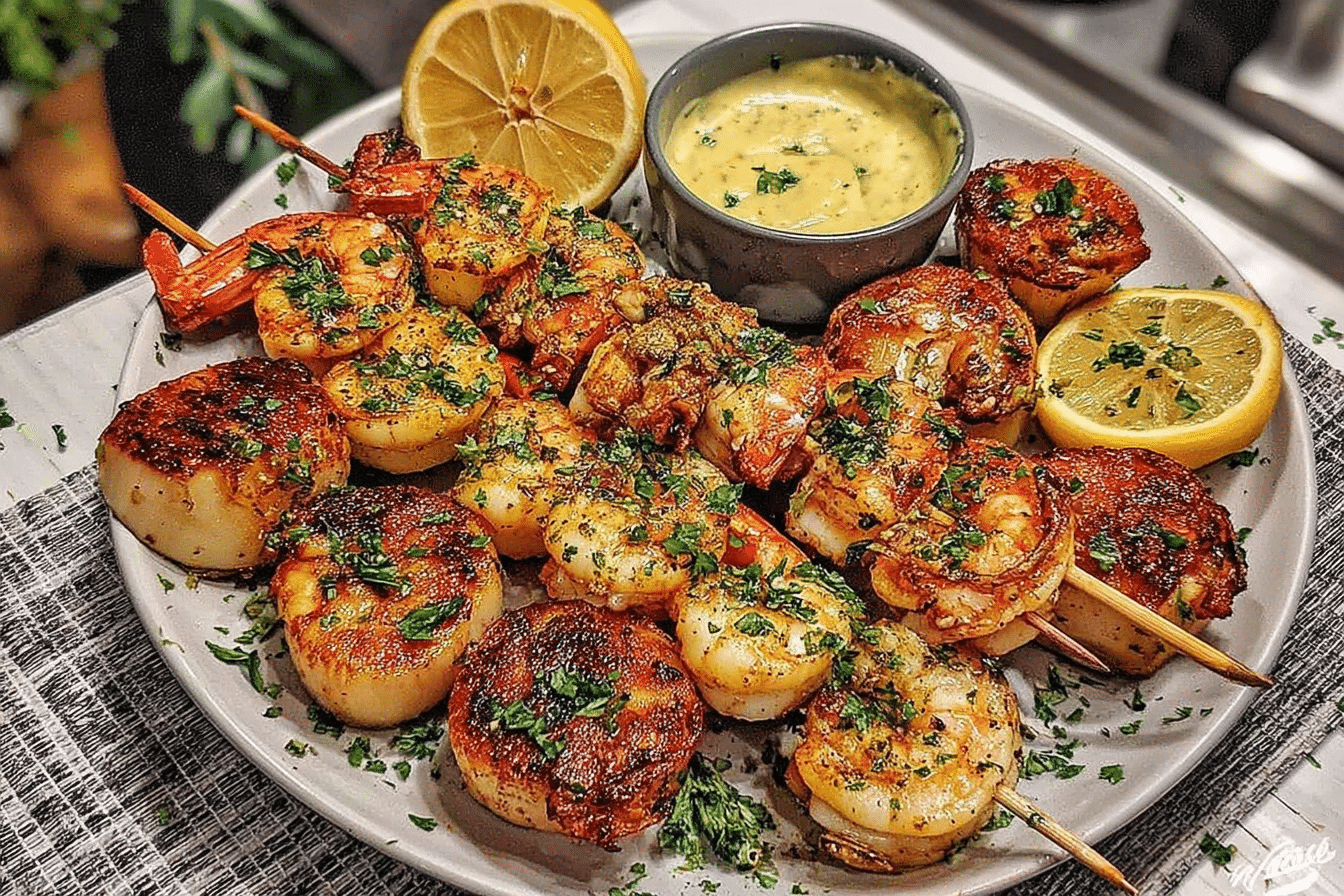
Start by preparing the seafood. Pat shrimp, fish, and scallops dry using a paper towel. Removing excess moisture helps achieve better browning on the grill. Cut fish into even-sized chunks so everything cooks at a similar rate.
Place all seafood in a large bowl. Add olive oil, minced garlic, salt, black pepper, paprika, and lemon juice. Toss gently until everything is evenly coated. Let the mixture rest briefly so flavors can settle into the seafood.
If using wooden skewers, soak them in water for at least 20 minutes before grilling. This helps prevent burning during cooking. Metal skewers can be used without preparation.
Thread seafood onto skewers, alternating pieces for even distribution. Avoid packing pieces too tightly, as spacing allows heat to circulate evenly and ensures proper cooking on all sides.
Preheat the grill to medium-high heat. The surface should be hot enough to sear seafood quickly while maintaining moisture inside. Lightly oil the grill grates to prevent sticking.
Place skewers on the grill. Cook shrimp and scallops for a short time on each side until they turn opaque and develop light grill marks. Fish pieces should be turned gently to avoid breaking apart.
Brush skewers lightly with additional oil if needed during grilling. This helps maintain moisture and supports even browning.
Once seafood is fully cooked, remove skewers from the grill. The texture should be firm but still tender inside. Avoid overcooking, as seafood becomes dry quickly under high heat.
Finish with fresh lemon juice and chopped parsley. Serve immediately while warm.
Do not overcrowd skewers or grill surface, as this can lead to uneven cooking. Also avoid using seafood pieces of different thickness on the same skewer, since they may cook at different speeds.
Tips, Variations & Substitutions
Different seafood combinations can be used depending on availability. Shrimp and scallops alone create a lighter skewer, while adding fish introduces a firmer texture contrast.
A marinade with olive oil, garlic, lemon zest, and herbs can be used for deeper flavor. Short marinating time is sufficient since seafood absorbs seasoning quickly.
Spice variations can include chili flakes, smoked paprika, or cayenne for a mild heat profile. These additions complement grilled flavor without overpowering the seafood.
Vegetables such as bell peppers, zucchini, or cherry tomatoes can be added to skewers. They provide color and additional texture while cooking alongside seafood.
For a richer finish, melted butter with garlic and herbs can be brushed over skewers just before serving. This adds a smooth coating and enhances aroma.
If grilling is not available, a grill pan or broiler can be used. High heat remains important for achieving similar surface texture.
Serving Ideas & Occasions
Grilled seafood skewers are often served as a main dish during outdoor meals or shared dining settings. They pair well with rice, couscous, or light pasta dishes that absorb juices from the seafood.
They also work well alongside fresh salads or grilled vegetables. Citrus-based salads or herb-heavy sides complement the smoky seafood flavor.
For dipping, garlic butter sauce, lemon aioli, or light herb yogurt sauces can be served on the side. These add creaminess and contrast to grilled texture.
Beverage pairings include chilled sparkling drinks, citrus-infused water, or light white beverages that complement seafood without overpowering it.
These skewers are also suitable for gatherings where food is served fresh off the grill in small portions. Their quick cooking time makes them practical for batch preparation.
Nutritional & Health Notes
Seafood provides lean protein along with nutrients such as omega-3 fatty acids, iodine, and selenium. These contribute to balanced nutrition in a light meal format.
Olive oil adds healthy fats and helps with grilling performance. It also supports flavor distribution across seafood pieces.
Seasonings such as garlic and herbs provide flavor without adding significant calories. Citrus juice adds brightness while remaining low in energy content.
Portion size can be adjusted depending on dietary needs. Combining skewers with vegetables increases fiber intake and creates a more balanced meal.
Grilling reduces the need for added fats compared to frying, making this preparation method relatively light while maintaining flavor depth.
FAQs
What seafood works best for skewers?
Shrimp, scallops, and firm white fish are commonly used because they cook quickly and hold shape on the grill. These types maintain texture under high heat and absorb seasoning well. Squid can also be used but requires short cooking time to prevent toughness.
How do you prevent seafood from sticking to the grill?
Lightly oiling the grill grates before cooking helps prevent sticking. Coating seafood with olive oil also creates a barrier that supports even cooking. Proper preheating of the grill surface is important for achieving clean release.
Can skewers be prepared ahead of time?
Skewers can be assembled a few hours before cooking and stored in the refrigerator. This allows seasoning to settle into the seafood. They should be cooked shortly after removal from cold storage for best texture.
How do you know when seafood is cooked?
Shrimp turns opaque and firm, scallops become slightly golden on the outside, and fish flakes easily with gentle pressure. Overcooking should be avoided, as seafood can become dry quickly.
Can vegetables be added to skewers?
Yes, vegetables such as bell peppers, zucchini, and cherry tomatoes can be added. They should be cut into similar sizes to seafood pieces to ensure even cooking. Vegetables also add color and texture contrast.
What sauces pair well with grilled seafood skewers?
Garlic butter, lemon aioli, and herb-based sauces work well. These sauces add creaminess or acidity that complements the grilled flavor without overpowering the seafood.
Can skewers be cooked without a grill?
Yes, a grill pan or oven broiler can be used. High heat is important to replicate grill texture. Skewers should be turned carefully to ensure even cooking on all sides.