
Marinated tomatoes are a simple yet deeply flavorful dish where ripe tomatoes soak in a light herb vinaigrette until they become tender, juicy, and infused with garlic, vinegar, and olive oil. The result is a bright, refreshing side that highlights the natural sweetness of tomatoes while adding layers of savory depth.
This preparation works best when tomatoes are at peak ripeness. Their natural juices combine with the marinade, forming a light dressing of their own that becomes even more flavorful as it rests. The texture softens slightly while still keeping a pleasant bite.
Marinated tomatoes are often served as a side dish, appetizer, or topping for grilled meats, bread, or salads. They fit easily into casual meals and also work well for gatherings where fresh, simple dishes are preferred.
The key to success is balance: acidity from vinegar or lemon, richness from olive oil, and aromatic depth from garlic and herbs. When combined properly, these ingredients turn basic tomatoes into something far more flavorful without overpowering their natural taste.
Ingredients Overview
Fresh ripe tomatoes are the foundation of this dish. Varieties like Roma, heirloom, or vine-ripened tomatoes work especially well because they hold their shape while releasing flavorful juices. The ripeness level matters greatly—tomatoes should be soft enough to be juicy but not overly mushy.
Olive oil adds smoothness and helps carry the flavors of garlic and herbs throughout the dish. A good-quality oil will enhance the natural sweetness of the tomatoes without making the dish heavy.
Vinegar provides acidity that balances the sweetness of the tomatoes. Red wine vinegar is commonly used for its mild, slightly fruity sharpness, though white wine vinegar or apple cider vinegar can also be used depending on preference.
Garlic brings a strong aromatic base that infuses into the marinade as it rests. Thinly minced or grated garlic distributes evenly without overpowering each bite.
Fresh herbs such as basil, parsley, or oregano add brightness and freshness. Basil pairs especially well with tomatoes, offering a slightly sweet, peppery aroma that complements the marinade.
Salt and black pepper are essential for drawing out tomato juices and enhancing overall flavor. A small amount of sugar can be added if the tomatoes are slightly acidic or underripe, though it is optional.
Red onion is often included for a mild sharpness and extra texture. When sliced thinly, it softens slightly in the marinade while still providing structure.
Together, these ingredients create a balanced mixture where acidity, sweetness, and herbal notes blend naturally into the tomatoes as they rest.
Ingredients
4 large ripe tomatoes, cut into wedges
1/4 cup extra virgin olive oil
2 tablespoons red wine vinegar
2 cloves garlic, finely minced
1/2 small red onion, thinly sliced
1/4 cup fresh basil leaves, torn
1 tablespoon fresh parsley, chopped
1/2 teaspoon salt
1/4 teaspoon black pepper
1/2 teaspoon sugar (optional)
Step-by-Step Instructions
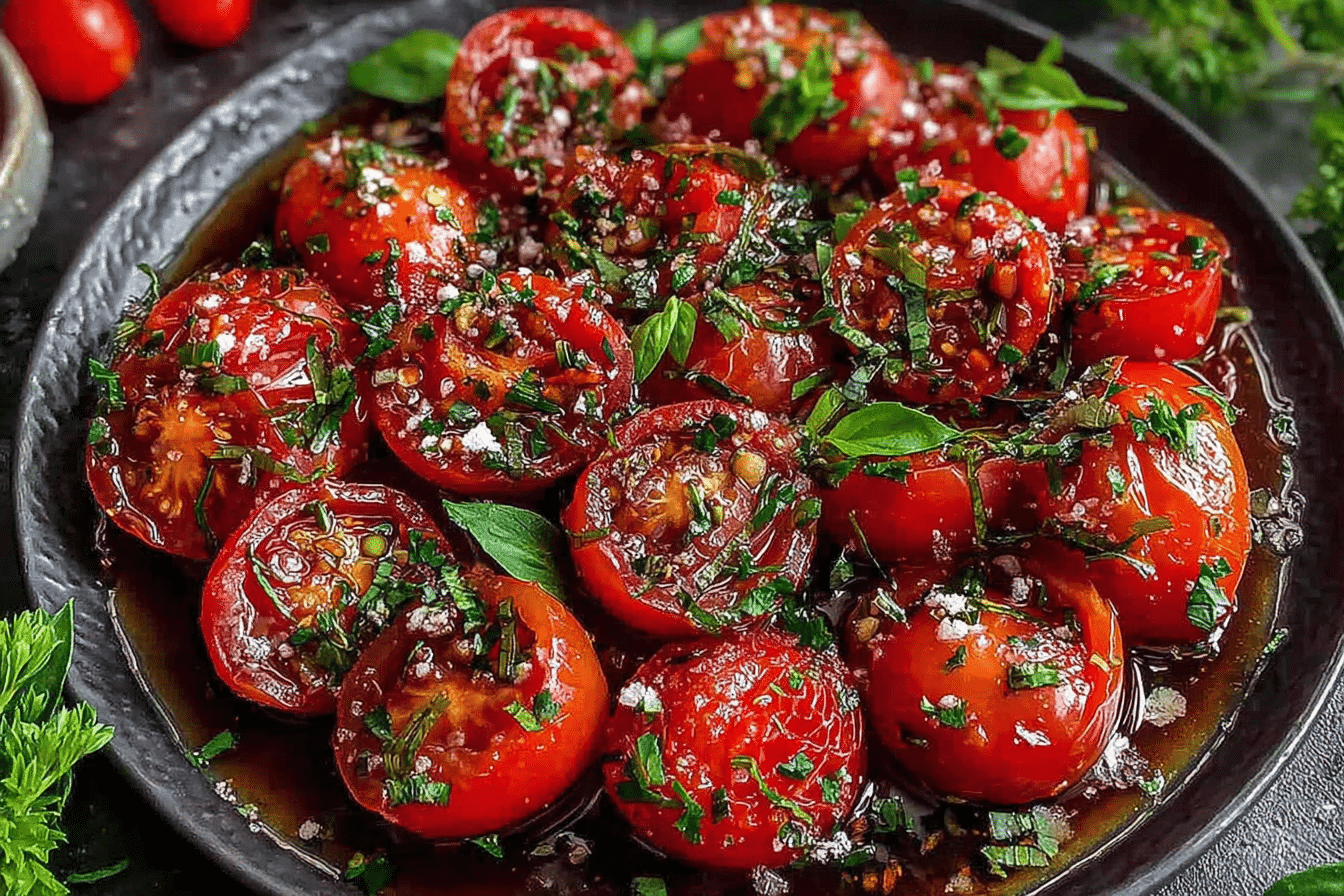
Start by washing the tomatoes thoroughly and drying them gently. Cut them into wedges or large bite-sized chunks, depending on preference. Place them into a medium or large mixing bowl.
Thinly slice the red onion and add it to the tomatoes. The thin slices help the onion soften slightly in the marinade while still maintaining its texture.
In a separate small bowl, whisk together olive oil, red wine vinegar, minced garlic, salt, black pepper, and sugar if using. Stir until the mixture becomes slightly emulsified and well combined.
Pour the marinade over the tomatoes and onions. Use a soft spoon or spatula to gently toss everything together, ensuring the tomatoes are evenly coated without being crushed.
Add the fresh basil and parsley last. Gently fold them into the mixture so their aroma spreads throughout the dish while keeping the leaves intact.
Allow the tomatoes to rest at room temperature for at least 20–30 minutes. This resting time is important because it allows the salt to draw out natural juices from the tomatoes, which then mix with the marinade to create a flavorful dressing.
If resting longer, place the bowl in the refrigerator, but bring it back to room temperature before serving for the best flavor. Cold temperatures can dull the aroma of the herbs and garlic.
Before serving, give the mixture a gentle stir and taste for seasoning. A small pinch of salt or splash of vinegar can be added if needed.
Avoid overmixing at any stage, as ripe tomatoes can break down easily and lose their structure.
Tips, Variations & Substitutions
Using a mix of tomato varieties creates more depth in texture and flavor. Heirloom tomatoes add sweetness, while Roma tomatoes provide structure.
For a stronger herbal profile, oregano or thyme can be added alongside basil. Each herb changes the direction of the flavor slightly while still complementing the tomatoes.
Balsamic vinegar can be used instead of red wine vinegar for a deeper, slightly sweeter profile. This works especially well if serving the tomatoes with grilled meats or bread.
A small amount of crushed chili flakes can be added for gentle heat. This brings contrast to the natural sweetness of the tomatoes.
For added richness, small cubes of fresh mozzarella can be mixed in just before serving, turning the dish into a simple salad variation.
If garlic is too strong, it can be lightly sautéed in olive oil and cooled before adding to the marinade. This softens its sharpness while keeping its aroma.
Serving Ideas & Occasions
Marinated tomatoes pair well with grilled chicken, fish, or steak. They also work beautifully as a topping for toasted bread or bruschetta-style appetizers.
They can be served alongside pasta dishes, especially those with light olive oil or garlic-based sauces. The acidity of the tomatoes helps balance richer meals.
This dish is commonly enjoyed during warm months when tomatoes are at their peak. It also fits well into picnic-style meals, where simple cold or room-temperature dishes are preferred.
It can be used as a fresh topping for grain bowls or served next to roasted vegetables for added brightness.
Nutritional & Health Notes
Tomatoes are a natural source of vitamins such as vitamin C and potassium. They also contain antioxidants like lycopene, which is commonly associated with plant-based diets.
Olive oil provides healthy fats that help absorb fat-soluble nutrients found in tomatoes. It also contributes to the smooth texture of the marinade.
Garlic and fresh herbs add flavor without significant calories, making the dish light while still flavorful. Vinegar adds acidity without added fat or sugar.
This recipe focuses on whole ingredients with minimal processing, making it suitable for a variety of balanced eating patterns.
FAQs
What type of tomatoes work best?
Ripe, flavorful tomatoes such as heirloom, vine-ripened, or Roma varieties work best. Heirloom tomatoes offer sweetness and complexity, while Roma tomatoes hold their shape better. The key is ripeness—tomatoes should be juicy but not overly soft, as this ensures they absorb the marinade without breaking down too much during resting.
How long should tomatoes be marinated?
A minimum of 20–30 minutes is ideal for flavor development. This allows the salt to draw out juices and blend with the marinade. For deeper flavor, they can rest for up to a few hours in the refrigerator. However, very long marinating times may cause the tomatoes to soften too much.
Can marinated tomatoes be made ahead of time?
Yes, but it is best to prepare them a few hours in advance rather than the day before. The tomatoes will release more liquid over time, which can slightly dilute the texture. For best results, add fresh herbs shortly before serving to maintain their brightness and aroma.
Can balsamic vinegar be used instead?
Balsamic vinegar can be used as a substitute for red wine vinegar. It creates a sweeter, richer flavor profile and pairs especially well with mozzarella or grilled dishes. However, it will slightly darken the appearance of the marinade due to its deeper color and natural sweetness.
How do I keep the tomatoes from becoming too watery?
Using ripe but firm tomatoes helps control excess moisture. Salting the tomatoes lightly before adding the marinade can also help draw out water in a controlled way. After resting, gently draining excess liquid is possible, though some juices are desirable for flavor.
Can other vegetables be added?
Yes, cucumbers, bell peppers, or even thinly sliced zucchini can be added. These vegetables absorb the marinade well and add texture contrast. It is best to slice them thinly so they integrate evenly with the tomatoes and absorb the dressing properly.
What herbs work best in this recipe?
Basil is the most classic herb for marinated tomatoes, offering a slightly sweet and aromatic flavor. Parsley adds freshness, while oregano provides a more earthy profile. A combination of these herbs can be used depending on personal preference and the intended serving style.
PrintMarinated Tomatoes with Olive Oil and Fresh Basil
Fresh ripe tomatoes marinated in olive oil, vinegar, garlic, and herbs until juicy, tender, and full of bright Mediterranean flavor.
- Prep Time: 10 minutes
- Cook Time: 0 minutes
- Total Time: 30 minutes
- Yield: 4 servings 1x
Ingredients
4 large ripe tomatoes, cut into wedges
1/4 cup extra virgin olive oil
2 tablespoons red wine vinegar
2 cloves garlic, finely minced
1/2 small red onion, thinly sliced
1/4 cup fresh basil leaves, torn
1 tablespoon fresh parsley, chopped
1/2 teaspoon salt
1/4 teaspoon black pepper
1/2 teaspoon sugar (optional)
Instructions
- Cut tomatoes into wedges and place in a bowl.
- Add sliced red onion.
- Whisk olive oil, vinegar, garlic, salt, pepper, and sugar.
- Pour marinade over tomatoes and toss gently.
- Add basil and parsley and fold in carefully.
- Rest 20–30 minutes before serving.
Notes
Use ripe but firm tomatoes for best texture. Add herbs just before serving for freshness. Can be served at room temperature or lightly chilled.