
Classic Pasta Salad (for a crowd) is a large-batch dish built for gatherings, potlucks, and shared meals where consistency and balance matter. Tender pasta is paired with crisp vegetables and a creamy dressing that coats every piece evenly, creating a bowl that holds its texture well even after chilling.
This version is designed to scale easily without losing structure or flavor balance. The combination of pasta, vegetables, and dressing creates a steady mix that stays cohesive in large servings. It works well when prepared ahead of time, allowing the ingredients to settle together before serving.
The dish is versatile, making it suitable for outdoor meals, casual dinners, and meal preparation across several days. Each ingredient plays a role in texture and taste, giving the salad both substance and freshness in every portion.
Ingredients Overview
Pasta forms the base of this dish, and short shapes like rotini or penne are preferred because they hold dressing in their curves. Cooking the pasta until just tender is important so it remains firm after chilling and mixing with other ingredients. Overcooked pasta tends to soften too much once the dressing is added.
The dressing is creamy and slightly tangy, built around mayonnaise as the main component. A small amount of vinegar or lemon juice adds brightness and helps balance the richness. Mustard adds depth and a mild sharp edge that keeps the flavor grounded rather than heavy.
Vegetables provide contrast and structure. Bell peppers add mild sweetness and color, while celery introduces crunch. Red onion contributes a sharper bite that balances the creaminess of the dressing. These vegetables also help the salad maintain interest in larger servings.
Optional additions such as peas or shredded carrots can be included for color variation and subtle sweetness. These ingredients blend well with the base without changing the structure of the dish. Pickles or relish can be added for a tangy note that complements the creamy texture.
Seasoning is kept steady with salt, black pepper, and a touch of paprika. These simple additions support the overall flavor without overpowering the main components. Each part of the recipe is designed to work together so the salad remains stable and balanced even after resting.
Substitutions are flexible. Whole wheat pasta can replace standard pasta for a firmer bite. Greek yogurt can replace part of the mayonnaise for a lighter texture. Gluten-free pasta can also be used, though cooking time may vary slightly depending on the type chosen.
Ingredients
1 1/2 pounds rotini pasta
1 cup mayonnaise
1/4 cup sour cream
2 tablespoons apple cider vinegar
1 tablespoon Dijon mustard
2 teaspoons salt
1 teaspoon black pepper
1 teaspoon paprika
1 cup cherry tomatoes, halved
1 cup diced cucumber
1 cup diced red bell pepper
1/2 cup finely chopped red onion
1 cup frozen peas, thawed
1/2 cup shredded carrots
2 tablespoons chopped parsley
Step-by-Step Instructions
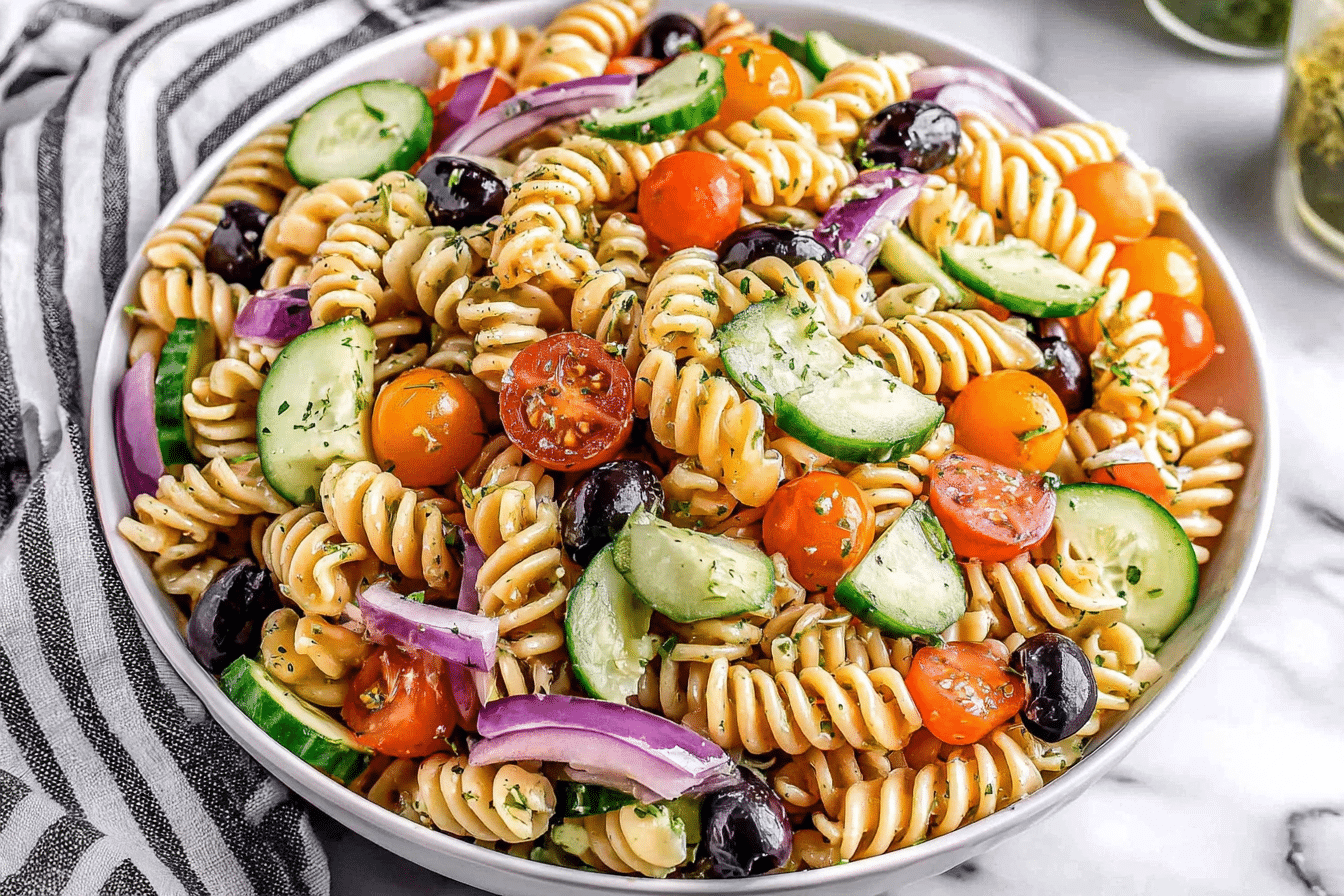
Start by bringing a large pot of salted water to a boil. Add the pasta and stir occasionally to prevent sticking. Cook until the pasta is tender but still firm. Drain it and rinse under cool water to stop the cooking process and remove excess starch. Let it drain fully so no extra water remains in the bowl.
While the pasta cools, prepare the vegetables. Slice cherry tomatoes in half, dice cucumber and bell pepper into small uniform pieces, and finely chop red onion. Thaw peas and pat them dry if needed. Shred carrots and chop parsley into small pieces. Keeping the vegetables evenly sized helps the salad mix consistently in large batches.
In a separate bowl, prepare the dressing. Combine mayonnaise, sour cream, apple cider vinegar, Dijon mustard, salt, black pepper, and paprika. Stir until smooth and thick. The dressing should be creamy enough to coat pasta without becoming too heavy or runny.
Place cooled pasta into a very large mixing bowl. Add all vegetables and gently toss to distribute them evenly. Pour the dressing over the mixture in stages, folding carefully to coat everything without breaking the pasta or crushing the vegetables.
Once fully combined, taste and adjust seasoning if needed. Add small amounts of salt or vinegar depending on balance preference. Stir gently again to distribute any added seasoning evenly through the mixture.
Cover the bowl and place it in a chilled environment for at least one hour before serving. This resting time allows the dressing to settle into the pasta and vegetables, improving consistency throughout the batch. Stir once more before serving to refresh the texture.
Avoid mixing while the pasta is still warm, as this can cause the dressing to thin and separate. Also avoid overmixing, since the vegetables should remain intact for the best texture.
Tips, Variations & Substitutions
For a lighter version, replace part of the mayonnaise with Greek yogurt. This adjustment keeps the creamy texture while reducing richness. A small amount of olive oil can also be added if a smoother consistency is needed.
Different vegetables can be used depending on availability. Broccoli florets, snap peas, or chopped spinach can be included for added variety. Each vegetable should be cut small so it blends evenly with the pasta base.
For added protein, diced grilled chicken or chickpeas can be mixed into the salad. These additions turn the dish into a more complete meal without changing preparation steps. They blend easily into the creamy base.
Herbs such as dill, basil, or chives can be added for extra aroma. These should be finely chopped so they distribute evenly through the salad. They add freshness without altering the structure of the dish.
If preparing for large events, the dressing can be mixed separately and added just before serving to maintain optimal texture. This approach works well when serving over extended time periods.
Serving Ideas & Occasions
Classic Pasta Salad (for a crowd) fits well into shared meals where large portions are needed. It pairs naturally with grilled proteins, roasted vegetables, or simple baked dishes. Its creamy texture complements both warm and chilled sides.
It is often served at outdoor meals, group gatherings, and casual buffet-style settings. The structure holds well in transport when stored in sealed containers, making it suitable for preparation ahead of time.
For presentation, serve in a wide bowl so the mix of vegetables and pasta is visible. A light sprinkle of parsley on top adds color contrast before serving. Stirring just before serving helps maintain even distribution of ingredients.
Chilled serving temperature helps preserve texture and flavor balance. It also keeps the dressing stable during longer serving periods.
Nutritional & Health Notes
This dish contains carbohydrates from pasta, fats from mayonnaise and sour cream, and fiber from vegetables. The combination provides steady energy and a balanced texture profile across servings.
Vegetables add volume and micronutrients without significantly increasing calorie density. Peas and carrots contribute mild natural sweetness and additional fiber, while peppers and onions add structure and depth.
Adjusting ingredient ratios can change nutritional balance. Increasing vegetables reduces pasta proportion, while adding protein increases overall satiety. Replacing part of the mayonnaise with yogurt reduces fat content while maintaining creaminess.
Portion control allows flexibility depending on meal context, whether served as a side dish or a main portion in larger servings.
FAQs
What type of pasta works best for large pasta salad batches?
Short pasta shapes such as rotini, penne, or fusilli work best for large batches because they hold dressing well and distribute evenly throughout the mixture. Rotini is especially effective due to its spiral shape, which helps capture creamy dressing in every bite. These shapes also maintain structure after chilling, which is important when preparing larger quantities. Long pasta types do not mix as evenly and can clump together, making them less suitable for crowd-sized servings.
How far in advance can pasta salad be made?
This salad can be prepared one day in advance for best flavor balance. When chilled, the dressing settles into the pasta and vegetables, creating a more unified texture. If preparing earlier, it is helpful to store it in a sealed container to preserve freshness. Stirring before serving redistributes the dressing and keeps the mixture even. Vegetables with higher moisture content should be added closer to serving if a firmer texture is preferred.
How do I keep pasta salad from becoming dry?
Pasta salad can become dry as it rests because pasta absorbs dressing over time. To prevent this, slightly increase the dressing quantity when mixing initially. Before serving, a small amount of extra dressing can be stirred in to restore creaminess. Storing the salad in a sealed container also helps retain moisture. Keeping it chilled reduces separation and helps maintain a consistent texture throughout storage.
Can I make this salad without mayonnaise?
Yes, mayonnaise can be replaced with Greek yogurt, sour cream, or a combination of both. These alternatives create a lighter texture while still coating the pasta evenly. A small amount of olive oil can be added to improve smoothness if needed. Each substitution slightly changes flavor, but the overall structure remains stable and suitable for large servings.
What vegetables work best in crowd-sized pasta salad?
Vegetables that hold structure well are best for large batches. Bell peppers, cucumbers, carrots, peas, and celery are commonly used because they stay crisp and blend easily. These ingredients also add color variety, which improves presentation in large serving bowls. Vegetables should be cut into small, uniform pieces so they distribute evenly throughout the pasta mixture.
How do I prevent vegetables from softening too much?
To maintain crispness, vegetables should be chopped shortly before mixing and stored chilled until use. Ingredients with high water content, such as cucumbers or tomatoes, can be added closer to serving time. Keeping the salad cold slows down moisture release and helps maintain structure. Gentle mixing also prevents crushing delicate vegetables during preparation.
Can protein be added to this pasta salad?
Yes, protein such as grilled chicken, chickpeas, or diced turkey can be added. These ingredients mix well with the creamy base and turn the salad into a more complete meal. Protein should be fully cooked and cooled before mixing to maintain texture. Even distribution ensures each serving contains a balanced amount of ingredients.
PrintClassic Pasta Salad for a Crowd with Rotini and Black Olives
Classic Pasta Salad (for a crowd) combines tender pasta, crisp vegetables, and creamy dressing in a large-batch dish designed for gatherings, meal preparation, and shared meals.
- Prep Time: 20 minutes
- Cook Time: 10 minutes
- Total Time: 30 minutes
- Yield: 10 servings 1x
Ingredients
1 1/2 pounds rotini pasta
1 cup mayonnaise
1/4 cup sour cream
2 tablespoons apple cider vinegar
1 tablespoon Dijon mustard
2 teaspoons salt
1 teaspoon black pepper
1 teaspoon paprika
1 cup cherry tomatoes, halved
1 cup diced cucumber
1 cup diced red bell pepper
1/2 cup finely chopped red onion
1 cup frozen peas, thawed
1/2 cup shredded carrots
2 tablespoons chopped parsley
Instructions
- Cook pasta until tender, then cool under water.
- Chop vegetables into small, even pieces.
- Mix mayonnaise, sour cream, vinegar, mustard, and seasoning.
- Combine pasta and vegetables in a large bowl.
- Add dressing and fold gently.
- Chill before serving and stir again.
Notes
Add extra dressing before serving if needed. Keep chilled for best texture.