
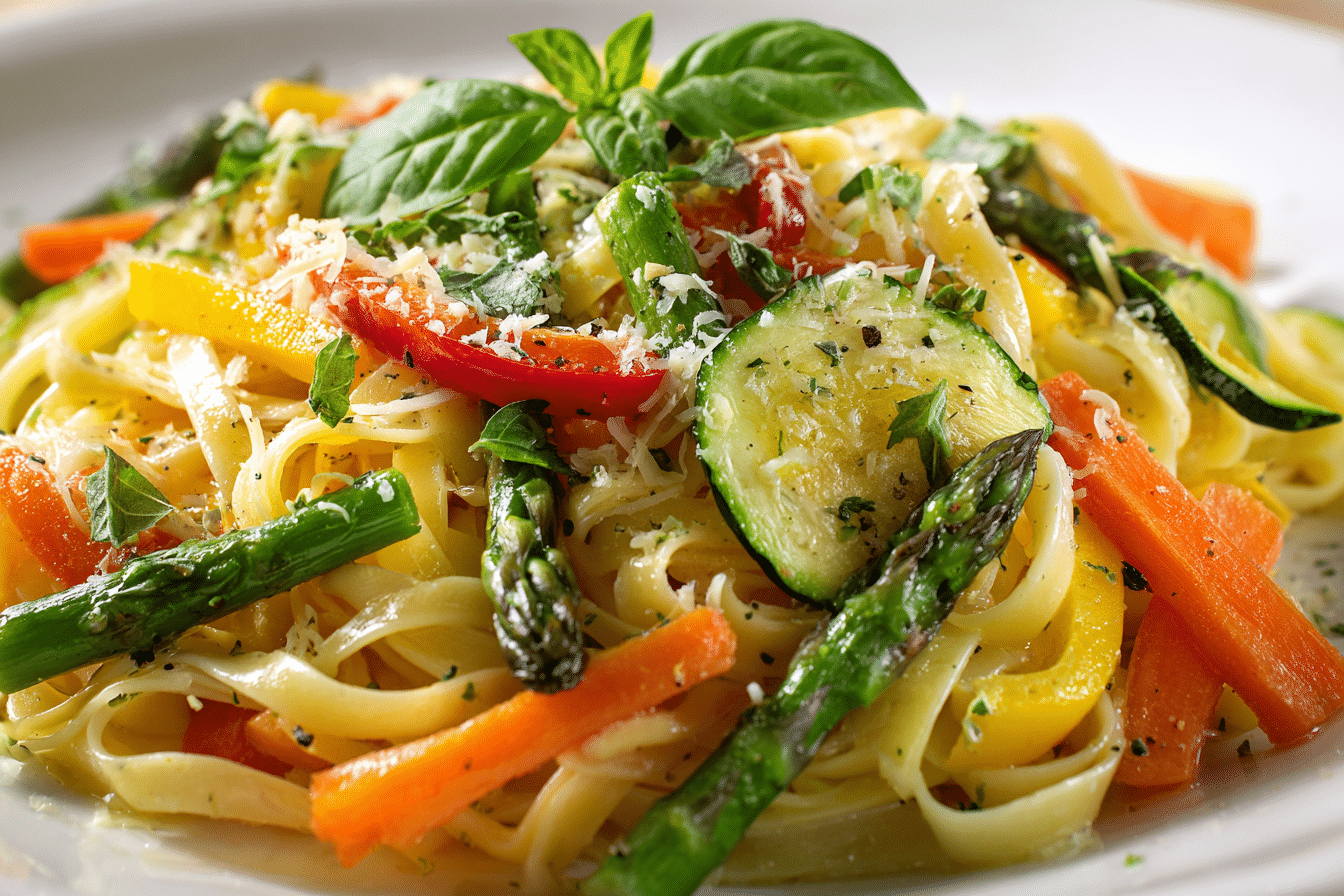
Pasta Primavera is a bright, flavorful dish that celebrates the freshest vegetables of the season, paired with tender pasta and a light, aromatic sauce. This classic Italian-inspired meal is perfect for both weeknight dinners and special gatherings, offering a colorful plate that is as pleasing to the eyes as it is to the taste buds. Pasta Primavera is versatile, effortlessly blending a medley of vegetables with a simple sauce that can range from olive oil and garlic to a creamy parmesan base, allowing each ingredient to shine. Its light yet satisfying nature makes it a favorite for those seeking a wholesome, vegetable-forward pasta dish that doesn’t compromise on taste.
From crisp bell peppers and tender asparagus to juicy cherry tomatoes and zucchini, Pasta Primavera brings the garden straight to your table. The dish is naturally customizable, so whether you prefer it vegetarian, with a touch of protein, or even whole-grain pasta for added fiber, it adapts beautifully. Each bite delivers a mix of textures—from al dente pasta to slightly caramelized vegetables—while the seasoning and sauce unite the ingredients into a harmonious, irresistible dish. This recipe guide dives deep into everything you need to know to create Pasta Primavera that impresses, delights, and satisfies.
Ingredients Overview
The success of Pasta Primavera lies in the balance of fresh vegetables, quality pasta, and a flavorful yet simple sauce. Freshness is key, as the dish relies on natural flavors rather than heavy sauces. Classic vegetables include bell peppers, zucchini, asparagus, broccoli, and cherry tomatoes. These vegetables provide a mix of crunch, tenderness, and sweetness that complements the pasta perfectly. Seasonal adjustments are easy, so feel free to swap in peas, snap peas, or baby carrots depending on availability.
Olive oil is the cornerstone of the sauce, providing richness and helping to lightly sauté vegetables. Garlic adds aromatic depth, while onions or shallots bring subtle sweetness. A sprinkle of parmesan cheese creates a creamy, savory layer, while a dash of lemon juice brightens the dish and balances flavors. Herbs such as basil, parsley, or thyme add fresh, herbal notes that make Pasta Primavera vibrant and fragrant. For a lighter twist, skip the cream or butter entirely, letting the vegetables and olive oil shine.
Pasta choice also influences texture and flavor. Long pasta like fettuccine or linguine allows vegetables to intertwine with each strand, while penne or farfalle gives a chunkier experience. Whole wheat pasta, gluten-free pasta, or legume-based pasta are excellent substitutions for dietary preferences. Additionally, adding a protein like grilled chicken, shrimp, or tofu can turn this vegetable-centric dish into a heartier main course. Every ingredient contributes to the overall balance, resulting in a dish that is fresh, colorful, and satisfying in every bite.
Ingredients
12 ounces pasta (fettuccine, penne, or farfalle)
2 tablespoons olive oil
3 cloves garlic, minced
1 small onion, thinly sliced
1 red bell pepper, thinly sliced
1 yellow bell pepper, thinly sliced
1 small zucchini, sliced into half-moons
1 small yellow squash, sliced into half-moons
1 cup broccoli florets
1 cup asparagus, trimmed and cut into 2-inch pieces
1 cup cherry tomatoes, halved
1/4 teaspoon red pepper flakes (optional)
Salt and black pepper, to taste
1/2 cup grated parmesan cheese
2 tablespoons fresh lemon juice
2 tablespoons chopped fresh basil
2 tablespoons chopped fresh parsley
1/4 cup heavy cream or half-and-half (optional)
2 tablespoons toasted pine nuts (optional)
Step-by-Step Instructions
-
Begin by bringing a large pot of salted water to a boil. Cook the pasta according to package instructions until al dente. Reserve 1/2 cup of pasta water and drain the rest. Set pasta aside.
-
While the pasta cooks, heat olive oil in a large skillet over medium heat. Add minced garlic and sauté for 30 seconds until fragrant, being careful not to burn it. Add the sliced onion and cook for 2–3 minutes until slightly translucent.
-
Add the bell peppers, zucchini, and yellow squash to the skillet. Stir frequently, cooking for about 4–5 minutes until the vegetables are just tender but still slightly crisp. Introduce broccoli florets and asparagus, cooking for another 3 minutes until bright green and tender-crisp.
-
Toss in the cherry tomatoes and optional red pepper flakes. Cook for an additional 2 minutes, just until tomatoes start to soften. Season with salt and black pepper.
-
Reduce heat to low, add the cooked pasta, and toss gently with the vegetables. If the dish appears dry, add reserved pasta water one tablespoon at a time until the desired consistency is reached. For a creamier version, stir in the heavy cream or half-and-half.
-
Remove from heat and sprinkle with parmesan cheese, fresh basil, and parsley. Toss lightly to combine, ensuring the cheese melts and herbs release their aroma.
-
For added texture and flavor, garnish with toasted pine nuts just before serving. Taste and adjust seasoning as needed. Serve immediately while warm, enjoying the medley of textures and bright flavors in every bite.
Tips, Variations & Substitutions
For best results, use vegetables that are in season, ensuring vibrant color and maximum flavor. Avoid overcooking, as vegetables should remain tender-crisp to maintain texture. You can swap vegetables freely: sugar snap peas, baby carrots, or even roasted mushrooms work wonderfully.
For a lighter dish, omit cream and rely solely on olive oil and lemon juice. For a richer, more decadent flavor, add a splash of white wine while sautéing the vegetables or finish with a knob of butter. Protein variations include grilled chicken, shrimp, or pan-seared tofu, which turn Pasta Primavera into a more filling entrée.
Herbs can also be adjusted to taste. Fresh tarragon or oregano adds an interesting twist, while dried Italian seasoning works if fresh herbs aren’t available. Nutritional swaps like whole wheat or gluten-free pasta, and plant-based cheese, make the dish suitable for various dietary needs without sacrificing flavor.
Serving Ideas & Occasions
Pasta Primavera is perfect for spring and summer meals when fresh vegetables are abundant, but it also works year-round using high-quality frozen vegetables. Serve as a main course for a family dinner, or as a side alongside grilled chicken, fish, or a fresh salad for a lighter meal.
Pair with a crisp white wine like Sauvignon Blanc or Pinot Grigio, or enjoy with sparkling water with a lemon twist for a refreshing, non-alcoholic option. The dish’s vibrant colors and fresh aroma make it a beautiful centerpiece for brunches, potlucks, or dinner parties. It is also an excellent choice for a quick weeknight meal that feels special without requiring hours in the kitchen.
Nutritional & Health Notes
Pasta Primavera is naturally rich in vitamins and minerals due to the abundance of fresh vegetables. Bell peppers provide vitamin C, while broccoli and asparagus offer fiber, vitamin K, and folate. Using olive oil adds heart-healthy monounsaturated fats, and optional parmesan contributes calcium and protein.
Choosing whole-grain or legume-based pasta increases fiber content and adds a slightly nutty flavor. Limiting cream keeps the dish lighter, reducing saturated fat without sacrificing taste. This dish provides a balanced combination of carbohydrates, protein, and healthy fats, making it a satisfying and colorful addition to any meal plan.
FAQs
Can I make Pasta Primavera ahead of time?
Yes, Pasta Primavera can be made ahead, but it’s best served fresh to preserve the crispness of the vegetables. If preparing in advance, cook the pasta and vegetables separately and store in airtight containers in the refrigerator for up to two days. Reheat gently in a skillet with a splash of water or olive oil to avoid overcooking and losing texture.
What pasta works best for this dish?
Long pasta like fettuccine, linguine, or spaghetti works well because it intertwines with the vegetables. Short pasta like penne or farfalle is also great for chunkier bites. Whole wheat, gluten-free, or legume-based pasta can be substituted depending on dietary needs. The key is to cook the pasta al dente to maintain texture and avoid a mushy result.
Can I make it vegan?
Absolutely. Replace parmesan cheese with a plant-based alternative or nutritional yeast, and omit cream or use a plant-based cream substitute. Ensure the pasta does not contain eggs if strictly vegan. Using a variety of fresh vegetables ensures the dish remains flavorful and satisfying without animal products.
How do I prevent vegetables from becoming soggy?
Cook vegetables in stages, starting with those that take longer to soften, and finish with tender vegetables. Use medium to medium-high heat for sautéing and avoid overcrowding the pan. Quick cooking preserves texture and vibrant color, giving each vegetable a fresh bite.
Can I freeze Pasta Primavera?
Freezing is possible, but not recommended if you want to maintain crisp vegetables. If necessary, freeze cooked pasta and sauce separately, without adding delicate vegetables like tomatoes or zucchini. Reheat gently and add fresh vegetables after thawing to preserve texture and flavor.
What can I use instead of parmesan cheese?
Grated Pecorino Romano, Asiago, or a plant-based parmesan alternative works well. Nutritional yeast adds a cheesy, nutty flavor without dairy. Taste as you go to ensure the seasoning balances the natural sweetness of the vegetables.
How can I make the dish more flavorful?
Add aromatics like garlic, shallots, or leeks, and finish with fresh herbs and a squeeze of lemon juice. A splash of white wine while sautéing vegetables or a pinch of crushed red pepper flakes adds depth and complexity. Tasting as you cook ensures the flavors are balanced.
PrintVegan Pasta Primavera Dinner Ideas
A colorful and fresh Pasta Primavera featuring tender vegetables tossed with al dente pasta and a light, aromatic sauce.
- Prep Time: 15 minutes
- Cook Time: 20 minutes
- Total Time: 35 minutes
- Yield: 4 servings 1x
Ingredients
12 ounces pasta (fettuccine, penne, or farfalle)
2 tablespoons olive oil
3 cloves garlic, minced
1 small onion, thinly sliced
1 red bell pepper, thinly sliced
1 yellow bell pepper, thinly sliced
1 small zucchini, sliced into half-moons
1 small yellow squash, sliced into half-moons
1 cup broccoli florets
1 cup asparagus, trimmed and cut into 2-inch pieces
1 cup cherry tomatoes, halved
1/4 teaspoon red pepper flakes (optional)
Salt and black pepper, to taste
1/2 cup grated parmesan cheese
2 tablespoons fresh lemon juice
2 tablespoons chopped fresh basil
2 tablespoons chopped fresh parsley
1/4 cup heavy cream or half-and-half (optional)
2 tablespoons toasted pine nuts (optional)
Instructions
-
Bring a large pot of salted water to a boil. Cook the pasta according to package instructions until al dente. Reserve 1/2 cup pasta water and drain the rest.
-
Heat olive oil in a large skillet over medium heat. Sauté garlic for 30 seconds until fragrant. Add onion and cook 2–3 minutes until translucent.
-
Add bell peppers, zucchini, and yellow squash. Cook 4–5 minutes until tender-crisp. Add broccoli and asparagus, cooking 3 minutes more.
-
Add cherry tomatoes and optional red pepper flakes. Cook 2 minutes until tomatoes soften. Season with salt and black pepper.
-
Reduce heat to low, add pasta, and toss gently. Add reserved pasta water or cream if desired for consistency.
-
Remove from heat. Sprinkle parmesan, basil, and parsley. Toss lightly to combine.
-
Garnish with toasted pine nuts if desired. Serve immediately.
Notes
Use fresh, seasonal vegetables for best flavor. Avoid overcooking vegetables. Protein additions like chicken or shrimp are optional.