
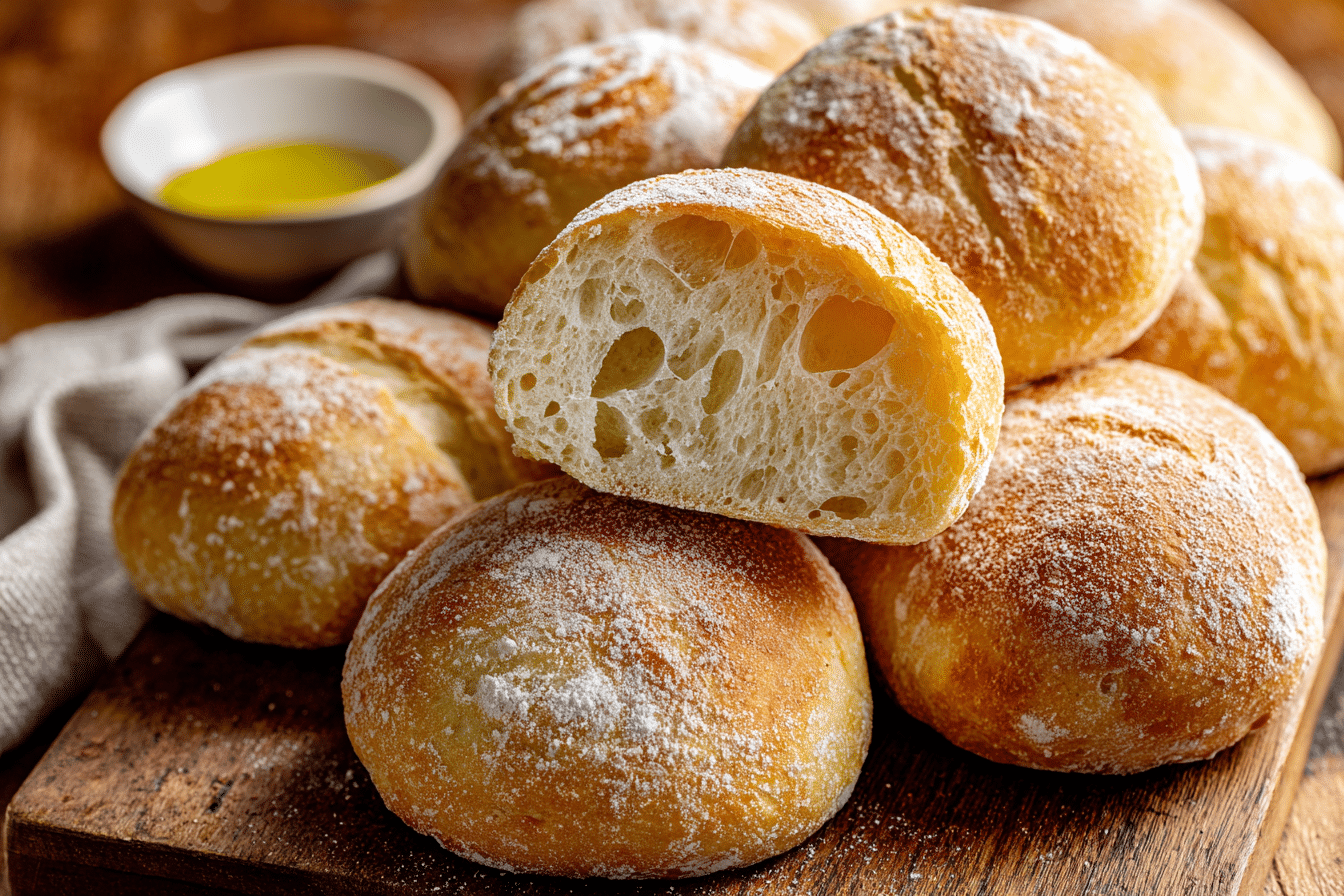
Few things compare to the satisfaction of pulling a warm, crusty loaf of homemade bread from the oven—especially when it’s as effortless as this No-Knead Ciabatta with a Light and Airy Crumb. With its signature open holes, crackly crust, and deeply fermented flavor, this bread is a rustic dream come true. And the best part? You won’t even break a sweat kneading.
This ciabatta boasts a delicate, web-like interior and a chewy crust that shatters with each bite. It’s a perfect balance between artisan technique and practical ease, ideal for beginner bakers or anyone looking to bake with minimal fuss. The long fermentation builds complexity, while the wet dough creates that unmistakable airy crumb. Perfect for sandwiches, soups, or just slathered with butter, this recipe delivers bakery-quality bread from the comfort of your own kitchen.
Ingredients Overview
Bread Flour
Bread flour is essential here, providing the higher protein content needed to develop strong gluten strands in this high-hydration dough. This structure helps create the classic ciabatta open crumb. If needed, all-purpose flour can be used, but expect a slightly less airy result.
Instant Yeast
A small amount of instant yeast does the heavy lifting in this long-rise dough. It promotes slow fermentation, which adds depth of flavor without overpowering the bread. Active dry yeast can also be used—just bloom it in warm water first.
Water
Cool or room temperature water is used to mix the dough and allow for a slow, cold fermentation process. The high hydration (over 75%) helps create that light, hole-filled interior. Avoid using hot water, which could inhibit the rise.
Salt
Salt balances flavor and strengthens gluten structure. Even in small amounts, it’s critical for both taste and texture. Avoid cutting back unless absolutely necessary for dietary reasons.
Olive Oil (optional)
Some versions of ciabatta include a small amount of olive oil for richness and a slightly softer crumb. It’s not essential, but a tablespoon or two can round out the flavor and aid in the crust’s color.
Step-by-Step Instructions
1. Mix the Dough (5 Minutes)
In a large bowl, combine the bread flour, instant yeast, and salt. Add water and stir with a wooden spoon or dough whisk until a wet, shaggy dough forms. Don’t worry about lumps—just make sure there’s no dry flour left.
2. First Rest (30 Minutes)
Cover the bowl with plastic wrap or a damp towel and let the dough sit at room temperature for 30 minutes. This rest allows the flour to hydrate and gluten to begin developing naturally.
3. Stretch and Folds (Optional but Helpful)
Every 30 minutes for the next 90 minutes, perform a set of stretch and folds. With wet hands, gently lift one edge of the dough and fold it over. Rotate the bowl and repeat 3–4 times. This helps build structure in the dough without kneading.
4. Bulk Fermentation (12–18 Hours)
Cover the dough tightly and let it rise at room temperature overnight. The dough should at least double in size and be bubbly and jiggly. For a more complex flavor, you can refrigerate the dough after 10–12 hours for up to 2 days.
5. Shape the Ciabatta (Very Gently)
Turn the dough out onto a well-floured surface. Flour the top and use a bench scraper to divide it into two long, rectangular loaves. Handle the dough as little as possible to preserve the air bubbles.
6. Second Rise (45–60 Minutes)
Place the shaped loaves onto a floured piece of parchment paper or a well-floured couche. Cover loosely with a towel and let rise until slightly puffy. Don’t expect a dramatic increase—most of the volume will come from the oven spring.
7. Preheat the Oven and Stone (If Using)
Place a baking stone or steel in the oven and preheat to 475°F (245°C) at least 45 minutes before baking. Place a tray of water at the bottom for steam if a crisp crust is desired.
8. Bake (20–25 Minutes)
Slide the loaves (with parchment) onto the preheated surface. Bake for 10 minutes with steam, then remove the water tray and continue baking for another 10–15 minutes until golden brown. The internal temperature should reach around 210°F (99°C).
9. Cool Before Slicing
Let the bread cool on a wire rack for at least 45 minutes before slicing. This sets the crumb and preserves the air pockets inside.
Tips, Variations & Substitutions
Tips:
-
Use wet hands or tools to handle the dough—it’s sticky by nature.
-
Don’t rush the fermentation. The long rise is key to flavor and texture.
-
Use a baking stone or steel for the best oven spring and crust.
Variations:
-
Whole Wheat Ciabatta: Swap up to 25% of the bread flour for whole wheat for a nuttier flavor.
-
Herb Infusion: Add finely chopped rosemary or thyme to the dough during mixing for a savory twist.
-
Olive Ciabatta: Gently fold in chopped kalamata olives after the first rest for a Mediterranean touch.
Substitutions:
-
All-purpose flour can be used in place of bread flour, though with less open crumb.
-
For a richer flavor, swap some water with beer or buttermilk.
-
Reduce salt slightly for a low-sodium version, though it will affect flavor.
Serving Ideas & Occasions
This No-Knead Ciabatta with a Light and Airy Crumb shines as part of any rustic or cozy meal. Slice it thick and serve with soups like tomato basil or roasted garlic potato. It’s perfect for hearty sandwiches with grilled vegetables, prosciutto, or fresh mozzarella.
Cut into strips and toast for dipping in olive oil and balsamic vinegar, or serve warm with butter at a dinner party. The chewy texture makes it ideal for panini, bruschetta, or even French toast the next day. Its crusty exterior holds up beautifully to rich spreads, bold toppings, and hearty fillings.
Make it the star of your next weekend baking project or a thoughtful homemade gift for neighbors and friends.
Nutritional & Health Notes
Ciabatta is made from just a few simple ingredients—flour, water, yeast, and salt—making it a straightforward, additive-free bread option. The high hydration results in a lower crumb density, meaning fewer calories per slice compared to denser breads.
Whole grain additions increase fiber and minerals, though they reduce the classic airy crumb. Using olive oil adds some healthy fats, but it’s optional. Ciabatta is naturally dairy-free and can be easily adapted for vegan diets.
When enjoyed in moderation and paired with protein-rich toppings or a fresh salad, this bread fits into most balanced eating plans. The slow fermentation may also improve digestibility for some people.
FAQs
Can I use all-purpose flour instead of bread flour?
Yes, you can use all-purpose flour if that’s what you have on hand. Your ciabatta may have a slightly tighter crumb and less chew, but it will still be delicious and airy if fermented properly.
Why is my dough so sticky?
High-hydration doughs like ciabatta are naturally sticky. Don’t add too much extra flour—it’s supposed to be loose. Use wet hands or a dough scraper to handle it more easily.
Can I refrigerate the dough for longer flavor development?
Absolutely. After the bulk rise at room temperature, refrigerate the dough for up to 48 hours. This extended fermentation will deepen the flavor and slightly improve the crust.
Do I need a baking stone?
A baking stone or steel helps create a better crust by providing strong, even heat. However, you can still bake great ciabatta on an inverted baking sheet or standard tray with parchment paper.
What causes large holes in ciabatta bread?
The open crumb comes from a high hydration level, gentle handling, and long fermentation. Avoid deflating the dough during shaping to preserve these air pockets.
Can I freeze ciabatta?
Yes. Once baked and cooled, slice the loaf and freeze in an airtight bag. Toast directly from frozen or reheat in a 350°F oven for 10 minutes.
How do I know when my ciabatta is fully baked?
Look for a golden brown crust and an internal temperature of about 210°F. The loaf should sound hollow when tapped on the bottom. If underbaked, the crumb may be gummy.
Healthy Homemade Bread: Simple No-Knead Ciabatta
A rustic Italian bread with a chewy crust and beautifully airy interior. This no-knead ciabatta is easy to make, perfect for sandwiches or dipping.
- Prep Time: 15 minutes
- Cook Time: 25 minutes
- Total Time: 18 hours
- Yield: 2 loaves 1x
Ingredients
-
4 cups bread flour
-
1/4 tsp instant yeast
-
1 1/2 tsp salt
-
1 3/4 cups cool water
-
(Optional) 1 tbsp olive oil
Instructions
-
In a large bowl, stir together flour, yeast, and salt.
-
Add water and mix until a sticky dough forms.
-
Cover and let rest 30 minutes.
-
Optionally perform 3 stretch-and-folds, 30 minutes apart.
-
Cover and let rise 12–18 hours at room temperature.
-
Turn dough onto floured surface, divide into 2 loaves.
-
Place on parchment, cover, and rest 45–60 minutes.
-
Preheat oven to 475°F with baking stone.
-
Bake 20–25 minutes with steam.
-
Cool on wire rack before slicing.
Notes
To refrigerate, chill dough after 10 hours of rising and bake within 48 hours.