
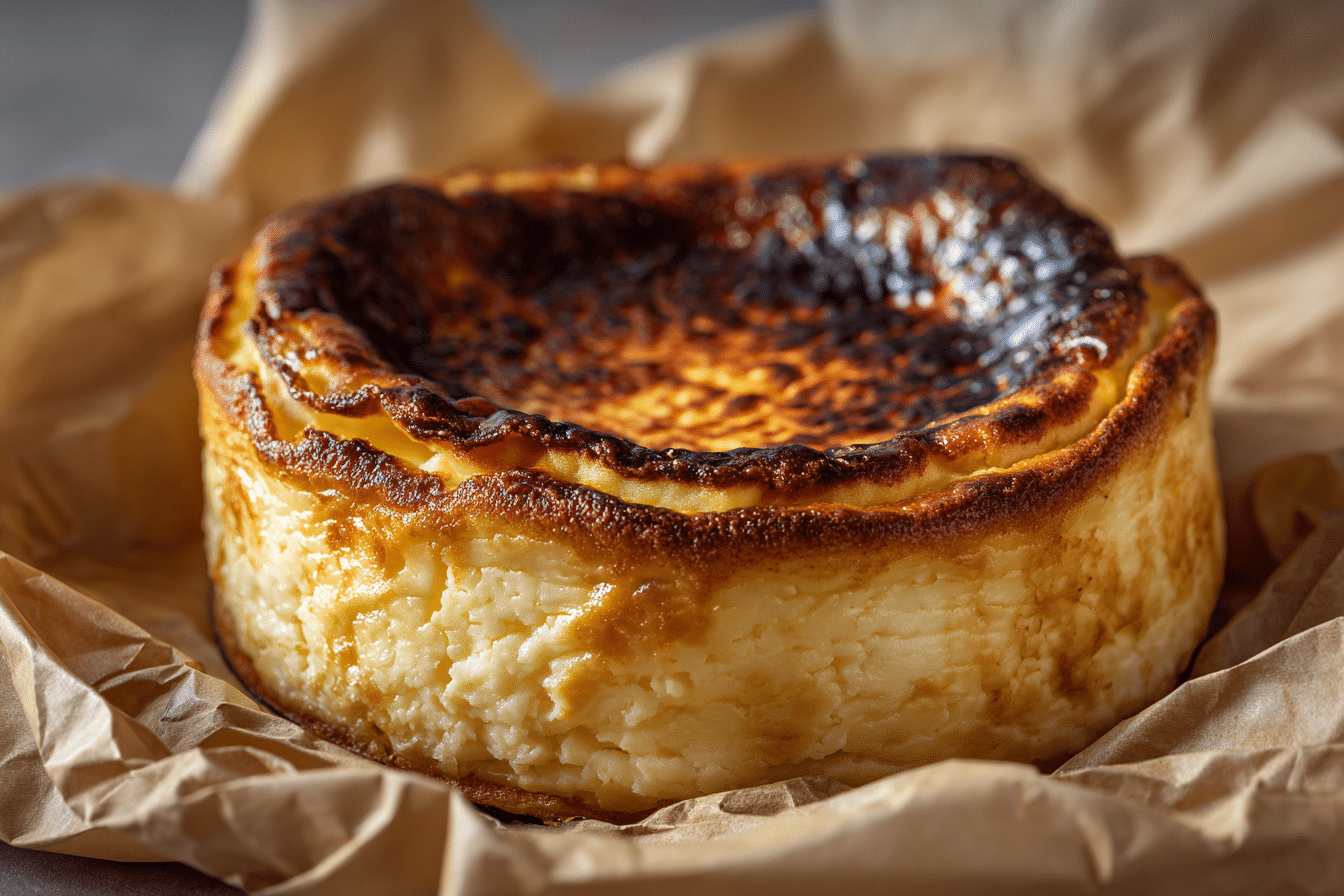
With its caramelized top, jiggly center, and crustless simplicity, the Basque “Burnt” Cheesecake is unlike any other. Originating in San Sebastián, Spain, this cheesecake is rustic, rich, and shockingly easy to make. No water bath, no crust, no fancy layering — just one pan and a high-temperature bake that gives it its signature burnt look and deep flavor.
The magic of this cheesecake lies in the contrast: a deeply golden, nearly scorched top and edges paired with an interior that’s creamy, custard-like, and subtly sweet. It’s bold, beautiful, and meant to look a little imperfect.
Whether you’re an experienced baker or a complete beginner, this one-bowl recipe delivers an elegant dessert with minimal effort — and maximum flavor.
Ingredients Overview
Let’s break down what makes this simple list of ingredients yield such an extraordinary result.
Cream Cheese
The base of any cheesecake. Use full-fat cream cheese for a creamy, rich texture. Make sure it’s softened to room temperature so it blends smoothly.
Tip: For best results, use a block-style cream cheese, not the spreadable kind from a tub.
Granulated Sugar
Balances the tang of the cream cheese and helps achieve that caramelized top. Regular white sugar works perfectly.
Adjustable: You can slightly reduce the sugar if you prefer a less sweet dessert.
Eggs
Whole eggs give structure and help create that custardy, soufflé-like interior. They also contribute to the cake’s beautiful puff and jiggle.
Room temperature eggs will mix more evenly and help with texture.
Heavy Cream
Adds richness and helps soften the dense cream cheese, resulting in a silky texture. Don’t substitute with milk — you need the fat content.
All-Purpose Flour
Just a small amount thickens the batter slightly, giving the cake some structure while keeping the center soft.
Gluten-Free Option: Use a 1:1 gluten-free flour blend or cornstarch.
Vanilla Extract
Adds subtle warmth and depth to the flavor, complementing the tangy cream cheese.
Salt
Balances the sweetness and enhances the richness of the cream.
Step-by-Step Instructions
1. Prepare Your Pan
Line a 9-inch springform or round cake pan with two overlapping sheets of parchment paper. Let the edges extend 2–3 inches above the rim — this cheesecake rises quite a bit as it bakes.
No need to grease the paper — the high fat content of the batter prevents sticking.
2. Preheat Your Oven
Set your oven to 400°F (200°C). A hot oven is essential for achieving the signature dark top.
3. Make the Batter
In a large mixing bowl, beat together:
-
2 lbs (four 8-oz blocks) cream cheese, softened
-
1½ cups granulated sugar
Beat on medium speed until very smooth and creamy — no lumps.
Add:
-
6 large eggs, one at a time, mixing well after each
-
2 cups heavy cream
-
1 tsp vanilla extract
-
¼ tsp salt
Mix until fully combined. Sift in:
-
¼ cup all-purpose flour
Whisk or beat until smooth and silky. The batter will be fairly runny — that’s exactly what you want.
4. Pour and Bake
Pour the batter into the prepared pan. Tap the pan lightly on the counter to release any air bubbles.
Bake for 50–60 minutes. The top should be deeply golden brown (even a little burnt in spots), and the center should still jiggle when shaken. It may puff up dramatically in the oven — this is normal and will deflate as it cools.
Note: For a more molten center, bake closer to 50 minutes. For a firmer set, aim for 60.
5. Cool and Chill
Let the cheesecake cool at room temperature for 1–2 hours. It will fall slightly and set into a rich, custardy texture.
Once cooled, refrigerate for at least 4 hours (preferably overnight). This enhances the flavor and helps it firm up just enough while keeping the inside creamy.
Remove from the pan and peel away the parchment edges before slicing.
Tips, Variations & Substitutions
-
Mini Version: Use a muffin tin lined with parchment cups for individual servings. Reduce bake time to ~20–25 minutes.
-
Lighter Texture: Use half cream cheese and half mascarpone for a silkier finish.
-
Citrus Twist: Add 1 tsp lemon zest or orange zest to the batter for brightness.
-
Chocolate Version: Mix in ½ cup melted dark chocolate for a richer, more indulgent take.
-
Dairy-Free: Substitute with vegan cream cheese and coconut cream — texture may vary slightly, but it works.
Serving Ideas & Occasions
This burnt cheesecake is striking enough for special occasions but simple enough for a casual weekend dessert.
-
Serve Chilled or Room Temp: Cold for a dense, fudge-like texture; room temp for a silkier custard-like feel.
-
Pair With: Fresh berries, poached fruit, or a drizzle of espresso, caramel, or berry compote.
-
Occasions: Perfect for birthdays, date nights, dinner parties, or holiday spreads. It’s impressive yet effortless.
For an elegant presentation, dust lightly with powdered erythritol or cocoa powder, or serve on a platter with seasonal fruit.
Nutritional & Health Notes
This Basque cheesecake is naturally:
-
Crustless – fewer carbs than traditional cheesecake
-
Gluten-light – contains just a small amount of flour
-
Rich in fat – making it ideal for low-carb or high-fat eating patterns
Approximate values per slice (1 of 12):
-
Calories: ~370
-
Fat: ~32g
-
Carbs: ~10g (can be reduced with low-carb sugar alternatives)
-
Protein: ~7g
To lighten it up:
-
Use reduced-fat cream cheese
-
Replace part of the heavy cream with Greek yogurt or sour cream
-
Use a natural sweetener like erythritol or allulose
FAQs
Q1: Why is it called a “burnt” cheesecake?
A1: The cheesecake is baked at a high temperature, which caramelizes the top and edges into a dark, almost burnt layer. It’s intentional and adds a deep, toasty flavor.
Q2: Do I need a water bath?
A2: Not at all! The beauty of Basque cheesecake is that it bakes directly in a hot oven without any water bath or steam. The rustic, cracked top is part of its charm.
Q3: Can I use low-fat cream cheese?
A3: You can, but the texture will be less creamy and slightly more firm. Full-fat is recommended for the best flavor and mouthfeel.
Q4: Is the center supposed to be jiggly?
A4: Yes! When you pull it from the oven, the center should still wobble when shaken. It will firm up as it cools, but the middle stays custardy and creamy.
Q5: How long should it chill before serving?
A5: At least 4 hours in the fridge is ideal. Overnight is best for flavor and texture development.
Q6: Can I freeze Basque cheesecake?
A6: Yes! Wrap slices individually in plastic wrap and store in an airtight container for up to 1 month. Thaw in the fridge before serving.
Q7: What size pan should I use?
A7: A 9-inch springform or round cake pan works best. If using a smaller pan, adjust the baking time accordingly (it may take a bit longer).
PrintBurnt Basque Cheesecake – Rustic & Creamy Dessert
A rustic, crustless cheesecake with a caramelized top and ultra-creamy center. This Basque-style cheesecake is simple, dramatic, and perfectly imperfect.
- Prep Time: 15 minutes
- Cook Time: 55 minutes
- Total Time: 1 hour 10 minutes (plus chill time)
- Yield: 12 slices 1x
Ingredients
-
2 lbs (4 blocks) cream cheese, softened
-
1½ cups granulated sugar
-
6 large eggs
-
2 cups heavy cream
-
¼ cup all-purpose flour
-
1 tsp vanilla extract
-
¼ tsp salt
Instructions
-
Preheat oven to 400°F (200°C). Line a 9-inch springform or cake pan with parchment paper, leaving overhang.
-
In a large bowl, beat cream cheese and sugar until smooth.
-
Add eggs one at a time, mixing well.
-
Add cream, vanilla, and salt. Beat until smooth.
-
Sift in flour and mix until fully combined.
-
Pour batter into prepared pan. Tap to remove bubbles.
-
Bake for 50–60 minutes, until top is dark brown and center is jiggly.
-
Cool at room temp, then refrigerate for at least 4 hours.
-
Peel off parchment, slice, and serve chilled or at room temp.
Notes
-
For a gooier center, bake closer to 50 minutes.
-
Store in fridge for up to 5 days or freeze slices for later.
-
Serve with berries, caramel drizzle, or whipped cream