
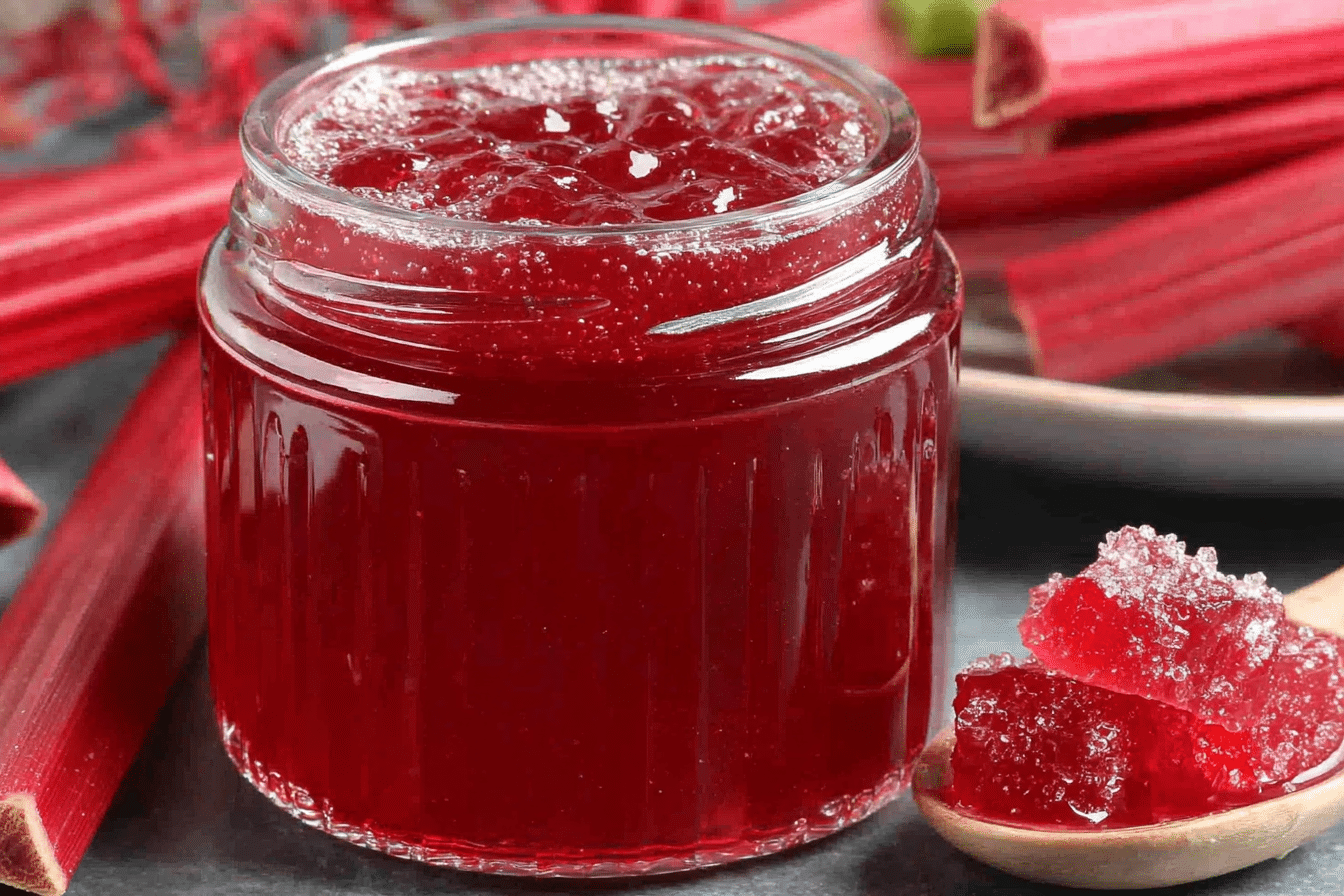
Rhubarb Jelly carries a bright ruby tone and a clean fruit profile shaped through slow simmering and gentle straining. The tart nature of rhubarb transforms into a smooth, glossy spread once the juice is extracted and cooked with sugar and citrus. Cinnamon or light spice can be added for depth, though the base remains focused on pure fruit flavor.
This rhubarb jelly preparation follows a traditional approach that relies on natural pectin from rhubarb and optional citrus support. The process centers on drawing out juice, clarifying it, then cooking it down until it reaches a soft gel consistency. The result is a spread that sits neatly on toast, pastries, and baked goods.
Rhubarb Jelly also fits seasonal kitchen routines when stalks are abundant and fresh. Its flavor carries a gentle sharpness balanced by sweetness, creating a spread that feels bright and steady across many serving styles.
Ingredients Overview
Fresh rhubarb forms the core of this jelly, bringing a sharp fruit profile and high water content. When heated, rhubarb breaks down and releases a deeply colored juice that becomes the base of the final jelly. Stalks with firm texture and even color generally produce a cleaner extraction.
Granulated sugar plays a structural role by supporting gel formation and balancing the natural tartness. As it dissolves, it binds with fruit juice and helps the mixture thicken during cooking. The ratio of sugar to juice affects both texture and firmness.
Lemon juice adds acidity, which supports natural pectin activation and brings brightness to the final flavor. It also helps stabilize the gel structure during cooling. Even a small amount has a noticeable effect on clarity and set.
Water is sometimes added at the initial simmer stage to assist juice release from the rhubarb. It evaporates later in cooking, leaving concentrated fruit flavor behind.
Optional additions such as cinnamon sticks or vanilla bean can introduce subtle aroma layers. These remain secondary and should not overshadow the rhubarb base.
Together, these ingredients create a jelly that is clear, smooth, and lightly tart with a balanced sweetness.
Ingredients
2 pounds fresh rhubarb, chopped
4 cups water
3 cups granulated sugar
2 tablespoons lemon juice
1 cinnamon stick (optional)
Step-by-Step Instructions
Rinse rhubarb stalks under cool water and trim both ends. Cut into even pieces to support consistent breakdown during cooking. Place the chopped rhubarb into a large heavy pot along with water.
Bring the mixture to a gentle simmer over medium heat. Stir occasionally while the rhubarb softens and releases its juice. The color will begin shifting into a pale pink liquid as the fruit breaks apart.
Once the rhubarb becomes fully softened, remove the pot from heat. Pour the mixture through a fine mesh strainer or cheesecloth-lined bowl. Allow the liquid to drain slowly without pressing too hard, which helps keep the jelly clear.
Measure the extracted juice. It should yield around 4 cups, though slight variation is normal depending on rhubarb moisture. Return the juice to a clean pot.
Add sugar and lemon juice to the strained liquid. Stir over low heat until the sugar dissolves fully. At this stage, the mixture will appear clear and slightly thin.
Increase heat to medium and bring to a steady boil. Cook without stirring constantly, allowing evaporation to concentrate the mixture. Foam may form on the surface and can be skimmed off for a clearer finish.
As cooking continues, the liquid thickens and bubbles become slower and heavier. A spoon test or cold plate test can help check gel formation. Place a small drop on a chilled plate and allow it to cool briefly. If it wrinkles when pushed, the jelly has reached proper consistency.
Remove from heat once gel stage is reached. Skim any remaining foam. If using cinnamon stick, remove it at this stage. Let the jelly rest for several minutes before pouring into sterilized jars.
As cooling occurs, the mixture firms into a smooth, glossy jelly with a clean set and bright fruit character.
Tips, Variations & Substitutions
Straining time affects clarity. Allowing juice to drip slowly without pressing produces a clearer jelly. Pressing the pulp can create a cloudy texture but yields slightly more volume.
Citrus balance can be adjusted slightly by changing lemon juice quantity. A small increase results in firmer set and sharper flavor, while a lower amount produces a softer gel.
Spice additions such as cinnamon or a small piece of ginger can shift aroma without changing structure. These should be removed before jarring.
For a firmer texture, cooking time can be extended slightly to reduce more water content. For a softer spread, remove from heat earlier in the gel stage.
Serving Ideas & Occasions
Rhubarb Jelly pairs well with toasted bread, warm biscuits, and flaky pastries. It also works as a glaze for baked goods or as a filling layer in sponge-style desserts.
It fits morning meals, afternoon spreads, and seasonal baking routines. Its bright profile also pairs well with mild cheeses and plain yogurt.
This jelly often appears during spring and early summer when rhubarb is most abundant, offering a way to preserve seasonal flavor for later use.
Nutritional & Health Notes
Rhubarb contributes fiber and naturally occurring plant compounds while remaining low in calories before sweetening. Most energy in rhubarb jelly comes from added sugar, which defines texture and preservation.
Portion size plays an important role in balancing intake, especially when paired with other sweet foods. Small servings provide flavor without heavy sweetness.
Lemon juice contributes small amounts of vitamin C and helps support gel structure. Cinnamon, if included, adds minor aromatic compounds without altering nutritional balance significantly.
Rhubarb Jelly can fit into varied eating patterns when enjoyed in moderate portions alongside whole foods.
FAQs
What helps rhubarb jelly set properly?
Rhubarb jelly sets when fruit juice, sugar, and acidity reach a balanced concentration. The natural pectin in rhubarb works alongside lemon juice to form a gel during cooling. Cooking time plays a major role, as excess liquid must evaporate for proper thickness. A cold plate test helps check readiness before pouring into jars. If the mixture runs thin, additional simmer time can improve structure.
Why is the jelly cloudy instead of clear?
Cloudiness often comes from pressing the cooked rhubarb during straining. Pressing forces pulp into the juice, which reduces clarity. Allowing the mixture to drip slowly through cheesecloth or a fine strainer helps maintain a clear finish. Foam during boiling can also affect appearance, so skimming it off improves transparency. Gentle handling throughout the process supports a cleaner result.
Can frozen rhubarb be used?
Frozen rhubarb works well for jelly preparation. It breaks down quickly during simmering and releases juice easily. No thawing step is required before cooking. Slightly more liquid may appear due to ice crystals, so boiling time may increase. Flavor remains consistent, and color often turns out slightly deeper due to faster breakdown of plant structure.
What happens if sugar amount changes?
Sugar affects both taste and gel structure. Lower sugar levels result in a softer set and shorter storage stability. Higher sugar content produces a firmer gel and longer preservation time. Adjusting sugar also changes cooking time since evaporation must balance liquid concentration. Careful measurement supports steady texture.
Can spices be added during cooking?
Light spices such as cinnamon or ginger can be added during the simmering stage. These ingredients infuse gently into the juice and add aroma without changing structure. They should be removed before jarring to prevent overpowering the fruit base. Spice levels should remain subtle to keep rhubarb as the main flavor.
How long does rhubarb jelly last?
When stored in sterilized jars and kept in a cool environment, rhubarb jelly holds quality for several months. Once opened, refrigeration is required. Clean handling during preparation supports longer shelf stability. Color and texture may shift slightly over time, but flavor remains stable when stored properly.
Why did my jelly not set at all?
A jelly that remains liquid usually indicates insufficient cooking or low sugar concentration. The mixture may require additional boiling to reduce water content. Acid balance also plays a role, as lemon juice supports gel formation. If set does not occur after cooling, reheating and further simmering can correct consistency.
PrintRhubarb Jelly with Rosewater Twist and Light Floral Notes
Rhubarb jelly is a smooth fruit spread prepared by simmering rhubarb, extracting its juice, and cooking it with sugar and lemon juice until it forms a clear, soft gel.
- Prep Time: 20 minutes
- Cook Time: 45 minutes
- Total Time: 1 hour 5 minutes
- Yield: 3–4 jars 1x
Ingredients
2 pounds rhubarb, chopped
4 cups water
3 cups granulated sugar
2 tablespoons lemon juice
1 cinnamon stick (optional)
Instructions
- Simmer rhubarb with water until soft.
- Strain juice through fine cloth.
- Measure juice and return to pot.
- Add sugar and lemon juice.
- Boil until gel stage is reached.
- Remove foam and optional spice.
- Pour into jars and cool.
Notes
Strain gently for clear texture. Adjust lemon for firmer set. Store in sealed jars after cooling.