
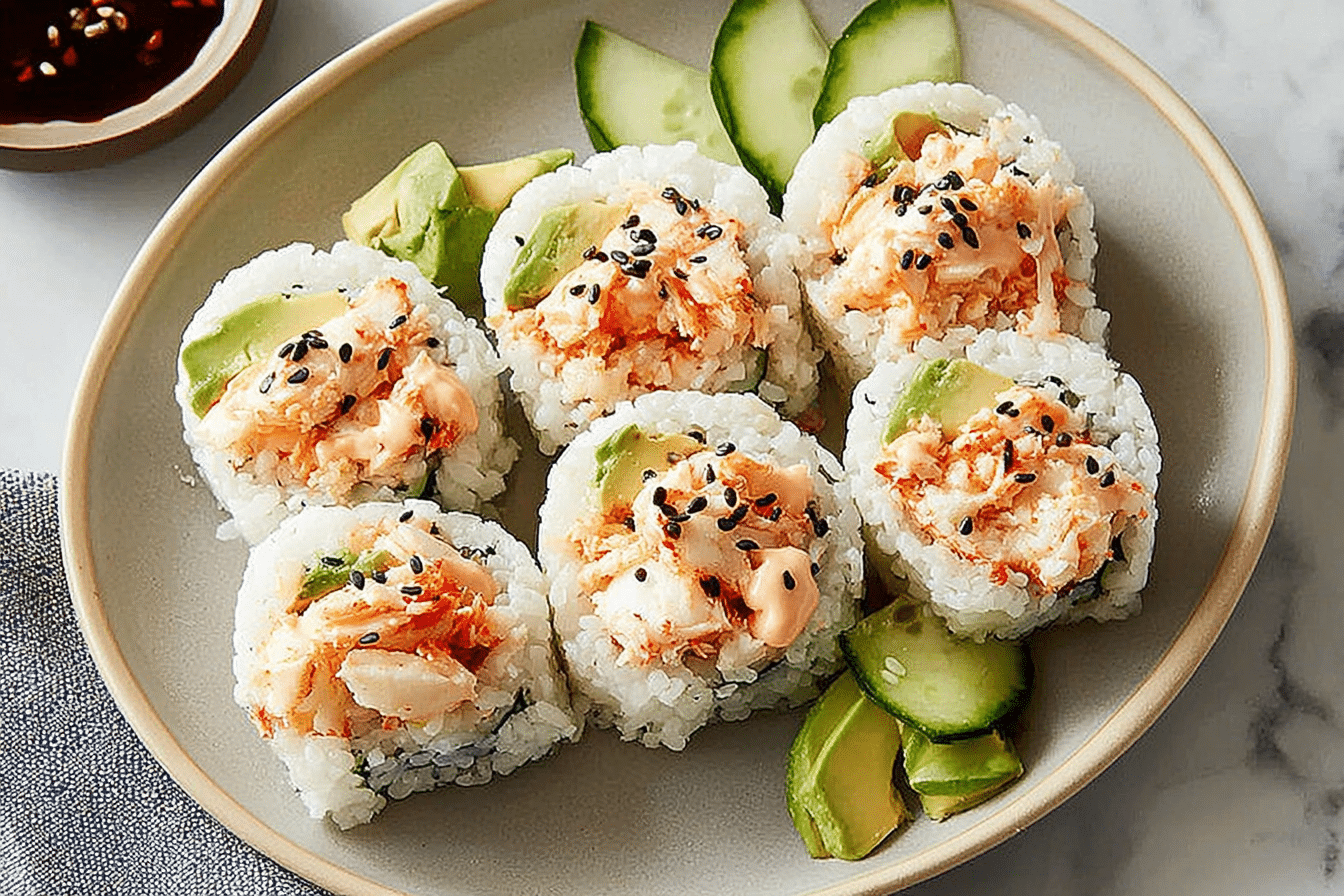
Kani sushi, also called a spicy crab roll, is a sushi-style dish made with seasoned rice, crab stick filling, creamy spicy sauce, and crisp seaweed. It delivers a balanced mix of soft rice, rich filling, and a gentle heat from chili-based sauce. Each slice shows a neat spiral of rice and crab, making it visually appealing for meals or shared plates.
This roll is commonly prepared in home kitchens using basic sushi ingredients and a bamboo mat. The crab mixture is typically made from imitation crab sticks mixed with mayonnaise and chili sauce, then layered with sushi rice and rolled tightly in nori. Once sliced, each piece holds its shape while maintaining a soft and creamy center.
The flavor profile is mild yet layered, combining sweetness from crab sticks, tang from seasoned rice, and warmth from spicy sauce. It works well as a starter, lunch item, or light dinner option. The preparation process is straightforward once ingredients are ready, and rolling becomes easier with practice.
Ingredients Overview
Sushi rice forms the base of kani sushi. It has a sticky texture after cooking, which helps hold the roll together. The rice is typically seasoned with rice vinegar to add mild tang and balance the overall flavor. Properly cooked rice is soft but still structured enough to support rolling.
Imitation crab sticks, also called kani sticks, provide the main filling. They have a mild seafood flavor and a soft, flaky texture. When shredded, they mix well with creamy sauce and spread evenly across the roll. Real crab meat can also be used for a richer flavor, though imitation crab is more common for this style.
Mayonnaise is used to create a creamy filling base. It binds the crab sticks together and adds smooth texture. Japanese-style mayonnaise is often preferred for its slightly richer taste, but standard mayonnaise also works well.
Chili sauce or sriracha adds heat and depth. The amount can be adjusted depending on preferred spice level. When mixed with mayonnaise, it creates a creamy spicy blend that coats the crab evenly.
Nori sheets (seaweed sheets) hold the roll together. They provide structure and a slight ocean flavor that complements the filling. When combined with rice, they form the outer layer of the roll.
Optional additions include cucumber strips or avocado slices. These add crunch or creaminess depending on choice. Sesame seeds can also be sprinkled on rice for light texture and aroma.
All ingredients work together to form a layered sushi roll with soft rice, creamy filling, and a subtle spicy finish.
Ingredients
2 cups sushi rice
2 1/2 cups water
1/4 cup rice vinegar
1 tablespoon sugar
1/2 teaspoon salt
10 imitation crab sticks (kani sticks)
1/3 cup mayonnaise
1 to 2 tablespoons chili sauce (sriracha)
4 sheets nori (seaweed)
1/2 cucumber, cut into thin strips
1/2 avocado, sliced (optional)
1 tablespoon sesame seeds
Soy sauce for serving
Bamboo sushi mat
Step-by-Step Instructions
Begin by preparing sushi rice. Rinse rice under cold water until water runs clear. This removes excess starch and helps achieve proper texture. Cook rice with measured water until soft and fully cooked. Allow it to rest briefly after cooking.
In a small bowl, mix rice vinegar, sugar, and salt until dissolved. Pour this mixture over warm rice. Gently fold rice using a flat utensil to distribute seasoning evenly. Allow rice to cool to room temperature before assembling rolls.
Prepare the crab filling by shredding imitation crab sticks into thin strips. Place shredded crab in a bowl. Add mayonnaise and chili sauce. Mix until crab is evenly coated and creamy. Adjust spice level based on preference.
Lay a bamboo sushi mat on a flat surface. Place one sheet of nori on top with shiny side facing down. Spread a thin layer of seasoned rice over the nori, leaving a small border at the top edge.
Sprinkle sesame seeds over rice if desired. Flip the nori carefully so rice faces downward on the mat. This step helps create a tighter roll structure.
Place crab mixture in a horizontal line across the center of the nori. Add cucumber strips or avocado slices if using. Keep filling even to support consistent rolling.
Lift the edge of the bamboo mat and begin rolling forward while pressing gently. Continue rolling until a firm cylinder forms. Apply light pressure to shape the roll without crushing ingredients.
Seal the edge of the nori with a small amount of water. Press lightly to secure the roll. Repeat the process with remaining ingredients.
Use a sharp knife to slice the roll into even pieces. Clean the knife between cuts for smoother edges. Each slice should show a spiral of rice and filling.
Serve immediately with soy sauce on the side. The roll should hold shape while remaining soft inside.
Avoid overfilling the roll, as this can cause tearing. Also avoid using hot rice, since it can make nori lose structure during rolling.
Tips, Variations & Substitutions
Real crab meat can replace imitation crab for a richer seafood flavor. It creates a softer texture and deeper taste profile.
Spice level can be adjusted by increasing or reducing chili sauce. A milder version uses only mayonnaise for a creamy filling without heat.
Cucumber adds a crisp texture that contrasts with soft rice and crab. Avocado adds smoothness and creates a richer mouthfeel.
Brown rice can be used instead of sushi rice for a more fibrous texture. It requires slightly more pressure during rolling due to reduced stickiness.
Adding cream cheese creates a thicker filling with a smooth texture. This variation is common in fusion-style sushi rolls.
Sesame seeds can be toasted before use for stronger aroma and flavor. They add light crunch to the outer rice layer.
Serving Ideas & Occasions
Kani sushi works well as a lunch dish, shared appetizer, or light dinner plate. It pairs well with miso soup, light salads, or pickled vegetables.
It is often served at casual gatherings or homemade sushi nights. The roll format allows easy slicing and sharing.
Soy sauce is commonly used for dipping. A small amount of wasabi or pickled ginger can be served alongside to add contrast.
Cold green tea or light sparkling drinks pair well with the creamy and spicy profile of the roll.
Nutritional & Health Notes
Sushi rice provides carbohydrates for energy, while crab sticks offer protein content. Mayonnaise adds fat, creating a more filling dish.
Vegetable additions such as cucumber or avocado increase fiber and nutrient balance. Avocado also contributes healthy fats.
Portion size plays an important role since sushi rolls can become calorie dense depending on filling amount.
Reducing mayonnaise or using light versions can lower fat content while maintaining flavor balance.
FAQs
Can real crab be used instead of imitation crab?
Real crab can replace imitation crab in this roll. It gives a richer seafood taste and softer texture. It should be shredded before mixing with sauce to create an even filling. While imitation crab is more commonly used due to cost and availability, real crab creates a more premium flavor profile and works well in the same preparation method.
What type of rice works for sushi rolls?
Short-grain sushi rice is used for kani sushi because it becomes sticky after cooking. This stickiness helps the roll hold shape during slicing. Long-grain rice does not provide the same structure and may cause the roll to fall apart. Proper seasoning with vinegar mixture also supports texture and flavor balance.
How spicy can the filling be made?
Spice level depends on chili sauce amount. A small amount creates mild warmth, while larger amounts produce stronger heat. The mixture can be adjusted before assembly to match preference. Since mayonnaise softens spice intensity, balance is easy to control.
Can sushi rolls be prepared ahead of time?
Sushi rolls can be prepared a few hours in advance and stored in a cool place. Covering them prevents drying. However, they are typically enjoyed fresh for best texture. Rice may harden slightly over time, so early consumption is preferred.
What prevents the roll from falling apart?
Proper rice preparation and even pressure during rolling help maintain structure. Leaving a small border on nori also helps sealing. Using slightly damp hands when handling rice prevents sticking and improves control during assembly.
Can other vegetables be added?
Vegetables such as carrots, bell peppers, or lettuce can be added. They provide crunch and color variation. It is important to cut them into thin strips so they do not interfere with rolling.
What dipping sauces work with kani sushi?
Soy sauce is commonly used for dipping. Light spicy mayo or eel sauce can also be served alongside. These sauces complement the creamy filling and enhance overall flavor without overpowering the roll.