
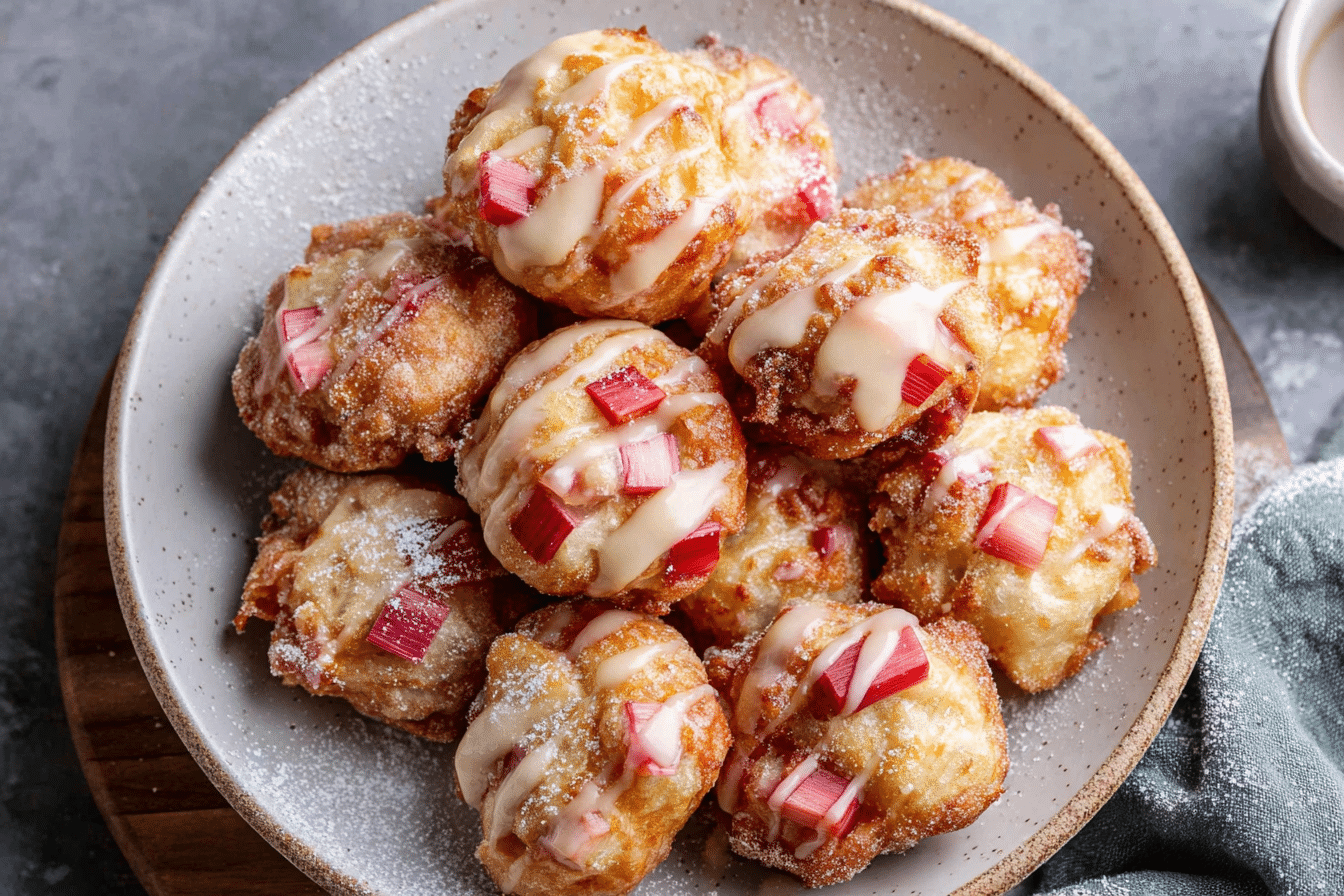
Baked rhubarb fritters bring together tart fruit flavor and a tender baked dough in a warm pastry-style bite. The rhubarb softens during baking, releasing a bright tang that blends with lightly sweet batter pockets and a crisp golden surface.
This preparation avoids frying, relying on oven heat to develop structure and texture. The result is a tray of rustic fritters with soft centers and lightly browned edges, ideal for serving fresh from the oven or at room temperature during gatherings or afternoon breaks.
Ingredients Overview
Rhubarb forms the centerpiece of this baked fritter recipe, offering a naturally tart profile that balances the mild sweetness of the batter. Fresh stalks are preferred for their firm texture and vivid color. When baked, rhubarb softens and releases juices that flavor the surrounding dough.
All-purpose flour provides structure, holding the fritters together while still allowing a tender crumb. Baking powder introduces lift, creating airy pockets throughout the dough. A moderate amount of sugar offsets rhubarb’s sharpness without overpowering its character.
Eggs contribute richness and help bind ingredients, while milk adds moisture and smoothness. Melted butter gives subtle depth and a soft, rich mouthfeel. Vanilla extract adds aromatic warmth that rounds out the flavor profile.
For variation, whole wheat flour can replace part of the all-purpose flour for a slightly denser texture. Plant-based milk and dairy-free butter alternatives can be used for a dairy-free version. A touch of orange zest or lemon zest can be added to brighten the overall flavor. If rhubarb is unavailable, tart apples or cranberries may offer a similar contrast in acidity, though texture and moisture will differ slightly.
Together, these ingredients create a balanced baked fritter with soft interior structure, crisp edges, and a bright fruit-forward character.
Ingredients
2 cups fresh rhubarb, chopped into small pieces
2 cups all-purpose flour
2 teaspoons baking powder
1/2 teaspoon salt
1/2 cup granulated sugar
2 large eggs
3/4 cup whole milk
1/4 cup melted unsalted butter
1 teaspoon vanilla extract
1/2 teaspoon ground cinnamon
1 tablespoon lemon zest
2 tablespoons additional sugar for topping
1 tablespoon melted butter for brushing
Step-by-Step Instructions
Begin by preparing the rhubarb. Wash the stalks thoroughly and trim any tough ends. Chop into small, even pieces to promote consistent baking. Set aside while preparing the batter.
In a large mixing bowl, combine flour, baking powder, salt, sugar, and cinnamon. Stir until evenly distributed so the leavening agent spreads uniformly throughout the mixture. This step supports even rise during baking.
In a separate bowl, whisk eggs until smooth. Add milk, melted butter, vanilla extract, and lemon zest. Whisk until the mixture becomes cohesive and lightly frothy. This liquid blend carries flavor and moisture through the fritter dough.
Gradually pour the liquid mixture into the dry ingredients. Stir gently using a spatula or wooden spoon until a thick batter forms. Avoid overmixing, as excessive stirring can reduce tenderness in the final bake.
Fold in chopped rhubarb carefully. The goal is even distribution without breaking down the fruit pieces. The batter will appear thick with visible fruit throughout.
Preheat the oven to 375°F (190°C). Line a baking sheet with parchment paper to prevent sticking and support even browning. Scoop portions of batter onto the tray, spacing them apart to allow expansion.
Lightly flatten each portion to encourage even baking. Brush the tops with melted butter and sprinkle with a small amount of sugar for a lightly crisp surface finish.
Bake for 18–22 minutes until the edges turn golden and the centers set firmly. The rhubarb should appear soft and slightly jam-like within the dough. Avoid overbaking, as dryness can develop quickly.
Remove from oven and allow fritters to rest for several minutes before serving. This resting period helps internal structure stabilize while preserving tenderness.
Tips, Variations & Substitutions
Chopping rhubarb into uniform pieces supports consistent texture throughout each fritter. Larger pieces may remain firm, while smaller cuts blend more smoothly into the dough.
For a deeper flavor profile, a small amount of nutmeg can be added alongside cinnamon. Almond extract can replace vanilla for a slightly nutty aroma.
A portion of the flour may be replaced with oat flour for a slightly heartier texture. Plant-based milk alternatives such as oat milk or almond milk function well without altering structure significantly.
If a softer fritter is preferred, reduce baking time slightly and remove from the oven as soon as edges show light browning. For a firmer texture, extend baking by a few minutes while monitoring closely.
Serving Ideas & Occasions
Baked rhubarb fritters pair well with light accompaniments such as vanilla yogurt, whipped cream, or a dusting of powdered sugar. A drizzle of honey or light citrus glaze can add contrast to the tart fruit notes.
They fit well into brunch spreads, afternoon pastry selections, or casual dessert trays. Warm fritters serve particularly well during cool weather gatherings, while room-temperature servings suit picnic-style settings.
Beverage pairings include herbal teas, lightly brewed coffee, or chilled milk. Their balance of tart and mild sweetness allows flexible pairing across different serving styles.
Nutritional & Health Notes
Rhubarb contributes dietary fiber and naturally occurring plant compounds while remaining low in calories. Combined with flour and eggs, the fritters provide a moderate balance of carbohydrates, fats, and protein.
Sugar content can be adjusted slightly depending on preference, though reduction may intensify rhubarb’s tart profile. Using whole wheat flour increases fiber content and adds a denser texture.
Baking instead of frying reduces added fat, offering a lighter pastry-style option. Portion size plays an important role in overall balance, as fritters remain a baked treat with moderate energy content.
FAQs
Can frozen rhubarb be used in this recipe?
Frozen rhubarb can be used without issue. It should be thawed and drained thoroughly before incorporation into the batter. Excess moisture can alter texture, so gentle pressing helps remove extra liquid. Once prepared, frozen rhubarb behaves similarly to fresh in baking applications, though it may soften slightly more during oven time.
What type of flour works best for fritters?
All-purpose flour provides the most balanced structure for baked fritters. It supports a tender crumb while holding fruit pieces in place. Cake flour may produce a softer texture, while whole wheat flour creates a denser result. Blending flours allows adjustment of texture depending on preference.
Can the fritters be prepared in advance?
The batter may be prepared shortly before baking, though it is best baked promptly after mixing. Once baked, fritters store well in an airtight container at room temperature for a short period. Reheating in a low oven restores softness and warmth without drying the surface.
Why does rhubarb release liquid during baking?
Rhubarb contains high water content and natural acids that break down under heat. During baking, cell walls soften and release juice, which blends into the surrounding batter. This process contributes to the moist interior and slightly jam-like texture found in baked fritters.
How can sweetness be adjusted?
Sugar levels can be increased or decreased based on preference. Reducing sugar highlights rhubarb’s tart character, while adding slightly more creates a milder flavor profile. Toppings such as powdered sugar or glaze also influence perceived sweetness at serving time.
Can spices be adjusted or changed?
Cinnamon can be replaced or complemented with nutmeg, cardamom, or ginger. Each spice introduces a different aromatic profile that shifts the overall flavor direction. Small amounts are recommended to avoid overpowering the rhubarb.
What is the best way to store leftovers?
Leftover fritters should be kept in an airtight container at room temperature for short-term storage or refrigerated for longer freshness. Reheating in an oven helps restore texture. Avoid prolonged exposure to air, as it can lead to dryness over time.
PrintRhubarb Fritters Recipe Baked with Cinnamon Sugar Coating
Baked rhubarb fritters offer a tender baked pastry with tart rhubarb pieces, lightly sweet batter, and a golden finish perfect for warm servings.
- Prep Time: 15 minutes
- Cook Time: 20 minutes
- Total Time: 35 minutes
- Yield: 10 fritters 1x
Ingredients
2 cups chopped rhubarb
2 cups all-purpose flour
2 teaspoons baking powder
1/2 teaspoon salt
1/2 cup sugar
2 eggs
3/4 cup milk
1/4 cup melted butter
1 teaspoon vanilla extract
1/2 teaspoon cinnamon
1 tablespoon lemon zest
2 tablespoons sugar topping
1 tablespoon melted butter brushing
Instructions
- Chop rhubarb into small pieces.
- Combine dry ingredients in bowl.
- Whisk eggs, milk, butter, vanilla, zest.
- Mix wet into dry until batter forms.
- Fold in rhubarb evenly.
- Scoop onto baking tray.
- Bake at 375°F for 18–22 minutes.
- Cool slightly before serving
Notes
Best served warm. Adjust sugar based on tartness preference. Can substitute plant-based milk if desired.