
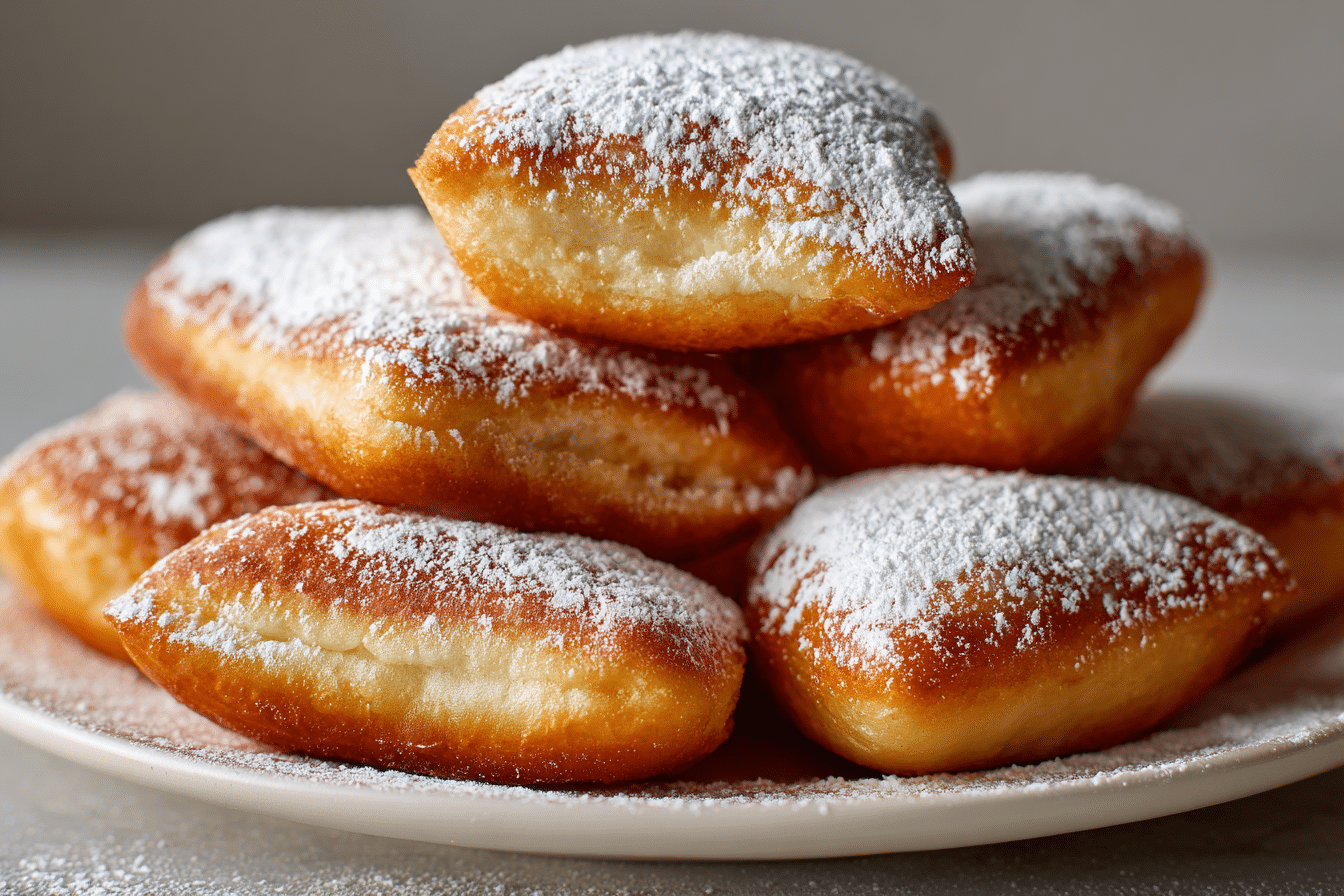
Soft, airy, and golden with a light dusting of powdered sugar — vanilla French beignets are a morning treat that feels like a warm hug. Originating in France and famously embraced by New Orleans, these deep-fried pastries are the kind of breakfast that transforms your kitchen into a cozy café.
What makes this version special is the addition of real vanilla — either from a bean or high-quality extract — lending the dough a fragrant depth. Served warm and puffy, these beignets are perfect for dipping into café au lait or hot chocolate. If you’ve never made them at home, you’ll be amazed at how satisfying and fun the process is. Think of them as the French cousin of the doughnut — but even lighter and less sweet.
This is the kind of breakfast that makes a weekend feel like a celebration. Let’s make it happen.
Ingredients Overview
Beignets may look fancy, but the ingredients are pantry staples. It’s the technique and timing that bring them to life.
All-Purpose Flour
The structure of your beignets depends on this. Stick to unbleached all-purpose flour for best results. Bread flour can be used for a chewier texture, but the goal here is pillowy softness.
Active Dry Yeast
This is what gives beignets their signature puff. Make sure your yeast is fresh and properly activated in warm water with sugar. If it doesn’t foam, it’s expired — start over.
Whole Milk
Milk adds richness to the dough. Warm it slightly to help activate the yeast, but don’t make it hot or you’ll kill the yeast.
Eggs
Eggs add tenderness and color. Room temperature eggs mix better and encourage better rise.
Butter
Melted butter gives the beignets a subtle richness without weighing them down. Use unsalted so you can control the salt level.
Granulated Sugar
Used in the dough and to activate the yeast. These aren’t overly sweet pastries, so just a bit is needed.
Salt
Even in sweet recipes, salt balances flavor. Don’t skip it — your beignets would taste flat.
Vanilla Extract or Vanilla Bean
This is the heart of the recipe. Use real vanilla extract or scrape a vanilla bean into the dough for a fragrant, elegant twist.
Powdered Sugar
A generous snowfall of powdered sugar on warm beignets is non-negotiable. Sift it for a fine, bakery-style finish.
Step-by-Step Instructions
-
Activate the Yeast
In a small bowl, mix warm milk (around 105–110°F) with 1 tablespoon of sugar and the yeast. Let it sit for 5–10 minutes until it becomes foamy. If it doesn’t foam, discard and try again. -
Mix the Wet Ingredients
In a large bowl or stand mixer, combine the eggs, melted butter, remaining sugar, vanilla, and salt. Stir in the yeast mixture. -
Add the Flour
Gradually mix in the flour — about one cup at a time — until a soft, slightly sticky dough forms. You may not need all the flour, or you might need a bit more depending on humidity. -
Knead the Dough
Knead for 8–10 minutes until smooth and elastic. In a stand mixer with a dough hook, it should pull away from the sides and form a ball. Don’t over-flour — a tacky dough yields softer beignets. -
First Rise
Place the dough in a greased bowl, cover with plastic wrap or a damp towel, and let it rise in a warm spot for 1.5 to 2 hours until doubled in size. -
Roll and Cut
Punch down the dough and turn it out onto a floured surface. Roll it to about ½ inch thick. Use a sharp knife or pizza cutter to cut 2.5-inch squares. -
Second Rise
Arrange cut pieces on a floured tray, cover lightly, and let rise again for 30–45 minutes until puffy. -
Heat the Oil
In a heavy-bottomed pot, heat oil to 350°F. Use a thermometer — too hot and they’ll burn outside before cooking inside; too cool and they’ll soak up oil. -
Fry the Beignets
Fry 3–4 beignets at a time, flipping once, about 1–2 minutes per side. They should puff up dramatically and turn golden brown. -
Drain and Dust
Remove with a slotted spoon and place on paper towels. Immediately sift powdered sugar generously over the hot beignets.
Tips, Variations & Substitutions
-
Vanilla Bean Bonus: For an elevated flavor, use the seeds from one vanilla bean in the dough and mix the pod into the milk while warming (remove before using).
-
Vegan Version: Substitute plant milk, vegan butter, and flax eggs. Frying method remains the same.
-
Dairy-Free: Almond or oat milk and coconut oil work well.
-
Gluten-Free: Use a 1:1 gluten-free flour blend with xanthan gum. The texture will be slightly different but still delicious.
-
Filled Beignets: After frying, inject with vanilla pastry cream or fruit jam for a café-style treat.
-
Cinnamon Sugar Twist: Toss warm beignets in cinnamon sugar instead of powdered sugar for a churro-inspired version.
Serving Ideas & Occasions
Vanilla French beignets shine brightest when served fresh and warm. Set them on a large platter with a bowl of hot chocolate or chicory coffee for dipping.
They’re a beautiful addition to:
-
Weekend brunch spreads with fruit, bacon, and eggs
-
Mother’s Day or birthday breakfasts
-
A cozy holiday morning like Christmas or New Year’s Day
-
A sweet send-off for overnight guests
For a festive touch, serve them in a paper cone dusted with extra sugar or alongside whipped cream and fresh berries.
Nutritional & Health Notes
Beignets are a treat — rich in carbs and lightly sweet, but they can fit into a balanced lifestyle when enjoyed occasionally. One standard beignet (fried in neutral oil and dusted with powdered sugar) provides roughly:
-
Calories: 150–200
-
Carbohydrates: 20–25g
-
Fat: 7–9g
-
Protein: 3–4g
To make them a bit lighter, use an air fryer (they won’t puff the same, but the flavor is still good), or bake them at 375°F for 10–12 minutes and brush with melted butter.
Pair with a protein-rich breakfast to balance the sugar spike, like eggs or Greek yogurt.
FAQs
Q1: Can I make the beignet dough ahead of time?
A1: Yes, you can prepare the dough the night before and let it rise slowly in the fridge. In the morning, bring it to room temperature, roll, cut, and fry. This makes breakfast easier and the flavor slightly deeper.
Q2: What’s the best oil for frying beignets?
A2: Use a neutral oil with a high smoke point like canola, peanut, or sunflower oil. Avoid olive oil, as its flavor is too strong and it has a lower smoke point.
Q3: Can I freeze beignets?
A3: Yes. Freeze the dough after shaping (before the second rise) on a tray, then transfer to a freezer bag. Let them thaw and rise before frying. You can also freeze fried beignets and reheat in the oven.
Q4: Why didn’t my beignets puff up?
A4: This could be due to old yeast, under-proofing, or oil that’s too cold. Make sure your dough has doubled in size and that your oil is at 350°F.
Q5: Do I need a stand mixer?
A5: No, beignet dough can be mixed and kneaded by hand. It takes a bit more elbow grease, but the results are just as soft and airy.
Q6: How long do beignets stay fresh?
A6: Beignets are best eaten within an hour of frying. They go stale quickly, but you can reheat them in the oven at 300°F for 5–8 minutes to revive some of the texture.
Q7: Can I use vanilla paste instead of extract?
A7: Absolutely. Vanilla paste gives a richer flavor and those beautiful flecks of vanilla bean. Use a 1:1 ratio to substitute for extract.
PrintVanilla French Beignets Recipe – Easy Yeast Breakfast Treat
Classic vanilla French beignets — soft, airy, and deep-fried to golden perfection. A breakfast pastry dusted in powdered sugar and packed with vanilla flavor.
- Prep Time: 20 minutes
- Cook Time: 20 minutes
- Total Time: 2 hours 30 minutes (includes rise time)
- Yield: 18–24 beignets 1x
Ingredients
-
3 ½ cups all-purpose flour
-
2 ¼ tsp active dry yeast
-
¾ cup whole milk, warm
-
¼ cup granulated sugar
-
2 large eggs, room temperature
-
¼ cup unsalted butter, melted
-
1 tsp salt
-
2 tsp pure vanilla extract or seeds from 1 vanilla bean
-
Vegetable oil, for frying
-
Powdered sugar, for dusting
Instructions
-
In a small bowl, mix warm milk, 1 tbsp sugar, and yeast. Let sit until foamy.
-
In a large bowl, whisk eggs, remaining sugar, melted butter, vanilla, and salt. Add yeast mixture.
-
Mix in flour gradually until dough forms. Knead 8–10 minutes until smooth.
-
Place dough in greased bowl, cover, and let rise 1.5–2 hours until doubled.
-
Roll out to ½ inch thick, cut into 2.5-inch squares.
-
Place on floured tray, cover, and let rise another 30–45 minutes.
-
Heat oil to 350°F. Fry in batches for 1–2 minutes per side.
-
Drain on paper towels. Dust generously with powdered sugar while warm.
Notes
Use vanilla bean for deeper flavor. Can be frozen before or after frying. Try cinnamon sugar or filled versions for variety.