
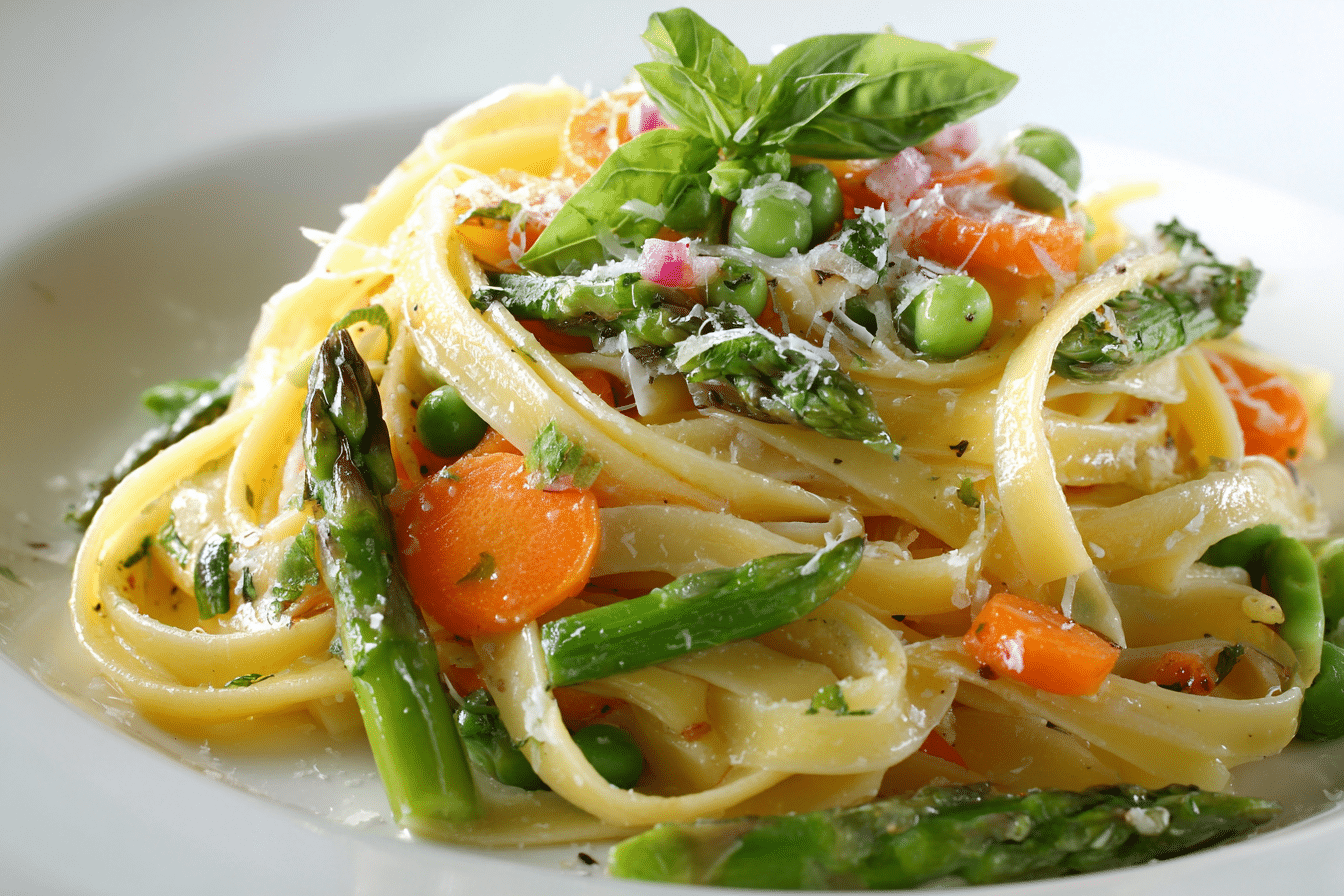
Spring Vegetable Pasta is a light, colorful dish that celebrates the season’s freshest produce. Bursting with tender asparagus, sweet peas, vibrant bell peppers, and delicate zucchini, this pasta is a feast for the senses. Tossed in a simple olive oil or light cream sauce, the vegetables maintain their bright flavors and crisp textures, making this an ideal dish for a refreshing weeknight dinner or a special occasion lunch. Spring Vegetable Pasta delivers a balance of textures, flavors, and colors that is both comforting and visually stunning.
This recipe is versatile, allowing for seasonal adjustments based on what vegetables are available. Baby spinach, snap peas, or artichoke hearts can be added for variety, while herbs like basil, parsley, or thyme elevate the freshness. Lightly cooked pasta absorbs the flavors of the sautéed vegetables, garlic, and olive oil, creating a harmonious, aromatic dish. Spring Vegetable Pasta is easy to prepare, naturally vibrant, and ideal for those seeking a vegetable-forward, healthy, and satisfying meal.
Ingredients Overview
The success of Spring Vegetable Pasta lies in fresh, high-quality vegetables and simple, well-balanced seasoning. Asparagus and zucchini provide a tender crunch, while bell peppers add natural sweetness. Sweet peas contribute a pop of color and light sweetness, and baby spinach adds an earthy note while wilting beautifully into the warm pasta. Seasonal vegetables can be swapped according to preference or availability.
Olive oil is essential for sautéing, giving a smooth coating and bringing out natural vegetable flavors. Garlic and shallots enhance aroma and depth, while a touch of lemon juice brightens the dish. Parmesan or pecorino cheese adds a savory, creamy element, though the dish can be made vegan by skipping cheese or using a plant-based alternative. Pasta choice affects the dish’s texture: long strands like linguine or fettuccine work well for wrapping around vegetables, while penne or farfalle provides a chunkier bite. Herbs such as basil or parsley finish the dish with fragrant notes, while optional pine nuts or toasted breadcrumbs provide a satisfying crunch.
Ingredients
12 ounces pasta (fettuccine, linguine, or penne)
2 tablespoons olive oil
2 cloves garlic, minced
1 small shallot, finely chopped
1 cup asparagus, trimmed and cut into 2-inch pieces
1 small zucchini, sliced into half-moons
1 yellow bell pepper, thinly sliced
1 cup peas (fresh or frozen)
2 cups baby spinach
1/2 cup grated parmesan cheese
Zest of 1 lemon
Juice of 1 lemon
Salt and black pepper, to taste
2 tablespoons chopped fresh basil
2 tablespoons toasted pine nuts (optional)
Step-by-Step Instructions
-
Bring a large pot of salted water to a boil. Cook the pasta according to package directions until al dente. Reserve 1/2 cup of pasta water and drain the rest.
-
While pasta cooks, heat olive oil in a large skillet over medium heat. Add garlic and shallots and sauté for 2–3 minutes until fragrant and translucent.
-
Add asparagus, zucchini, and bell pepper to the skillet. Cook for 4–5 minutes, stirring occasionally, until vegetables are tender-crisp.
-
Add peas and baby spinach, stirring until the spinach wilts and peas are heated through, about 2 minutes. Season with salt and black pepper.
-
Reduce heat to low and add cooked pasta to the skillet. Toss gently to combine, coating the pasta with vegetables. Add reserved pasta water as needed to create a light sauce.
-
Stir in lemon juice and zest, and sprinkle with parmesan cheese. Toss gently to combine and adjust seasoning as needed.
-
Remove from heat and garnish with fresh basil and optional toasted pine nuts. Serve immediately for the best texture and flavor.
Tips, Variations & Substitutions
Use fresh, seasonal vegetables to ensure vibrant flavor and texture. Avoid overcooking vegetables to maintain their crispness. Swap vegetables based on availability—baby carrots, snap peas, or artichoke hearts all work beautifully.
For a richer flavor, add a splash of cream or a knob of butter. Protein additions such as grilled chicken, shrimp, or chickpeas turn this into a heartier dish. Gluten-free or whole-grain pasta can be used to suit dietary preferences. Herbs like parsley, tarragon, or thyme add fragrance, while toasted pine nuts or breadcrumbs add crunch. A touch of crushed red pepper flakes provides subtle heat.
Serving Ideas & Occasions
Spring Vegetable Pasta pairs well with a crisp white wine, such as Sauvignon Blanc, or sparkling water with a slice of lemon. Serve alongside a fresh salad, crusty bread, or roasted vegetables for a complete, fresh meal.
Perfect for spring or summer dinners, casual lunch gatherings, or brunches, this dish is visually appealing and flavorful. Its bright colors and fresh flavors make it a stunning addition to any table, ideal for entertaining or enjoying a light, satisfying meal at home.
Nutritional & Health Notes
This pasta is rich in vitamins, minerals, and fiber from fresh vegetables. Olive oil adds heart-healthy fats, and parmesan cheese contributes protein and calcium. Whole-grain pasta increases fiber and provides sustained energy.
For a lighter version, skip cheese or use a plant-based alternative, and reduce the amount of olive oil if desired. Adding a variety of vegetables boosts nutrient density and keeps the dish balanced. The result is a healthy, colorful, and flavorful pasta that provides a satisfying balance of carbohydrates, fats, and protein.
FAQs
Can I make Spring Vegetable Pasta ahead of time?
Yes, but vegetables are best served fresh to maintain texture. Store cooked pasta and sautéed vegetables separately in airtight containers for up to two days. Reheat gently in a skillet, adding a splash of pasta water if needed.
What pasta works best for this dish?
Long pasta like fettuccine or linguine allows the vegetables to mix well with each strand, while short pasta like penne or farfalle provides chunkier bites. Whole-grain or gluten-free pasta is a suitable alternative.
Can I make this dish vegan?
Absolutely. Omit parmesan cheese or use a plant-based alternative. Use olive oil or plant-based butter for sautéing, and ensure pasta is egg-free for a fully vegan version.
How do I prevent vegetables from becoming soggy?
Cook vegetables over medium heat and avoid overcooking. Add vegetables in stages based on their cooking times—denser vegetables like asparagus first, followed by softer ones like spinach.
Can I freeze Spring Vegetable Pasta?
Freezing is not recommended, as delicate vegetables can become mushy. If necessary, freeze pasta and sauce separately, and combine with fresh vegetables after reheating.
How can I enhance the flavor of this pasta?
Use fresh herbs, lemon zest, and high-quality olive oil. Optional ingredients like crushed red pepper flakes, toasted pine nuts, or a sprinkle of parmesan add depth and texture.
Can I add protein to this dish?
Yes, grilled chicken, shrimp, or chickpeas work well. Cook protein separately and toss with pasta just before serving to maintain the freshness and texture of vegetables.
PrintLight Spring Pasta with Fresh Garden Vegetables
: Light and colorful Spring Vegetable Pasta with tender seasonal vegetables, bright lemon, and a simple, flavorful sauce.
- Prep Time: 15 minutes
- Cook Time: 20 minutes
- Total Time: 35 minutes
- Yield: 4 servings 1x
Ingredients
12 ounces pasta (fettuccine, linguine, or penne)
2 tablespoons olive oil
2 cloves garlic, minced
1 small shallot, finely chopped
1 cup asparagus, trimmed and cut into 2-inch pieces
1 small zucchini, sliced into half-moons
1 yellow bell pepper, thinly sliced
1 cup peas (fresh or frozen)
2 cups baby spinach
1/2 cup grated parmesan cheese
Zest of 1 lemon
Juice of 1 lemon
Salt and black pepper, to taste
2 tablespoons chopped fresh basil
2 tablespoons toasted pine nuts (optional)
Instructions
-
Bring a large pot of salted water to a boil. Cook pasta until al dente. Reserve 1/2 cup pasta water and drain.
-
Heat olive oil in a skillet. Sauté garlic and shallot 2–3 minutes until fragrant.
-
Add asparagus, zucchini, and bell pepper. Cook 4–5 minutes until tender-crisp.
-
Add peas and spinach, stirring until wilted and heated through. Season with salt and pepper.
-
Add pasta and toss to combine, using reserved pasta water if needed.
-
Stir in lemon juice and zest, sprinkle with parmesan, and toss lightly.
-
Garnish with basil and pine nuts. Serve immediately.
Notes
Use fresh seasonal vegetables for best flavor. Avoid overcooking. Protein additions like chicken or shrimp are optional.