
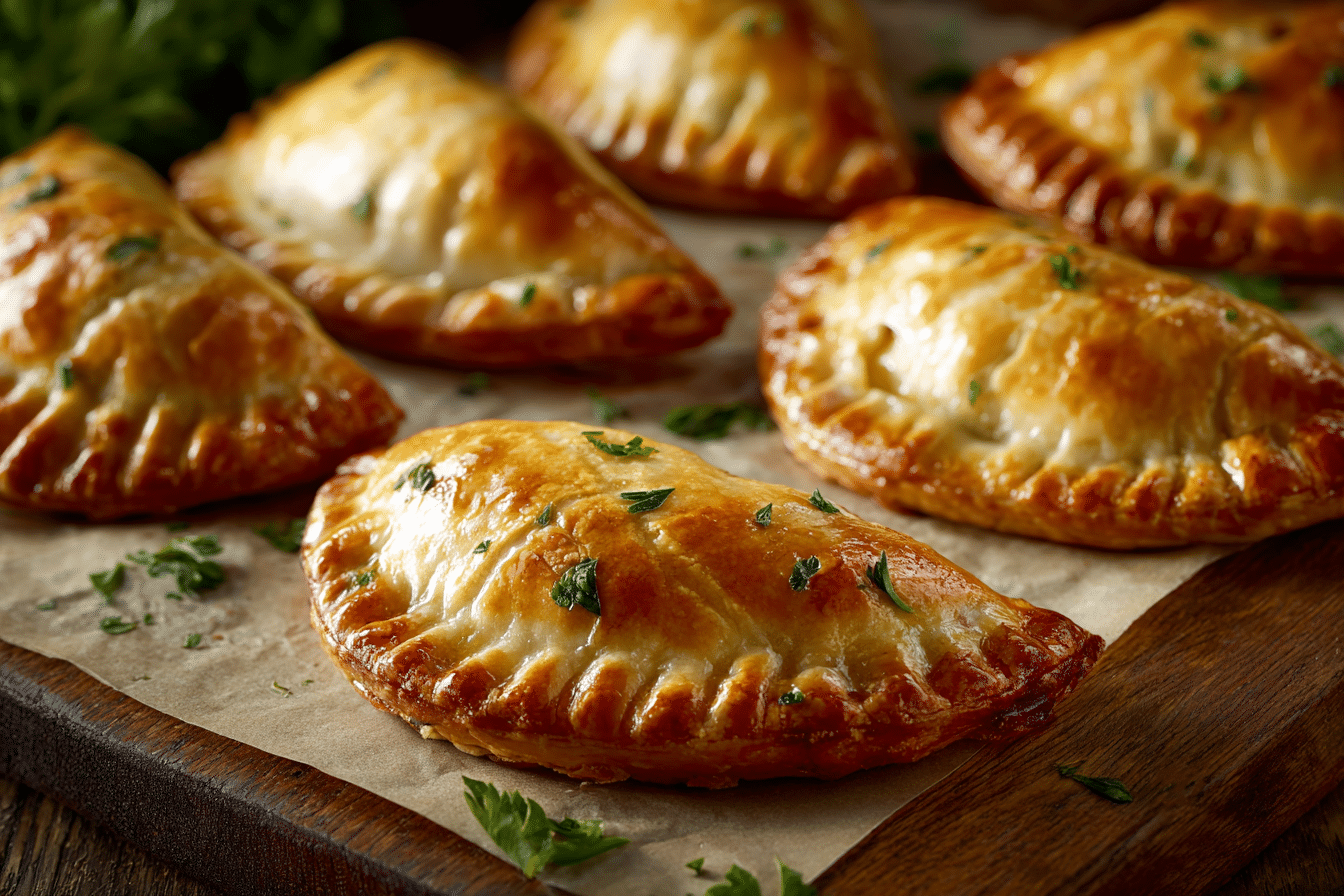
Irish Pasties carry the warmth of a rural kitchen, where sturdy ingredients transform into hand-held pies packed with rich flavor. These golden pastries feature flaky crust wrapped around a savory filling of beef, potatoes, onions, and herbs. Each bite delivers tender meat, soft vegetables, and buttery layers that crumble gently with every mouthful.
Across Ireland and neighboring regions, pasties have long served as a practical meal for farm laborers and families alike. Their sealed crust keeps the filling moist while baking, creating steam that melds the ingredients into a deeply satisfying mixture.
Irish Pasties remain popular because they strike a balance between simplicity and depth. The crust turns crisp and bronzed in the oven, while the interior stays hearty and aromatic. Served warm, they bring comfort without fuss, offering a meal that feels generous and grounding.
Ingredients Overview
The foundation of Irish Pasties begins with a sturdy pastry dough. All-purpose flour forms the structure, while cold unsalted butter creates flakiness. A small amount of salt sharpens flavor, and chilled water binds the dough without softening the butter. Keeping ingredients cold is essential for achieving distinct layers in the crust.
Beef is the traditional protein in Irish Pasties. Choose chuck or skirt steak, diced into small cubes. These cuts contain enough fat to remain tender during baking. Lean cuts can turn dry, so moderate marbling is preferred. If beef is unavailable, lamb offers a rich alternative that pairs beautifully with root vegetables.
Potatoes provide body and mild earthiness. Waxy varieties such as Yukon Gold hold their shape while softening gently inside the pastry. Starchy potatoes can break apart, creating a pasty filling that lacks texture.
Onions bring subtle sweetness and moisture. Finely chopped pieces distribute flavor evenly throughout the filling. Some cooks add rutabaga or carrot for additional depth and a touch of natural sweetness.
Fresh thyme and parsley lend herbal fragrance. A dash of black pepper adds warmth, while salt draws out the savory character of the beef. A small knob of butter placed inside each pasty before sealing melts during baking, enriching the interior.
For substitutions, ground beef can replace diced steak for a softer filling. Gluten-free flour blends designed for pastry can work in place of wheat flour, though the dough may require slightly extra moisture.
Step-by-Step Instructions
Begin by preparing the pastry dough. In a large bowl, combine flour and salt. Add cold butter cut into cubes. Using a pastry cutter or fingertips, work the butter into the flour until the mixture resembles coarse crumbs with visible pea-sized pieces. Drizzle in chilled water gradually, mixing just until the dough begins to come together.
Turn the dough onto a lightly floured surface and press it into a disc. Avoid overworking, as excessive handling can toughen the crust. Wrap tightly and refrigerate for at least 30 minutes. This resting period relaxes the gluten and firms the butter.
While the dough chills, prepare the filling. In a mixing bowl, combine diced beef, chopped potatoes, onions, thyme, parsley, salt, and pepper. Toss until evenly distributed. The ingredients should be raw at this stage; they will cook fully inside the pastry.
Preheat the oven to 400°F (200°C). Line a baking sheet with parchment paper.
Divide the chilled dough into equal portions. Roll each piece into a circle roughly 7 to 8 inches in diameter. Keep thickness even to promote uniform baking. If the dough sticks, dust lightly with flour.
Place a mound of filling on half of each dough circle, leaving a border around the edge. Add a small cube of butter on top of the filling. Fold the empty half of dough over to form a half-moon shape.
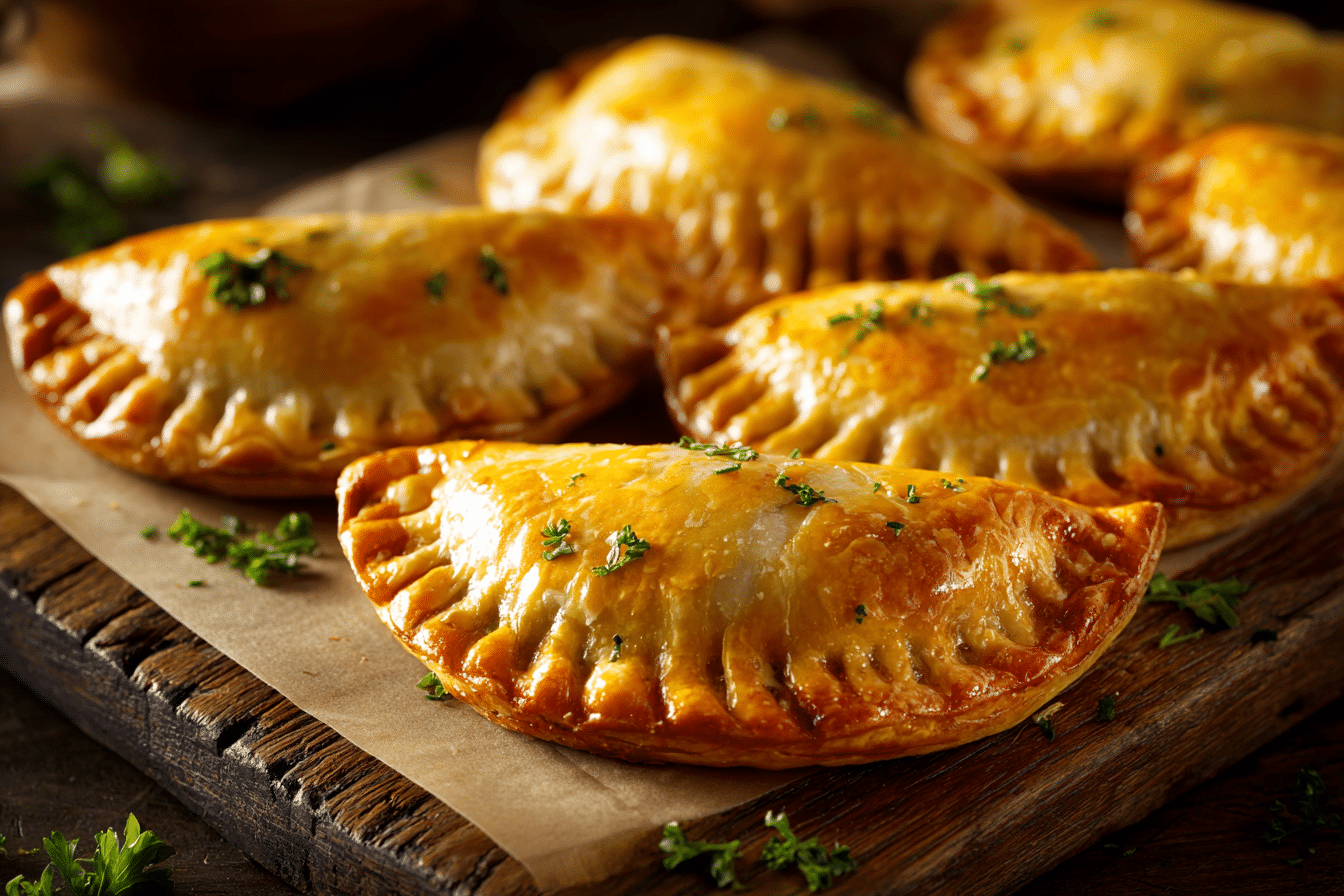
Press the edges together firmly. Crimp with a fork or fold the edge over itself to seal. Proper sealing prevents juices from escaping during baking. Cut a small slit in the top of each pasty to allow steam to escape.
Transfer the assembled Irish Pasties to the prepared baking sheet. Brush the tops with beaten egg for a glossy finish.
Bake for 40 to 45 minutes, until the crust turns deep golden brown and the filling bubbles gently through the vent. The pastry should feel firm to the touch. Remove from the oven and allow them to rest for 10 minutes before serving. This brief cooling period allows juices to settle, preventing spills when cutting.
Common mistakes include overfilling, which can cause splitting, and rolling the dough too thin, leading to leaks. Maintaining moderate thickness and sealing edges tightly helps achieve consistent results.
Tips, Variations & Substitutions
For added richness, sauté the onions briefly before mixing with the raw filling. This step softens their sharpness and adds subtle sweetness.
A dash of Worcestershire sauce can deepen the savory profile, though traditional versions rely solely on herbs, salt, and pepper. Smoked paprika introduces gentle warmth without overpowering the classic character.
Vegetarian Irish Pasties can feature mushrooms, lentils, and diced root vegetables. Mushrooms contribute umami notes, while lentils add protein and structure. Season generously to maintain depth.
For a lighter crust, replace a portion of butter with chilled vegetable shortening. This adjustment increases flakiness while keeping structure intact.
If preparing in advance, assemble the pasties and refrigerate for up to 24 hours before baking. They can also be frozen unbaked. Bake directly from frozen, adding 10 to 15 minutes to the cooking period.
Serving Ideas & Occasions
Irish Pasties pair well with simple sides that complement their hearty filling. A crisp green salad dressed with mustard vinaigrette adds brightness and contrast. Steamed cabbage with a touch of butter reflects traditional Irish flavors.
For gatherings, serve Irish Pasties alongside pickled vegetables and sharp cheddar. Their hand-held shape suits casual meals, picnics, and holiday celebrations.
During cooler months, present them with a bowl of vegetable soup or barley broth. The pastry’s richness balances lighter starters, creating a satisfying meal suitable for family dinners or festive events.
Nutritional & Health Notes
Irish Pasties provide protein from beef and carbohydrates from potatoes and pastry. The combination offers sustained energy and satiety. Including vegetables such as onions and optional carrots contributes fiber and micronutrients.
Butter and beef contain saturated fat, so portion awareness is helpful for balanced eating. Choosing leaner cuts of beef can reduce overall fat content while preserving flavor.
Homemade preparation allows control over sodium levels. Adjust salt gradually to suit dietary preferences. When paired with fresh vegetables, Irish Pasties fit comfortably within a varied meal plan.
FAQs
Can Irish Pasties be prepared in advance?
Yes, Irish Pasties can be assembled a day ahead and stored in the refrigerator before baking. Keep them covered to prevent the dough from drying. When ready to bake, brush with egg wash and place directly into a preheated oven. If freezing, arrange unbaked pasties on a tray until firm, then transfer to airtight containers. Bake from frozen, extending the cooking period slightly. This approach maintains texture and flavor without compromising quality.
How do I prevent the crust from turning soggy?
Sogginess often occurs when excess moisture escapes from the filling. Dice vegetables evenly and avoid overly wet ingredients. Sealing the edges firmly keeps juices contained. Cutting a small vent in the top allows steam to escape gradually, reducing condensation inside the pastry. Baking at a consistent high temperature also promotes crispness. Allowing the pasties to rest briefly after baking further helps the crust set properly.
Can ground beef replace diced steak?
Ground beef can serve as a substitute for diced steak in Irish Pasties. The texture will differ, creating a softer filling rather than distinct chunks. Choose ground beef with moderate fat content to prevent dryness. Season carefully, as ground meat distributes spices more evenly. Some cooks lightly brown ground beef before assembling, though traditional versions use raw filling that cooks inside the pastry.
What herbs pair well with Irish Pasties?
Thyme and parsley remain traditional choices due to their subtle fragrance and compatibility with beef and potatoes. Rosemary adds pine-like depth, though it should be used sparingly to avoid overpowering the filling. Bay leaf can infuse additional aroma if the filling is briefly sautéed before assembly. Fresh herbs generally offer brighter flavor compared to dried varieties, though both can work effectively.
Are Irish Pasties served hot or cold?
Irish Pasties are typically enjoyed warm, shortly after baking, when the crust remains crisp and the filling tender. However, they can also be eaten at room temperature, making them suitable for packed lunches or outdoor meals. If reheating, place them in an oven rather than a microwave to maintain crust texture. Gentle reheating prevents the pastry from softening excessively.
How should leftovers be stored?
Store leftover Irish Pasties in an airtight container in the refrigerator for up to three days. Allow them to cool completely before storage to avoid trapped condensation. Reheat in a preheated oven at 350°F (175°C) until warmed through. This method helps restore the crust’s crisp texture. Avoid stacking them while warm, as trapped steam can soften the pastry.
Can I add cheese to the filling?
Cheese can be added for extra richness. Sharp cheddar complements the savory beef and potatoes without overpowering traditional flavors. Grate the cheese and sprinkle a small amount over the filling before sealing each pasty. Keep portions moderate to prevent excessive moisture during baking. The cheese melts into the mixture, creating a creamy interior that contrasts with the flaky crust.
PrintIrish Pasties Recipe: Golden Hand Pies with Beef and Potatoes
Irish Pasties are hand-held savory pastries filled with diced beef, potatoes, onions, and herbs, wrapped in flaky crust and baked until golden brown.
- Prep Time: 25 minutes
- Cook Time: 45 minutes
- Total Time: 1 hour 10 minutes
- Yield: 4 pasties 1x
Ingredients
2 1/2 cups all-purpose flour
1 teaspoon salt
1 cup unsalted butter, cold and cubed
6 to 8 tablespoons chilled water
12 ounces beef chuck, diced small
2 medium Yukon Gold potatoes, peeled and diced
1 small onion, finely chopped
1 tablespoon fresh parsley, chopped
1 teaspoon fresh thyme leaves
1/2 teaspoon black pepper
1 teaspoon salt
2 tablespoons butter, divided into small cubes
1 egg, beaten for brushing
Instructions
-
Combine flour and salt in a large bowl.
-
Cut in cold butter until the mixture resembles coarse crumbs.
-
Add chilled water gradually and mix until dough forms.
-
Shape into a disc, wrap, and refrigerate for 30 minutes.
-
In a bowl, mix beef, potatoes, onion, parsley, thyme, salt, and pepper.
-
Preheat oven to 400°F (200°C) and line a baking sheet with parchment.
-
Divide dough into 4 portions and roll each into a 7 to 8 inch circle.
-
Place filling on half of each circle and top with a small cube of butter.
-
Fold dough over, seal edges, and crimp with a fork.
-
Cut a small slit on top and brush with beaten egg.
-
Bake for 40 to 45 minutes until golden brown.
-
Rest for 10 minutes before serving.
Notes
Keep butter cold for flaky crust.
Seal edges tightly to prevent leaking.
Bake from frozen by adding 10 to 15 minutes.