
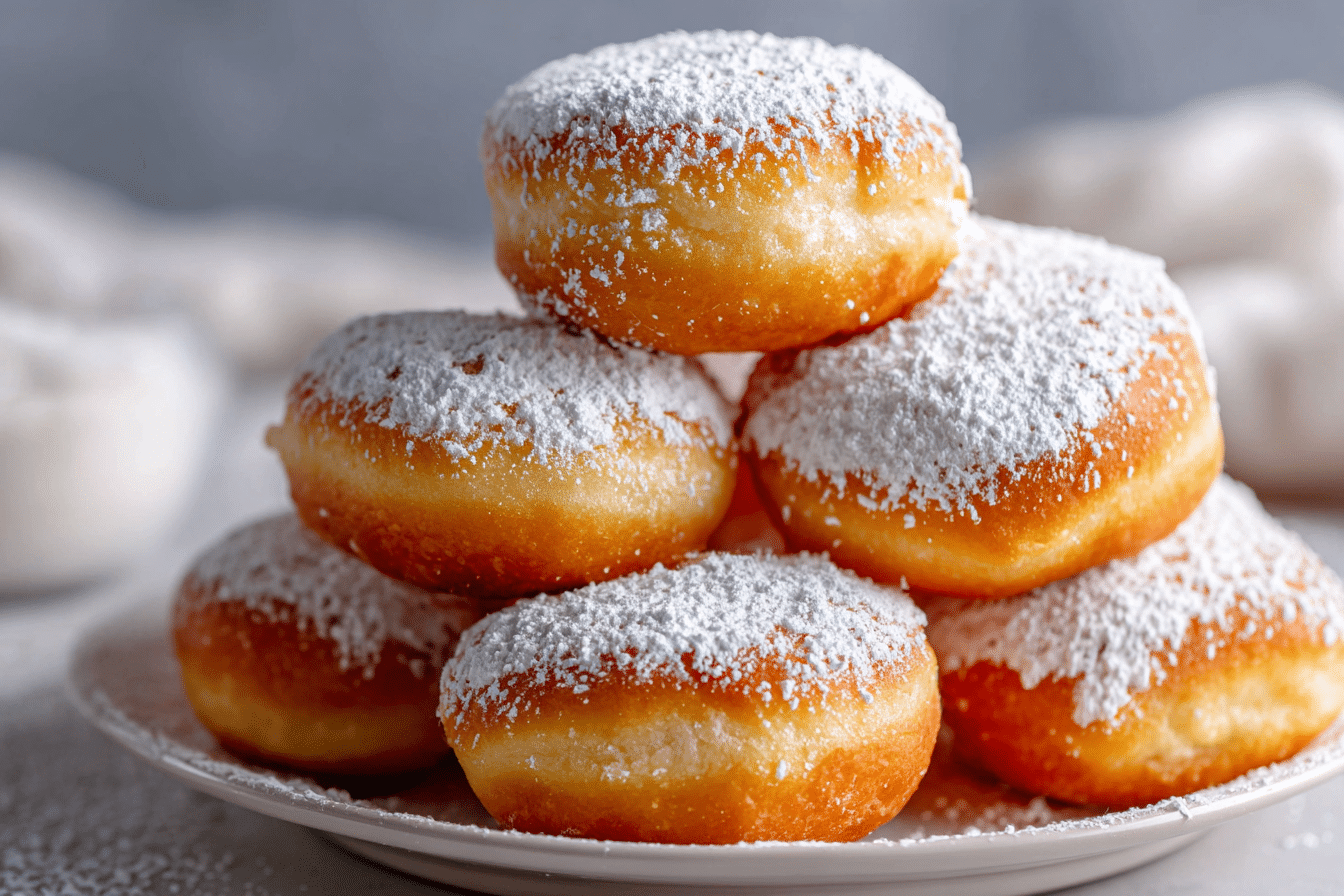
Vanilla French beignets are a delicate, fluffy indulgence that transport you straight to a café in Paris with just one bite. Crisp on the outside, tender and pillowy on the inside, these golden pastries are dusted generously with powdered sugar and laced with a soft, fragrant vanilla essence that lingers pleasantly on the tongue.
I first encountered fresh beignets in a tiny bakery tucked in a quiet corner of Montmartre. They were simple, still warm, and utterly unforgettable. Recreating them at home, I knew they had to be more than just dough fried in oil—they had to capture that perfect balance of texture and aroma, with just enough sweetness and a whisper of vanilla woven through the batter.
Unlike heavier doughnuts, French beignets feel light and almost cloudlike. Whether served with coffee, dipped in chocolate, or simply enjoyed straight from the paper bag, they’re a beautiful way to bring a little bit of France into your kitchen.
Ingredients Overview
Vanilla French beignets rely on a few classic ingredients that work together to create that perfect light texture and rich flavor. Here’s what makes them so special:
All-Purpose Flour: Provides the base structure for the dough. It creates a soft crumb with enough strength to hold the puffed shape when fried.
Milk: Whole milk is preferred for richness, helping to tenderize the dough and add moisture. Warm milk activates the yeast more evenly than cold.
Yeast: Either active dry or instant yeast works. Yeast gives the beignets their rise and airiness, making them puff dramatically when they hit hot oil.
Sugar: A small amount of granulated sugar sweetens the dough and helps with browning. It’s also part of what gives the beignets a golden crust.
Eggs: Eggs add richness, structure, and color. They also contribute to the smoothness and pliability of the dough.
Butter: Softened unsalted butter enriches the dough, creating a tender bite and subtle buttery flavor.
Salt: Balances the sweetness and enhances all the other flavors.
Vanilla Extract: The heart of this recipe. A good-quality pure vanilla extract makes all the difference, infusing the dough with its gentle aroma and warmth.
Powdered Sugar: For finishing—liberally dusted over the hot beignets, it melts slightly into a sweet, snowy coating.
You can also substitute half of the vanilla extract with vanilla bean paste for more intense flavor and specks of vanilla throughout.
Step-by-Step Instructions
-
Warm the Milk and Activate Yeast
Warm ¾ cup of whole milk until just warm to the touch (about 100°F). Add 2 ¼ tsp active dry yeast and 1 tbsp sugar. Stir and let sit for 5–10 minutes until foamy. If it doesn’t foam, your yeast may be expired. -
Mix the Dough
In a large bowl or stand mixer, combine 2 ½ cups all-purpose flour, 2 tbsp sugar, and ½ tsp salt. Add the yeast mixture, 1 beaten egg, 2 tsp vanilla extract, and 3 tbsp softened butter. Mix until a sticky dough forms. -
Knead and Rest
Knead the dough for 8–10 minutes (or use the dough hook on medium speed for 5–6 minutes) until smooth and slightly elastic. Place the dough in a lightly greased bowl, cover with a towel or plastic wrap, and let rise in a warm place for 1 to 1.5 hours, or until doubled in size. -
Roll Out and Cut
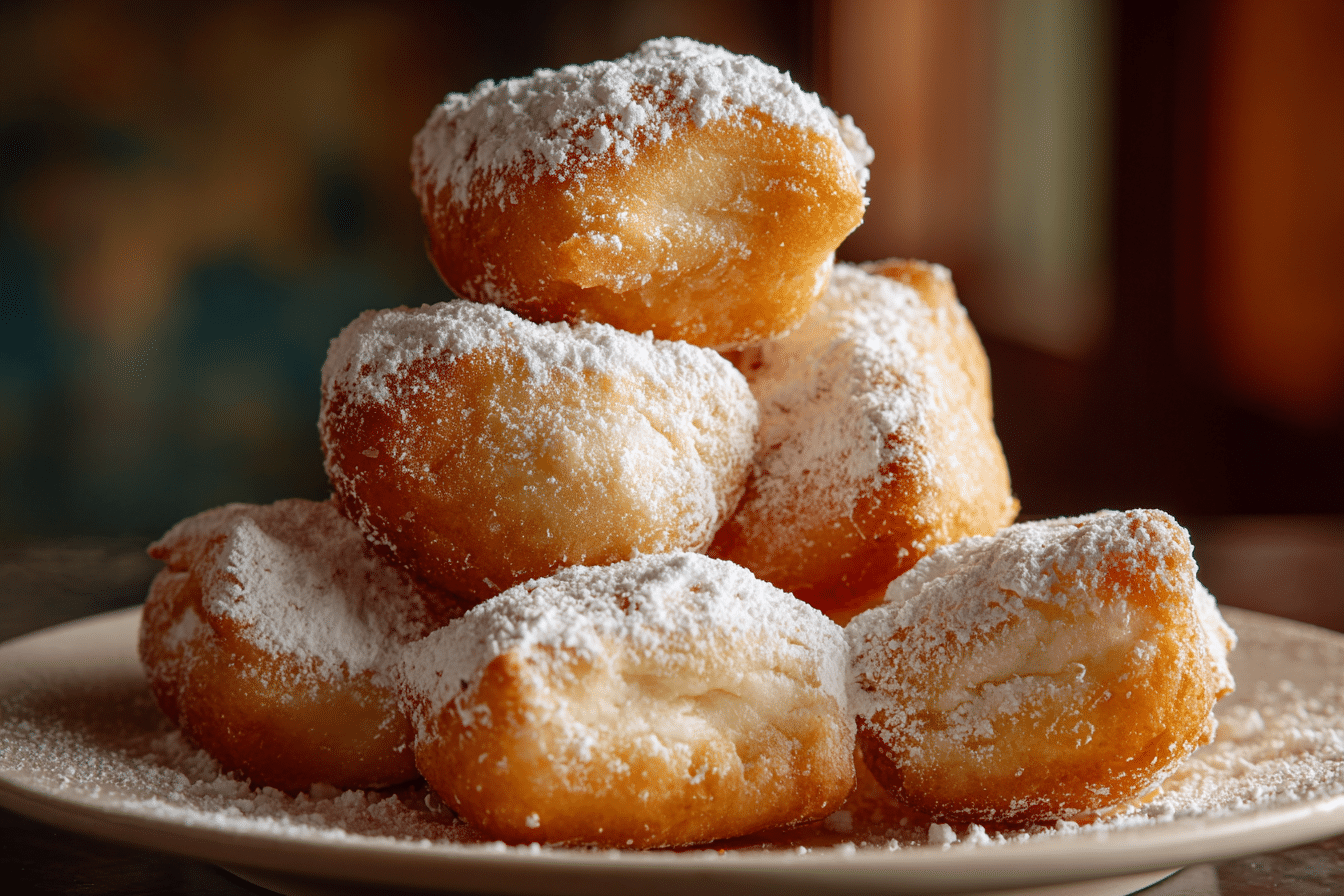
Turn the dough onto a floured surface. Roll it out to about ½-inch thickness. Using a sharp knife or dough cutter, slice into 2-inch squares. Don’t worry if the shapes aren’t perfect—that rustic look is part of their charm. -
Second Rise
Place the squares on a parchment-lined tray with some space between each. Cover lightly and let rest for 30–45 minutes until slightly puffed. -
Heat Oil
In a deep pot, heat neutral oil (like canola or vegetable) to 350°F. Use a thermometer to maintain temperature—it’s crucial for even frying. -
Fry the Beignets
Carefully lower a few beignets into the oil without crowding the pot. Fry for 1–2 minutes per side until golden and puffed. Flip with tongs or a slotted spoon. Drain on a paper towel–lined rack. -
Dust with Powdered Sugar
While still warm, generously sift powdered sugar over the beignets. Serve immediately for best texture and flavor.
Common Mistakes to Avoid
-
Don’t skip the second rise—this is what makes them so airy.
-
Overcrowding the oil can drop the temperature and lead to greasy results.
-
Be sure your oil is hot enough, or the beignets won’t puff properly.
Tips, Variations & Substitutions
Helpful Tips
-
Make the dough the night before and refrigerate after the first rise. In the morning, let it warm slightly, roll, rise, and fry.
-
Use a pizza cutter to slice dough easily.
-
Always use fresh oil for clean flavor—old oil affects taste.
Flavor Twists
-
Vanilla Bean Beignets: Use 1 tsp vanilla bean paste and 1 tsp extract for deeper vanilla flavor.
-
Filled Beignets: Once fried and cooled slightly, pipe in vanilla pastry cream, lemon curd, or raspberry jam.
-
Cinnamon Sugar: Toss warm beignets in a mix of cinnamon and granulated sugar instead of powdered sugar.
Substitutions
-
Dairy-Free: Use almond milk and dairy-free butter.
-
Egg-Free: Try a flax egg (1 tbsp flaxseed + 3 tbsp water, soaked for 10 mins) as a substitute, though texture may differ slightly.
Serving Ideas & Occasions
Vanilla French beignets are a delightful centerpiece for brunches, holidays, or quiet weekend mornings. Serve them piled high on a platter with a generous snow of powdered sugar and a side of espresso or café au lait.
For dessert, try pairing them with dark chocolate sauce, vanilla bean ice cream, or a berry compote. You can even create a beignet bar with dipping sauces—caramel, honey, Nutella—for guests to mix and match.
They make a sweet addition to baby showers, brunch buffets, or birthday breakfasts. And if you have leftovers (rare, but possible), warm them briefly in the oven to bring back that fresh-from-the-fryer texture.
Nutritional & Health Notes
While beignets are a special treat, they’re made with simple ingredients and no preservatives. Each square is fried, so they’re best enjoyed in moderation. The homemade version gives you more control over the ingredients and oil quality.
Using whole milk and real butter offers better flavor and richness, though lighter substitutions are possible. Beignets are naturally free from artificial additives and colors, especially when made from scratch.
To make them a touch healthier, you can bake them at 375°F for 10–12 minutes (they won’t puff quite the same), then brush with butter and dust with powdered sugar. The texture will be more like a soft roll than a classic beignet, but still delicious.
FAQs
1. Can I make the dough ahead of time?
Yes, after the first rise, cover and refrigerate the dough overnight. Let it sit at room temperature for 30 minutes before rolling and frying the next day.
2. Why didn’t my beignets puff up?
If the oil wasn’t hot enough or the dough was over-proofed or under-proofed, they may not rise well. Aim for 350°F oil and follow rise times carefully.
3. Can I bake beignets instead of frying?
You can, though the texture will be more bread-like. Bake at 375°F for 10–12 minutes. Brush with butter and dust with sugar after baking.
4. What’s the best oil for frying?
Use a neutral oil with a high smoke point like canola, peanut, or vegetable oil. Avoid olive oil—it adds flavor and smokes quickly.
5. How long do beignets stay fresh?
They’re best eaten warm within a few hours. If storing, keep in an airtight container at room temperature for up to one day. Reheat in the oven for a few minutes.
6. Can I freeze beignet dough?
Yes. Freeze after the first rise, then thaw in the fridge overnight. Bring to room temp, roll, rise, and fry.
7. What if I don’t have a stand mixer?
You can mix and knead the dough by hand—it’ll take about 8–10 minutes of firm kneading to reach a smooth texture.
French Beignets Recipe with a Soft, Vanilla-Infused Center

Fluffy, golden French-style beignets infused with vanilla and dusted in powdered sugar. Light and airy, perfect for breakfast, dessert, or special brunches.
- Prep Time: 20 minutes
- Cook Time: 20 minutes
- Total Time: 2 hours 15 minutes
- Yield: 20–24 beignets 1x
Ingredients
2 ½ cups all-purpose flour
¾ cup warm whole milk
2 ¼ tsp active dry yeast
2 tbsp granulated sugar
½ tsp salt
1 egg, beaten
2 tsp vanilla extract
3 tbsp unsalted butter, softened
Neutral oil for frying
Powdered sugar, for dusting
Instructions
-
Warm milk and mix with yeast and 1 tbsp sugar. Let foam 5–10 minutes.
-
In a large bowl, mix flour, remaining sugar, salt, egg, vanilla, butter, and yeast mixture. Stir until sticky dough forms.
-
Knead for 8–10 minutes until smooth. Cover and let rise 1–1.5 hours until doubled.
-
Roll dough to ½ inch thick. Cut into 2-inch squares.
-
Place on parchment, cover, and let rise 30–45 minutes.
-
Heat oil to 350°F. Fry beignets 1–2 minutes per side until golden.
-
Drain on paper towels. Dust with powdered sugar and serve warm.
Notes
Use vanilla bean paste for extra depth. Dough can be refrigerated overnight after first rise.