
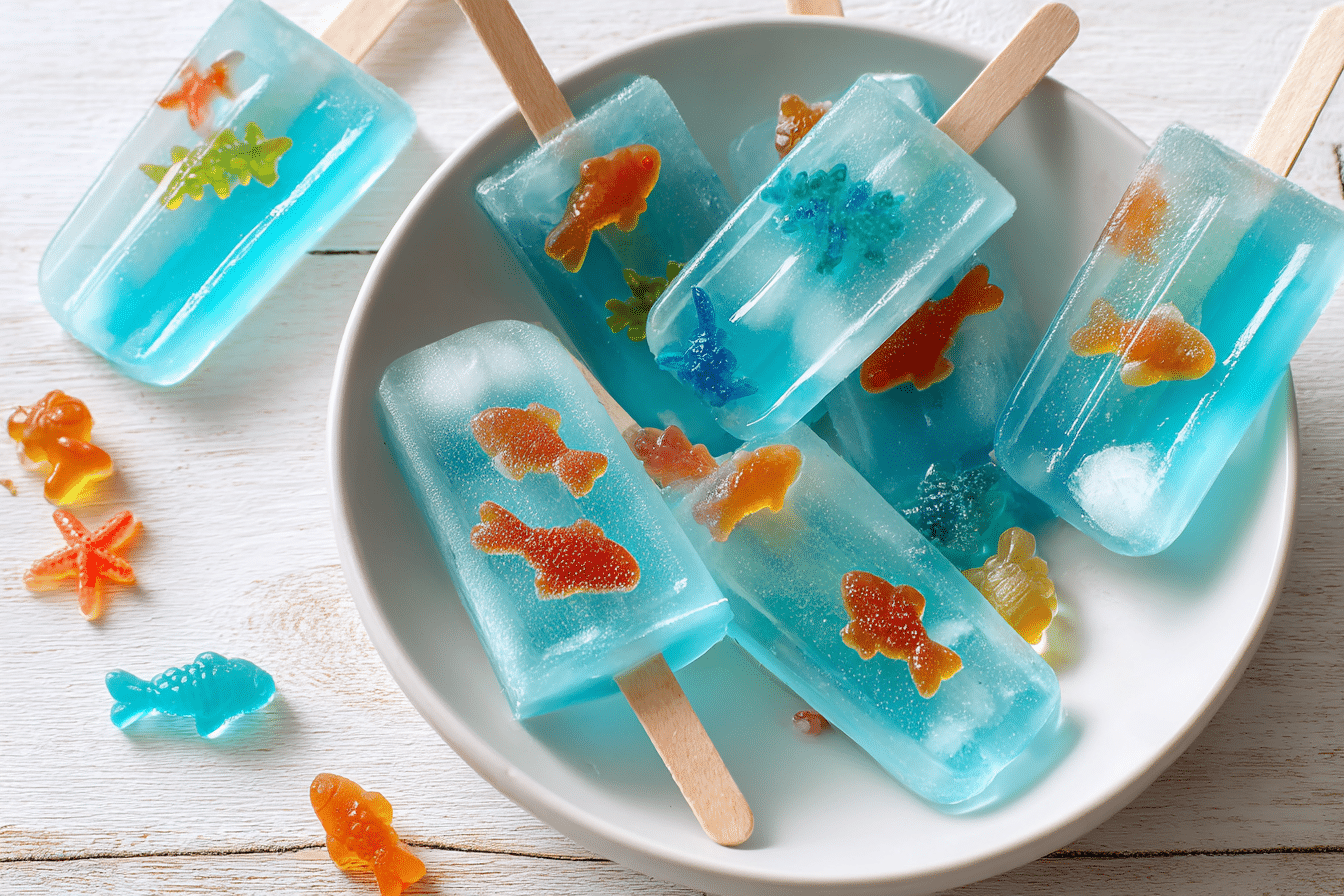
Edible Aquarium Popsicles bring playful ocean imagery into a refreshing frozen dessert. Clear juice surrounds colorful fruit pieces arranged like tiny sea creatures drifting through water. When frozen inside a mold, the result resembles a miniature aquarium captured inside ice.
Children often enjoy the visual element as much as the flavor. Translucent layers allow fruit shapes to remain visible, creating the impression of fish, coral, or sea plants suspended in water. Bright berries, sliced citrus, and soft candy decorations form the underwater scene.
Texture also plays a role in the appeal. The frozen juice creates a crisp, refreshing bite while fruit pieces soften slightly during freezing. Each bite offers gentle sweetness balanced with natural fruit brightness.
This frozen dessert suits warm afternoons, themed birthday celebrations, or ocean-inspired parties. The popsicles can also act as an activity in the kitchen. Arranging fruit pieces inside molds feels similar to assembling a tiny edible scene.
Because the ingredients remain flexible, many flavor combinations work beautifully. Coconut water, lemonade, or clear fruit juice provide the base, while fruit pieces become colorful aquatic details.
The final result is a frozen treat that feels playful, refreshing, and visually striking while staying simple enough for home preparation.
Ingredients Overview
The foundation of Edible Aquarium Popsicles begins with a clear liquid base. Transparency allows fruit decorations to remain visible once frozen. Coconut water works especially well because its mild flavor does not overpower the fruit pieces. White grape juice or lightly diluted lemonade also create excellent clarity while adding gentle sweetness.
Blueberries frequently represent small fish or floating bubbles inside the popsicle. Their deep color contrasts beautifully with the clear liquid and provides bursts of berry flavor throughout the frozen treat.
Mandarin orange segments often resemble tiny sea creatures due to their curved shape and bright color. Thin slices placed carefully within the mold appear like small underwater animals drifting through the liquid.
Kiwi slices contribute vibrant green tones that resemble aquatic plants or coral formations. The small black seeds within the fruit add interesting detail once frozen inside the popsicle.
Strawberries sliced into thin shapes can mimic larger sea creatures or colorful reef accents. When positioned against the mold wall, their red color becomes visible through the clear ice layer.
Soft gummy candy shaped like fish sometimes appears in playful versions of this dessert. When using candy decorations, place them within the mold after a thin liquid layer freezes so they remain suspended rather than floating upward.
Mint leaves occasionally join the arrangement as plant-like details. Their bright green color adds freshness and subtle herbal aroma that complements fruit flavors.
Popsicle molds remain essential for structure. Transparent molds help maintain the aquarium appearance because the fruit remains visible during freezing.
These simple ingredients combine to form a frozen scene where fruit acts as colorful ocean elements within a refreshing juice base.
Step-by-Step Instructions
Begin by selecting a clear juice base. Coconut water, white grape juice, or diluted lemonade all produce attractive transparency once frozen. Chill the liquid in advance so freezing occurs faster.
Prepare the fruit decorations next. Slice strawberries into thin pieces so their color shows clearly through the popsicle surface. Cut kiwi into small rounds or half circles resembling underwater plants. Separate mandarin segments gently to keep their shape intact.
Rinse blueberries and pat them dry. Their round shape works well as small fish or decorative bubbles within the frozen design.
Place popsicle molds on a flat tray so they remain stable during filling. Stability helps fruit pieces remain in position before freezing begins.
Pour a small amount of juice into each mold, filling roughly one quarter of the mold height. Transfer the tray to the freezer for about twenty minutes until the liquid begins to firm. This early layer holds fruit pieces in place during the next stage.
Remove the molds from the freezer. Carefully arrange fruit along the inner walls so the shapes remain visible. Kiwi slices can stand upright to resemble sea plants. Mandarin segments can rest slightly angled like small swimming creatures.
Drop blueberries between the larger fruit pieces so they appear like bubbles rising through water. Gentle placement keeps the arrangement visible from the outside of the mold.
Pour additional juice slowly into the mold until it reaches about three quarters full. Insert popsicle sticks into the center of each mold.
Return the tray to the freezer again for about thirty minutes until the mixture partially freezes. This pause helps keep fruit suspended rather than floating upward.
Remove the tray once again and fill the remaining space with juice. This final layer seals the fruit scene inside the popsicle.
Freeze the molds for four to six hours until completely solid. Full freezing guarantees a firm texture that releases easily from the mold.
To release the popsicles, briefly run warm water along the outer surface of the mold. Gentle warmth loosens the frozen treat without melting the interior.
The finished Edible Aquarium Popsicles display fruit pieces suspended within clear frozen juice, creating the appearance of a tiny underwater environment.
Tips, Variations & Substitutions
Clarity of the liquid base strongly affects the aquarium appearance. Coconut water and white grape juice typically freeze with excellent transparency. Cloudy juices may hide the fruit arrangement, so lighter liquids work best.
For stronger fruit flavor, blend a portion of berries with juice before pouring the final layer. This produces a subtle gradient effect where the base appears lightly tinted while fruit shapes remain visible.
Citrus slices also work well for decoration. Thin lemon or lime wheels resemble floating sea plants when positioned against the mold wall.
For tropical flavor variation, pineapple juice paired with mango cubes creates bright color and refreshing taste. Small mango pieces resemble coral shapes once frozen.
Plant-based gelatin cubes can replace candy decorations for families who prefer fruit-based ingredients. Colored gelatin cut into fish shapes adds playful detail without overwhelming sweetness.
Layer freezing helps maintain fruit placement. If all liquid enters the mold immediately, fruit often floats toward the top. Gradual filling keeps the arrangement balanced throughout the popsicle.
For parties, several color themes can appear across a serving tray. Blue-tinted coconut water using natural spirulina powder creates a deeper ocean appearance while fruit pieces remain visible.
These small adjustments allow Edible Aquarium Popsicles to shift from simple kitchen activity to a visually impressive frozen dessert.
Serving Ideas & Occasions
Edible Aquarium Popsicles shine during ocean-themed celebrations. Birthday parties centered around sea creatures, beach gatherings, or summer events all benefit from their playful appearance.
Serving trays filled with these popsicles create a colorful display. Because fruit pieces remain visible inside the frozen liquid, guests often pause to admire the tiny underwater scenes before enjoying the treat.
Outdoor gatherings during warm weather provide another ideal setting. The refreshing fruit base helps cool guests while the popsicles remain lighter than many frozen desserts.
For children’s activities, assembling the popsicles together becomes part of the entertainment. Fruit pieces can form tiny underwater arrangements before freezing begins.
These popsicles also pair nicely with other fruit-focused snacks such as berry skewers or citrus cups. The fresh flavors complement light summer menus without heavy richness.
Nutritional & Health Notes
Fruit forms the central ingredient within Edible Aquarium Popsicles, providing natural sweetness along with vitamins and fiber. Blueberries contribute antioxidants, while citrus segments offer vitamin C and refreshing brightness.
Coconut water or diluted fruit juice generally contains fewer added sugars compared with many commercial frozen desserts. Choosing unsweetened varieties can further moderate overall sweetness.
Portion size also remains naturally controlled because each popsicle acts as a single serving. This structure allows guests to enjoy a refreshing frozen dessert without excessive sugar intake.
Using fresh fruit instead of artificial coloring maintains natural flavor and color within the treat. The visual appeal still remains vibrant because berries and citrus naturally provide bright tones.
When candy decorations appear, moderation keeps the treat balanced. A small amount adds visual fun without overwhelming the fruit-focused character of the dessert.
FAQs
How can fruit stay suspended inside the popsicle?
Layer freezing provides the most reliable method for holding fruit in position. Begin with a small amount of liquid in the mold and freeze briefly until slightly firm. Afterward, place fruit pieces against the mold walls. Because the base layer already holds partial structure, the fruit remains anchored. Additional liquid poured gradually during later stages surrounds the fruit without allowing it to float upward. This approach preserves the aquarium appearance throughout the frozen treat.
Which liquid base creates the clearest popsicles?
Clear liquids such as coconut water or white grape juice typically freeze with excellent transparency. Their pale color allows fruit decorations to remain visible from the outside of the popsicle. Lemonade diluted with water can also work when clarity remains high. Dark juices often reduce visibility, hiding the decorative fruit pieces that form the underwater scene.
Can Edible Aquarium Popsicles contain yogurt?
Yogurt can appear in layered variations, though it produces a cloudy appearance rather than clear transparency. A thin yogurt layer placed near the top can create a creamy section above the fruit arrangement. Vanilla yogurt works particularly well with berries and citrus. The visual aquarium effect remains strongest when most of the popsicle still contains a clear liquid base.
How long should these popsicles freeze?
Complete freezing usually requires four to six hours depending on mold size and freezer temperature. Smaller molds freeze slightly faster, while larger molds require additional time. Full freezing guarantees firm texture and prevents fruit movement during removal from the mold.
Can frozen fruit replace fresh fruit?
Frozen fruit can work, though thawing and drying it first improves appearance. Excess moisture from frozen fruit may cloud the liquid base if placed directly into the mold. After thawing and gently drying, the fruit pieces perform similarly to fresh fruit and still display vibrant color.
How long can these popsicles remain stored?
Properly sealed popsicles stored within the freezer typically remain enjoyable for about two weeks. Placing them inside airtight freezer containers helps prevent ice crystals and flavor transfer from other foods. For strongest fruit flavor and best appearance, serving during the first week works well.
Which molds work best for the aquarium effect?
Clear or lightly colored popsicle molds allow fruit arrangements to remain visible during preparation and serving. Straight-sided molds often display the fruit pieces clearly against the outer surface. Silicone molds also release frozen popsicles easily after a brief rinse under warm water.
PrintDIY Aquarium Popsicles – Easy Frozen Treat with Gummy Fish
Edible Aquarium Popsicles feature fruit pieces arranged inside clear frozen juice to resemble tiny underwater scenes. Blueberries, citrus segments, and kiwi create colorful ocean-inspired shapes within refreshing popsicles.
- Prep Time: 20 minutes
- Cook Time: 0 minutes
- Total Time: 6 hours 20 minutes
- Yield: 8 popsicles 1x
Ingredients
2 cups coconut water or white grape juice
1/2 cup blueberries
1 kiwi, sliced
1/2 cup mandarin orange segments
1/2 cup strawberries, thinly sliced
Fresh mint leaves (optional)
Instructions
-
Place popsicle molds on a tray for stability.
-
Pour a small amount of juice into each mold and freeze for 20 minutes.
-
Arrange fruit pieces against the mold walls for visibility.
-
Add blueberries between larger fruit pieces.
-
Fill molds three quarters full with juice and insert sticks.
-
Freeze again for 30 minutes.
-
Fill remaining space with juice.
-
Freeze for 4 to 6 hours until fully solid.
-
Run warm water along the mold exterior to release popsicles.
Notes
Using clear juice keeps fruit decorations visible inside the frozen popsicle. Layer freezing helps fruit remain suspended rather than floating upward.