
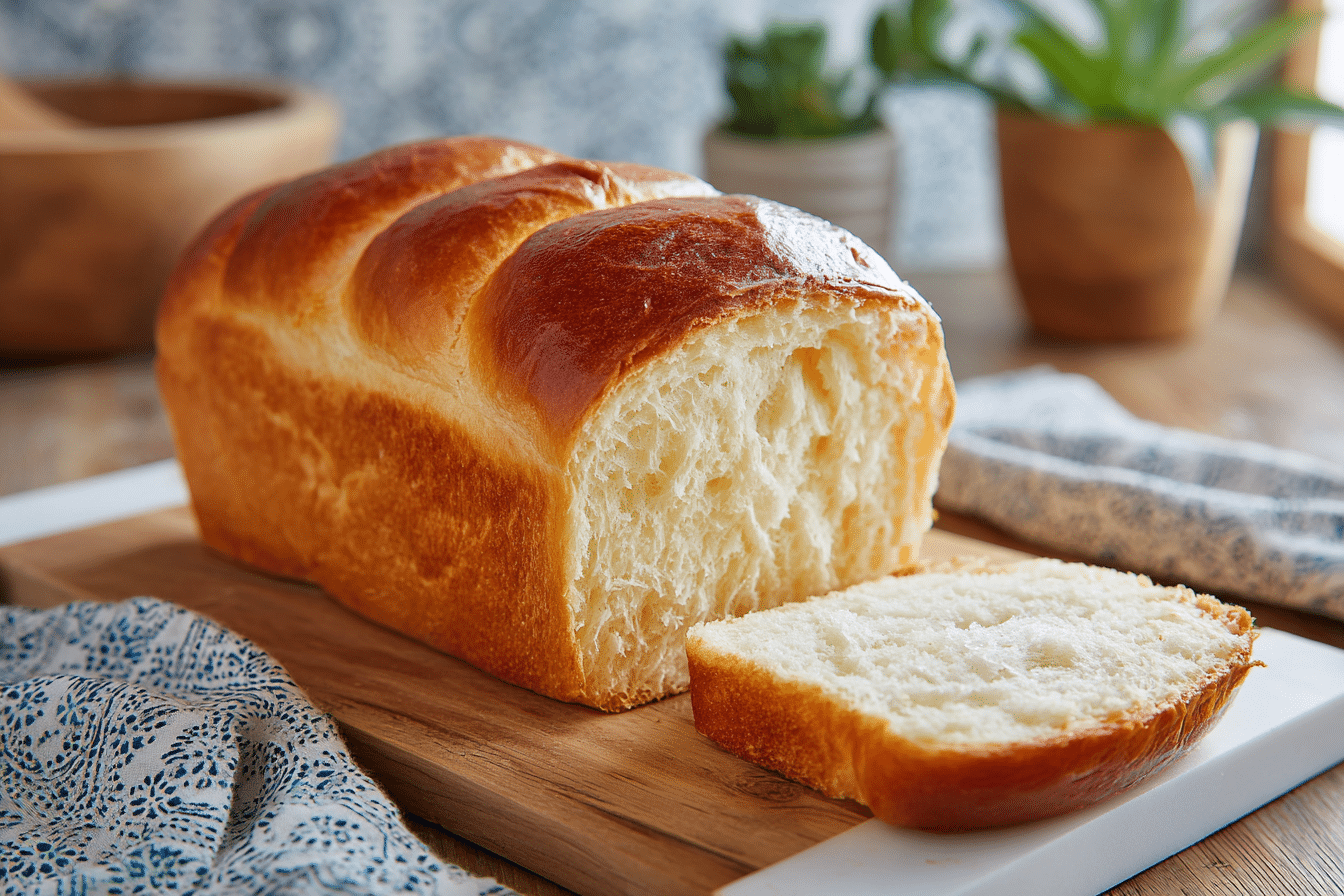
There’s something deeply comforting about the aroma of fresh bread baking in your kitchen — especially when it’s this cloud soft everyday bread. As the name suggests, this loaf is unbelievably fluffy, tender, and ideal for just about any meal. Whether you use it for morning toast, lunch sandwiches, or buttery dinner rolls, this recipe is a true staple that earns its place in your weekly rotation.
The beauty of this bread lies in its lightness. Thanks to a gentle kneading process and a simple dough enriched with milk and butter, the result is a pillow-soft crumb with just enough structure to hold up to spreads, fillings, or a warm slab of butter.
What makes this recipe even better? It’s incredibly easy. With minimal ingredients, forgiving technique, and a texture that rivals bakery-level loaves, cloud soft everyday bread is exactly what it sounds like — dependable, fluffy, and delicious every single time.
Ingredients Overview
All-Purpose Flour:
Provides structure to the bread. For a slightly chewier texture, you can substitute up to 1 cup with bread flour. Whole wheat flour works too, but replace only up to 1 cup to keep the softness intact.
Whole Milk:
Adds richness and tenderness. Warm milk helps activate the yeast and gives the bread its signature soft bite. Non-dairy milk such as oat or soy milk can be used, though full-fat versions yield the best results.
Active Dry Yeast:
Essential for the rise. Proofing the yeast ensures it’s active and helps create a lofty, airy loaf. Instant yeast can be used instead — just skip the proofing step and mix directly into the flour.
Sugar:
Feeds the yeast and adds a subtle sweetness that balances the flavor. Honey or maple syrup are great alternatives if you want a natural touch.
Salt:
Balances the flavors and strengthens the dough structure. Do not skip it — even sweet bread needs salt to bring everything together.
Butter:
Softened unsalted butter enriches the dough and keeps the crumb delicate and tender. You can use margarine or a neutral oil (like canola or light olive oil) in a pinch.
Egg (optional):
Adds additional richness and structure. If omitted, the bread will still rise and bake well, just slightly less rich. You can also use a flax egg if needed.
Step-by-Step Instructions
1. Proof the Yeast:
In a small bowl, combine 1 tablespoon of sugar, the warm milk (about 110°F/43°C), and yeast. Stir gently and let sit for 5–10 minutes until foamy. If nothing happens, your yeast may be inactive — start again with fresh yeast.
2. Mix the Dough:
In a large mixing bowl or stand mixer, combine flour, remaining sugar, and salt. Add the yeast mixture, softened butter, and beaten egg (if using). Stir until a shaggy dough forms.
3. Knead the Dough:
Knead by hand on a lightly floured surface for 8–10 minutes or use a dough hook in a stand mixer for about 5 minutes on medium-low. The dough should become smooth, elastic, and slightly tacky but not sticky.
4. First Rise:
Place the dough in a lightly greased bowl, cover with a damp towel or plastic wrap, and let rise in a warm spot for 1 to 1½ hours, or until doubled in size.
5. Shape the Dough:
Punch down the dough gently to release air. Turn it onto a lightly floured surface and shape into a loaf. Place in a greased 9×5-inch loaf pan or shape into rolls and arrange in a baking dish.
6. Second Rise:
Cover again and let rise for 30–45 minutes until the dough has puffed up about 1 inch above the rim of the pan.
7. Preheat and Bake:
Preheat oven to 350°F (175°C). Bake the loaf for 25–30 minutes or until golden brown and the internal temperature reaches 190°F (88°C). If browning too fast, tent loosely with foil after 15 minutes.
8. Cool Completely:
Remove from the oven and let the bread cool in the pan for 5–10 minutes. Transfer to a wire rack to cool fully. This helps set the crumb and makes slicing easier.
Tips, Variations & Substitutions
Helpful Tips:
-
Always check your yeast expiration date.
-
To speed up the rise, place the dough in a slightly warm (but turned-off) oven.
-
Brushing the top with milk before baking adds a tender crust.
Flavor Add-Ins:
-
Savory: Add herbs like rosemary or garlic powder to the dough.
-
Sweet: Fold in raisins, cinnamon, or chopped dates before shaping.
-
Cheese: Sprinkle shredded cheddar or parmesan during shaping for a cheesy swirl.
Substitutions:
-
Dairy-Free: Use plant-based milk and vegan butter.
-
Egg-Free: Omit the egg or use a flax egg.
-
Whole Grain: Replace up to 1 cup of flour with whole wheat for a more rustic feel.
Serving Ideas & Occasions
Cloud soft everyday bread fits seamlessly into any part of the day. Try these ideas:
-
Morning: Toasted with jam, butter, or cream cheese
-
Lunch: Sandwiches with turkey, cheese, or egg salad
-
Dinner: Served warm with soup, stews, or as a dinner roll alternative
-
Snacks: Slathered with peanut butter and banana or Nutella
It’s perfect for meal prep, brunches, casual dinners, or even as a homemade gift wrapped in parchment.
Nutritional & Health Notes
This bread is made from simple ingredients, offering a more wholesome option compared to store-bought loaves filled with preservatives. While it’s not low-carb or low-calorie, the ability to control sugar, salt, and additives makes it a more mindful choice.
To boost nutrition, you can incorporate whole grains, seeds, or use natural sweeteners. It’s a satisfying, balanced bread that fits a variety of diets and lifestyles when portioned properly.
Using dairy and eggs adds protein and richness, but these can be swapped for lighter alternatives depending on dietary needs.
FAQs
1. Can I make this bread without a stand mixer?
Yes. Kneading by hand is totally doable and takes about 8–10 minutes. Just be patient and watch for the dough to become smooth and elastic.
2. What if I don’t have whole milk?
You can use 2%, skim, or plant-based milks like oat or almond. Full-fat milk gives the richest flavor, but the recipe is flexible.
3. Can I freeze this bread?
Absolutely. Let it cool completely, then wrap tightly in plastic wrap and freeze for up to 2 months. Thaw at room temperature or toast slices directly from frozen.
4. Why is my bread dense and not fluffy?
This can happen if the yeast was inactive, the dough didn’t rise enough, or if you added too much flour. Always measure accurately and allow enough time for proofing.
5. Can I make rolls instead of a loaf?
Yes! Divide the dough into 12 equal portions, shape into balls, and bake in a greased dish. Bake for about 18–20 minutes until golden and soft.
6. How do I store leftovers?
Store in an airtight container or bread bag at room temperature for up to 3 days. For longer storage, freeze in slices or as a whole loaf.
7. Is it okay to let the dough rise overnight?
Yes, for added depth of flavor. After kneading, cover the dough and refrigerate overnight. Bring to room temperature, shape, and let it rise again before baking.
Cloud Soft Bread Loaf That Stays Pillowy and Fresh

An ultra-fluffy, cloud-soft everyday bread that’s perfect for toast, sandwiches, or dinner rolls. Easy to make with a soft crumb and lightly sweet flavor.
- Prep Time: 15 minutes
- Cook Time: 30 minutes
- Total Time: 2 hours 15 minutes
- Yield: 1 loaf 1x
Ingredients
3 ½ cups all-purpose flour
1 cup whole milk, warm
2 ¼ teaspoons active dry yeast
2 tablespoons sugar
1 teaspoon salt
3 tablespoons unsalted butter, softened
1 egg (optional)
Instructions
-
Combine warm milk, 1 tbsp sugar, and yeast in a small bowl. Let sit until foamy.
-
In a large bowl, mix flour, remaining sugar, and salt.
-
Add yeast mixture, butter, and egg. Mix to form a dough.
-
Knead for 8–10 minutes by hand or 5 minutes in a stand mixer.
-
Transfer to a greased bowl, cover, and let rise until doubled (1–1½ hours).
-
Punch down and shape into a loaf. Place in a greased 9×5 loaf pan.
-
Let rise again for 30–45 minutes until puffed.
-
Preheat oven to 350°F. Bake for 25–30 minutes until golden.
-
Cool in the pan for 5 minutes, then transfer to a rack.
-
Slice when completely cooled.
Notes
Replace up to 1 cup of flour with whole wheat if desired. Milk can be dairy or non-dairy. Omit egg for a leaner loaf.