
A cucumber Caprese salad brings together crisp cucumber slices, ripe tomatoes, soft mozzarella, and basil with a light dressing. This style of salad keeps preparation minimal while focusing on texture contrast and natural flavor balance. The cucumber adds a cool crunch, while tomato and mozzarella create softness and creaminess in each portion.
This dish is often served cold, arranged in layers or gently combined in a bowl. A light olive oil and vinegar dressing coats each piece without weighing down the ingredients. Basil leaves add aromatic notes that lift the overall profile.
Easy Cucumber Caprese Salad works well as a side dish alongside grilled items, pasta dishes, or grain-based meals. It also stands alone as a light plate during warm seasons. The simplicity of the ingredients allows each component to remain distinct while still forming a cohesive combination.
Resting time in a cool environment allows flavors to settle and blend. The cucumber retains structure while absorbing mild seasoning from the dressing. Tomato releases slight juiciness that mixes gently with mozzarella, creating a balanced texture throughout.
Ingredients Overview
Cucumber forms the base of this salad. Its high water content and crisp texture provide contrast against softer ingredients. Thin slices or half-moon cuts allow even distribution throughout the bowl. English cucumber or Persian cucumber varieties work well due to minimal seeds and tender skin.
Tomatoes contribute juiciness and mild sweetness. Cherry or grape tomatoes offer consistent size and firm structure. When halved, they blend easily with cucumber and mozzarella without breaking apart. Their natural liquid slightly mixes with dressing, forming a light coating.
Fresh mozzarella adds creamy softness. Small mozzarella pearls or diced fresh mozzarella both work. The mild dairy flavor balances the acidity from tomatoes and vinegar. Texture remains smooth and tender, complementing the crunch of cucumber.
Fresh basil introduces aromatic depth. Whole leaves or torn pieces distribute evenly through the mixture. Basil provides a fragrant lift that contrasts with the cooling cucumber and creamy cheese.
Olive oil acts as the primary dressing base. It coats ingredients lightly without overpowering. Extra virgin olive oil provides a clean, slightly fruity profile that supports the salad structure.
Balsamic vinegar or white wine vinegar adds mild acidity. This balances the richness of mozzarella and enhances tomato flavor. Only a small amount is required to avoid excess moisture.
Salt and black pepper complete seasoning. Salt enhances natural flavors, while pepper adds subtle heat. Both should be used lightly to maintain balance across ingredients.
Optional additions include red onion slices for sharpness or avocado chunks for creaminess. These elements shift texture without changing the core structure of the dish.
Ingredients
2 large cucumbers, sliced
2 cups cherry tomatoes, halved
1 1/2 cups fresh mozzarella balls
1/3 cup fresh basil leaves
3 tablespoons extra virgin olive oil
1 tablespoon balsamic vinegar
1/2 teaspoon salt
1/4 teaspoon black pepper
1/4 small red onion, thinly sliced (optional)
1/2 avocado, diced (optional)
Step-by-Step Instructions
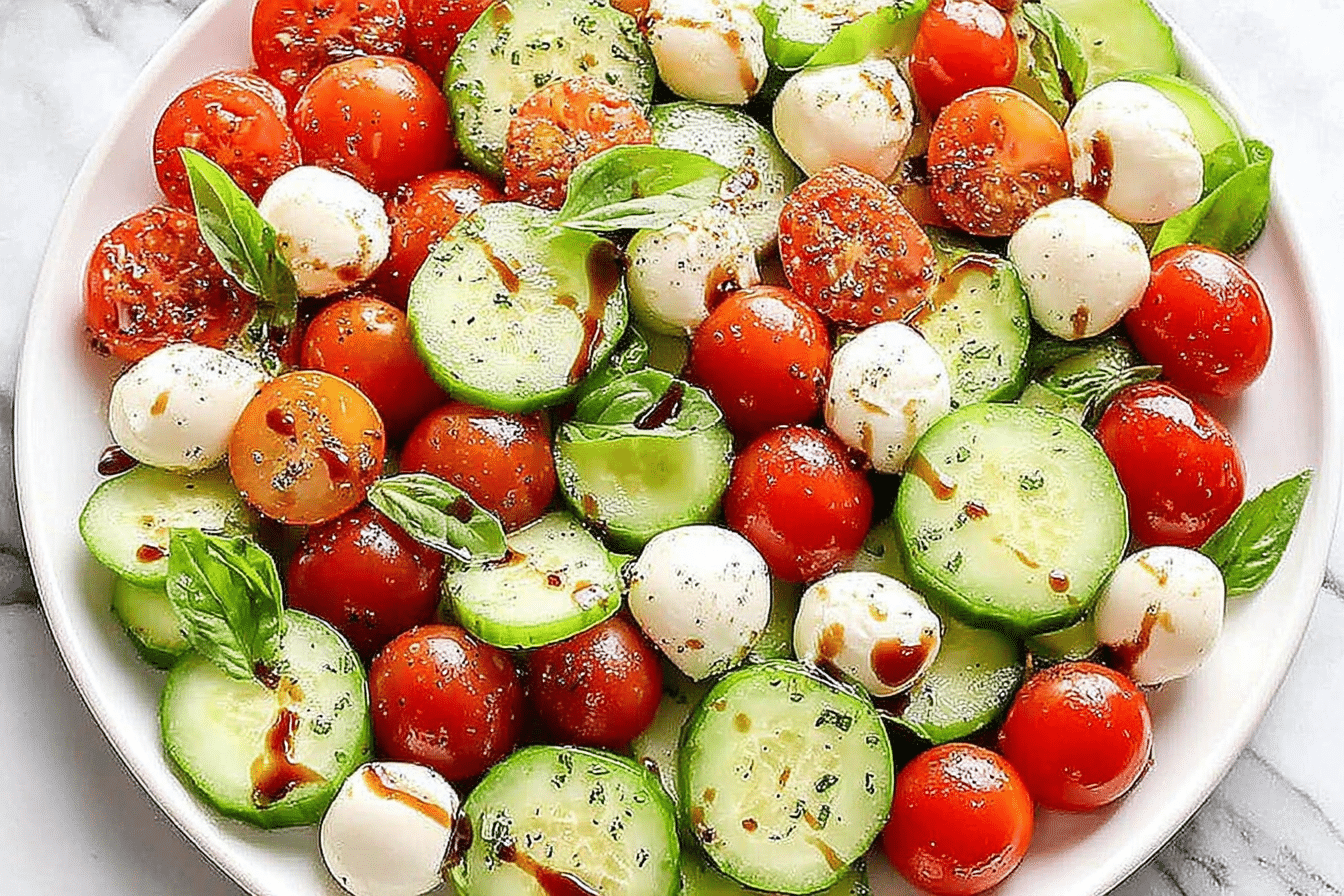
Cucumbers should be rinsed thoroughly and sliced into even rounds or half-moon shapes. Uniform thickness supports balanced texture across the salad. Excess moisture can be lightly patted away using a clean cloth or paper towel.
Cherry tomatoes are cut in half to expose inner juices. This allows slight mixing with dressing while maintaining structure. Halved tomatoes distribute evenly through cucumber pieces without dominating texture.
Fresh mozzarella is drained if stored in liquid. Small pearls can be used directly. Larger mozzarella portions can be cut into bite-sized pieces. Consistent size supports even distribution.
A large mixing bowl is prepared for assembly. Cucumbers, tomatoes, and mozzarella are placed inside. Gentle handling preserves structure and avoids crushing delicate ingredients.
Fresh basil leaves are added whole or torn by hand. Tearing helps release aroma without bruising. Basil should be distributed throughout the bowl rather than concentrated in one area.
Olive oil and balsamic vinegar are combined in a small container. The mixture is stirred until slightly blended. This dressing is then poured evenly over the salad ingredients.
Salt and black pepper are sprinkled across the surface. Light seasoning ensures that natural flavors remain clear while still being enhanced.
All ingredients are gently folded together using a wide spoon or spatula. Folding motion prevents damage to soft cheese and tomato while allowing even coating of dressing.
Optional red onion slices or avocado cubes can be added during this stage. These ingredients should be distributed evenly for consistent texture in each portion.
The salad is placed in a cool setting for a short resting period. This allows dressing to settle lightly into cucumber and tomato surfaces. Moisture balances across ingredients without breaking structure.
Before serving, a final gentle toss ensures even distribution of dressing and seasoning. The salad is kept chilled until presentation.
Tips, Variations & Substitutions
English cucumber can be replaced with Persian cucumber for a smaller, more tender bite. Peeling remains optional depending on skin preference and texture goals.
Mozzarella pearls can be substituted with diced feta for a saltier profile. This adjustment changes flavor intensity while maintaining creamy texture contrast.
Balsamic vinegar can be replaced with lemon juice for a sharper citrus note. This creates a lighter dressing profile suitable for warmer settings.
Additional herbs such as oregano or parsley can be added for variation. These herbs shift aroma without changing structure.
Avocado adds creaminess and richness. It should be added just before serving to maintain color and texture integrity.
For a stronger flavor profile, roasted cherry tomatoes can replace raw tomatoes. This adds depth and slight caramelized notes.
Serving Ideas & Occasions
This salad fits well alongside grilled vegetables, roasted chicken, or baked fish. Its cool temperature contrasts with warm dishes, creating balance on a plate.
It also pairs with pasta dishes where heavier sauces benefit from a lighter side. Grain bowls and flatbreads also complement its texture.
Cucumber Caprese salad works well for shared tables, casual gatherings, and outdoor meals. Its simple structure allows easy portioning.
It can be served in a shallow bowl for layered presentation or mixed gently for a uniform distribution style.
Nutritional & Health Notes
Cucumber provides hydration due to high water content and contributes low-calorie bulk. Tomato adds natural sugars and mild acidity along with micronutrients.
Mozzarella supplies protein and fat, creating a more filling profile. Olive oil adds healthy fats that support satiety.
Basil contributes small amounts of plant compounds and aroma without affecting calorie load.
Overall composition remains balanced between hydration, protein, and fats, with moderate carbohydrate content from vegetables.
FAQs
Can different cucumber types be used in this salad?
English cucumber and Persian cucumber both work well due to their thin skin and minimal seeds. Standard garden cucumbers can also be used after peeling to reduce bitterness. Slice thickness should remain consistent for even texture. Each cucumber type brings slightly different crunch levels, with English cucumber offering a milder bite and garden varieties providing firmer texture.
Can this salad be prepared in advance?
Preparation ahead of serving is possible within a short time window. Vegetables can be sliced and stored separately in a cool environment. Dressing should be added closer to serving time to maintain crisp texture. Extended resting after dressing may lead to excess moisture release from cucumber and tomato.
What type of mozzarella works best?
Fresh mozzarella in pearl form or soft block style both work well. Pearls provide convenience and consistent size, while block mozzarella allows custom cutting. Low-moisture mozzarella is not ideal due to firmer texture and reduced creaminess. Fresh varieties maintain soft bite and blend well with vegetables.
Can balsamic vinegar be replaced?
Lemon juice or white wine vinegar can replace balsamic vinegar. Lemon juice creates a brighter profile, while white wine vinegar offers mild acidity without sweetness. Each option changes flavor direction slightly but maintains structural balance in the salad.
How long does this salad remain stable?
The salad remains stable for several hours when kept cool. After longer periods, cucumber releases additional moisture, which may dilute dressing. For best texture, consumption within the same day is preferred.
Can additional vegetables be added?
Bell peppers, radishes, or arugula can be added for variation. Each brings different texture and flavor contrast. Additions should be sliced thin or kept small to maintain balance across ingredients.
Is this salad suitable for layered presentation?
Layered presentation works well using alternating cucumber, tomato, and mozzarella sections. Basil can be placed between layers for even distribution. Dressing can be drizzled at the end for visual clarity and even coating.
PrintEasy Cucumber Caprese Salad with Fresh Mozzarella Balls
Easy Cucumber Caprese Salad combines crisp cucumber, tomato, mozzarella, and basil with light olive oil and vinegar for a cool balanced dish.
- Prep Time: 15 minutes
- Cook Time: 0 minutes
- Total Time: 15 minutes
- Yield: 6 servings 1x
Ingredients
2 large cucumbers, sliced
2 cups cherry tomatoes, halved
1 1/2 cups fresh mozzarella balls
1/3 cup fresh basil leaves
3 tablespoons extra virgin olive oil
1 tablespoon balsamic vinegar
1/2 teaspoon salt
1/4 teaspoon black pepper
1/4 small red onion, thinly sliced (optional)
1/2 avocado, diced (optional)
Instructions
- Slice cucumbers evenly.
- Halve cherry tomatoes.
- Prepare mozzarella pieces.
- Place all vegetables in bowl.
- Add basil leaves.
- Mix olive oil and vinegar, pour over salad.
- Season and fold gently.
Notes
Keep ingredients cool before serving. Add dressing shortly before presentation for firm texture.