
A solid set of make ahead camping meals can turn outdoor cooking into a smooth, stress-free experience. Instead of spending time at the campsite prepping from scratch, everything is planned, cooked, or partially prepared at home so meals come together quickly when hunger hits.
These ideas focus on simple, packable foods that hold up well in coolers or airtight containers. From hearty breakfasts to satisfying dinners and easy snacks, each option is designed to travel well and reheat easily over a campfire or portable stove.
The goal is convenience without sacrificing flavor, so you can spend more time enjoying the outdoors and less time worrying about what’s for the next meal.
Ingredients Overview
Make ahead camping meals rely on ingredients that are sturdy, portable, and easy to store. Proteins like cooked chicken, ground beef, canned beans, and hard-boiled eggs form the base of many meals because they hold up well after cooking and can be used in multiple dishes.
Carbohydrates such as rice, pasta, tortillas, and potatoes provide energy and bulk. These ingredients are often pre-cooked at home and stored in sealed containers to reheat quickly at the campsite. Tortillas are especially useful since they can turn almost anything into a wrap or quick breakfast burrito.
Vegetables like bell peppers, onions, carrots, and zucchini are commonly chopped ahead of time. Some are roasted before the trip to add flavor and reduce cooking time outdoors. Leafy greens should be kept fresh and added closer to serving time to maintain texture.
Dairy ingredients such as shredded cheese, cream cheese, and butter are often used in small portions for flavor and richness. They store well in coolers and help round out meals like wraps, baked potatoes, or pasta dishes.
Condiments and sauces like BBQ sauce, ranch, salsa, and pesto play a big role in keeping meals flavorful without requiring extra cooking. Seasonings are also pre-mixed into small containers to simplify campsite cooking.
The combination of pre-cooked proteins, prepped vegetables, and ready-to-use starches makes it easy to build meals quickly. With a well-organized cooler, these ingredients can support a wide range of camping recipes for several days.
Ingredients
Cooked chicken breast, shredded or sliced
Ground beef, fully cooked and drained
Canned black beans, rinsed
Cooked rice, cooled and stored
Cooked pasta, lightly oiled
Flour tortillas
Shredded cheddar cheese
Hard-boiled eggs
Pre-cooked bacon
Sliced bell peppers
Chopped onions
Cherry tomatoes
Shredded lettuce
Baby spinach
Roasted sweet potatoes
Boiled potatoes, cubed
Olive oil
Butter
Salt
Black pepper
Garlic powder
Taco seasoning mix
BBQ sauce
Ranch dressing
Salsa
Pesto sauce
Granola
Peanut butter
Jelly or honey
Oatmeal packets
Trail mix
Instant coffee
Hot chocolate mix
Crackers
Pre-cooked sausage links
Hot dogs (pre-cooked or ready to heat)
Foil sheets for wrapping meals
Zip-top storage bags
Step-by-Step Instructions
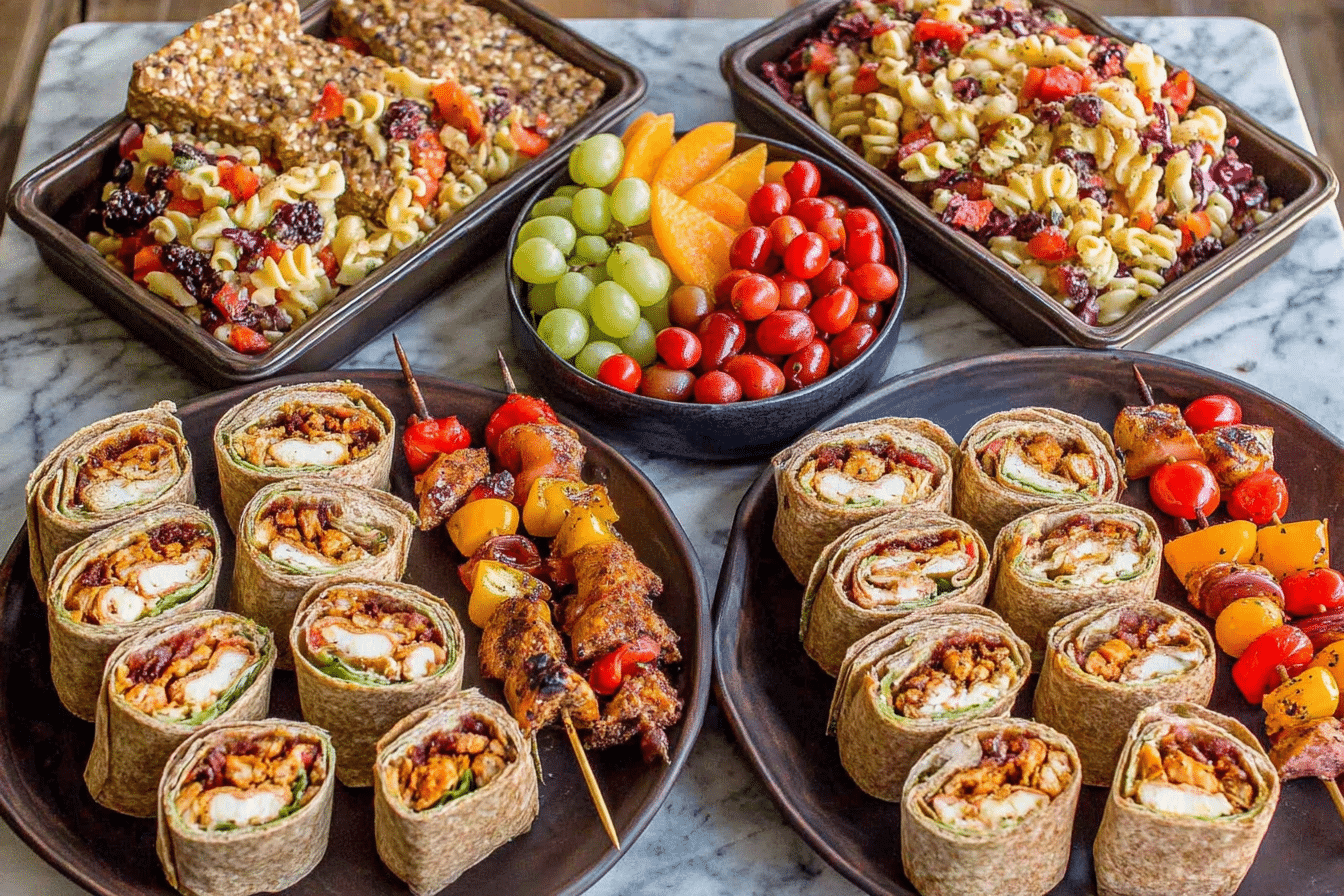
Start by planning meals in advance based on how many days you will be camping. Divide ingredients into breakfast, lunch, dinner, and snack categories to make packing easier.
Cook proteins at home before the trip. Chicken, ground beef, and sausage should be fully cooked, cooled, and stored in airtight containers. This reduces cooking time at the campsite and improves food safety.
Prepare carbohydrates like rice, pasta, and potatoes ahead of time as well. Lightly coat pasta with oil to prevent sticking, and store everything in sealed containers.
Chop vegetables such as peppers, onions, and tomatoes in advance. Keep delicate greens like lettuce and spinach uncut until closer to serving time to maintain freshness.
Assemble some meals fully before the trip, such as burritos or foil packet meals. Wrap them tightly in foil or store them in sealed bags so they can be heated directly over a campfire or portable stove.
Pack sauces and seasonings in small containers. This allows you to quickly add flavor to wraps, bowls, or grilled items without carrying bulky bottles.
Organize your cooler so raw or ready-to-eat items are separated and kept cold. Place frequently used ingredients near the top for easy access.
At the campsite, reheat meals using a skillet, grill grate, or directly in foil over hot coals. Stir or rotate food evenly to avoid cold spots.
Keep prep minimal during camping by using pre-cooked and pre-cut ingredients. Most meals can be assembled in minutes by combining starches, proteins, vegetables, and sauces.
Clean as you go by using disposable bags for scraps and wiping surfaces regularly. This helps maintain an organized cooking area throughout the trip.
Tips, Variations & Substitutions
Wraps are one of the most flexible camping meal options. You can fill tortillas with almost any combination of protein, vegetables, and sauce for a quick handheld meal. Burritos can also be wrapped in foil and warmed over a fire.
Foil packet meals are another reliable option. Combine potatoes, protein, and vegetables with seasoning, wrap tightly in foil, and cook directly over coals for easy cleanup.
For vegetarian options, replace meat with beans, lentils, or extra vegetables. Tofu can also be pre-cooked and used in wraps or rice bowls.
Breakfast can be simplified with overnight oats, pre-made breakfast burritos, or granola packs. These require minimal preparation at the campsite.
Switching sauces changes the entire flavor profile of meals. BBQ sauce creates smoky meals, while pesto or ranch adds creaminess and herb flavor.
Serving Ideas & Occasions
Make ahead camping meals are ideal for multi-day camping trips, road trips, and outdoor festivals where cooking time is limited. They also work well for backyard camping or cabin stays.
Breakfast ideas include burritos, oatmeal packs, and egg wraps. Lunch often features sandwiches, wraps, or cold pasta salads. Dinner options include foil packets, rice bowls, or grilled sausage with vegetables.
Snacks like trail mix, crackers, and fruit are easy to grab throughout the day while hiking or exploring.
Pair meals with simple drinks like water, instant coffee, or hot chocolate for cooler evenings around the fire.
Nutritional & Health Notes
These meals provide a balanced mix of protein, carbohydrates, and fats. Pre-cooked meats and beans supply protein, while rice, pasta, and tortillas provide energy-rich carbohydrates.
Vegetables add fiber and vitamins, helping balance heavier camping foods. Using a variety of ingredients helps maintain nutritional variety over multiple days outdoors.
Portion control is easier when meals are pre-packed. This also reduces food waste and keeps storage organized in limited cooler space.
FAQs
What are the best meals to prep before camping?
Meals like burritos, pasta salads, rice bowls, and foil packet meals work best. They hold up well in coolers and reheat easily over a fire or stove. Pre-cooked proteins and chopped vegetables make assembly fast and simple at the campsite.
How long can make ahead camping meals last?
Most meals last 2–4 days in a properly packed cooler with ice packs. Cooked meats and dairy should be kept cold and consumed earlier in the trip. Dry snacks like trail mix and crackers last much longer without refrigeration.
Can I freeze camping meals before traveling?
Yes, freezing meals like burritos or cooked meats helps them stay cold longer and acts as extra ice in your cooler. They thaw gradually during the trip and remain safe if kept below safe temperatures.
What is the easiest camping meal to prepare?
Wraps and burritos are among the easiest. You simply combine pre-cooked meat, vegetables, cheese, and sauce in a tortilla. They can be eaten cold or warmed over a fire without much preparation.
How do I keep food cold while camping?
Use a high-quality cooler with plenty of ice packs or block ice. Keep the cooler closed as much as possible and organize it so frequently used items are easy to reach. Separate raw and ready-to-eat foods.
Are foil packet meals safe for camping?
Yes, foil packet meals are safe and convenient when cooked properly. They should be sealed tightly and cooked over steady heat until ingredients are fully cooked and tender. They also make cleanup very easy.
What snacks are best for camping trips?
Trail mix, granola bars, crackers, dried fruit, and peanut butter sandwiches are all excellent options. These snacks are lightweight, non-perishable, and easy to pack for hiking or long days outdoors.