
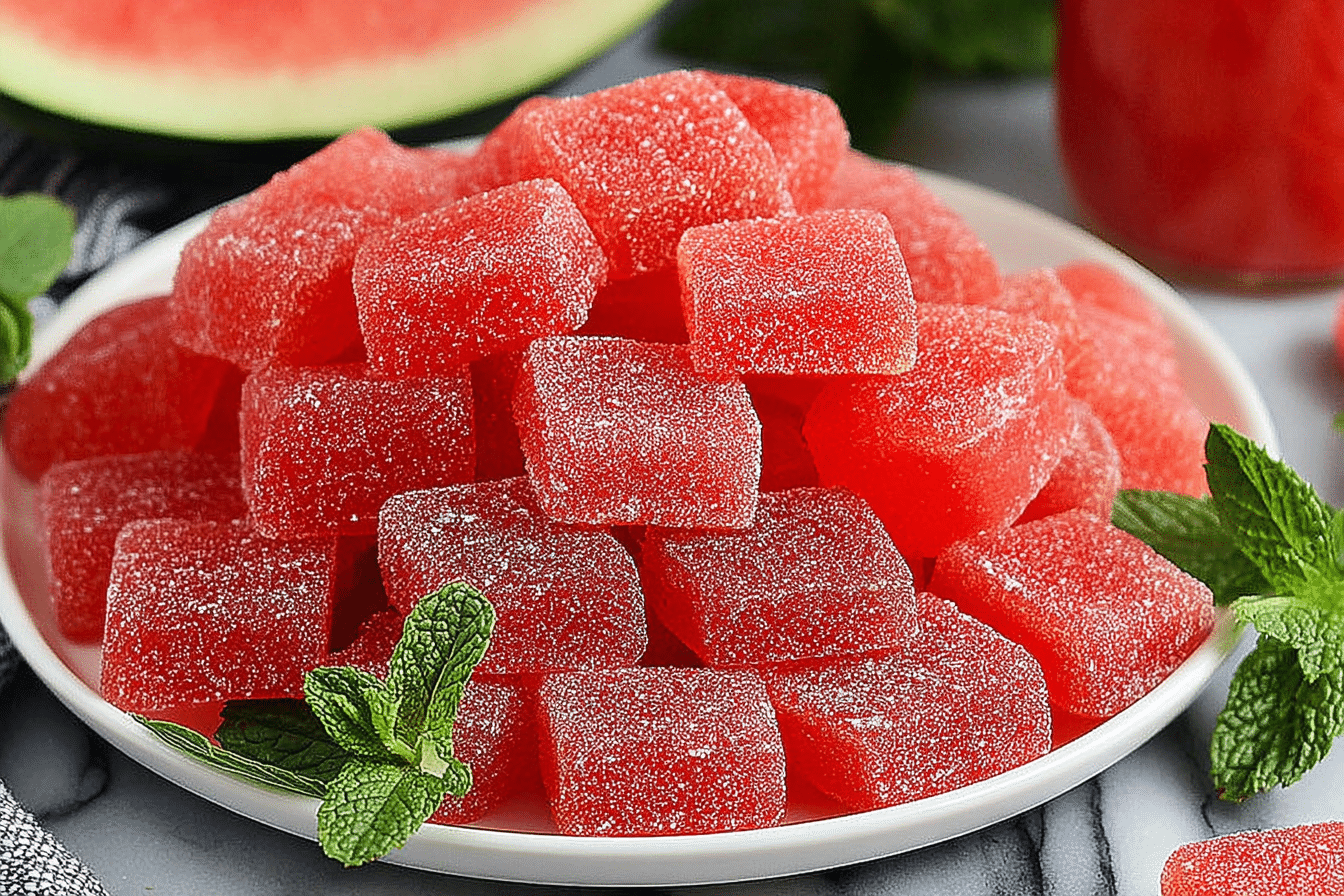
Homemade watermelon gummies are soft, chewy fruit snacks made from real watermelon juice and a simple gelling agent. They are a lighter alternative to store-bought candies and rely on natural fruit flavor rather than artificial additives. The texture is smooth and slightly firm, similar to traditional gummy candies but with a fresh fruit profile.
Fresh watermelon is blended and strained to create a smooth juice base. This juice provides natural sweetness and a light, refreshing taste. Because watermelon has a high water content, it works well for gummies when properly reduced or combined with a setting agent.
Gelatin is commonly used to create the gummy texture. When dissolved in warm liquid and cooled, it forms a soft, elastic structure that holds shape. For a plant-based version, agar agar can be used, though it creates a slightly firmer bite.
A small amount of honey or natural sweetener can be added depending on the sweetness of the fruit. Lemon juice is often included to balance the flavor and add a mild tang that enhances the fruit notes.
These gummies are typically poured into small molds and chilled until set. Silicone molds are often used because they allow easy removal without breaking the shapes. The final result is a smooth, bite-sized treat with a clean watermelon flavor.
Homemade watermelon gummies are often prepared as a simple snack option or as a way to use extra fruit. They store well in the refrigerator and can be made in batches for convenience. Their soft texture and fruit base make them a practical alternative to processed sweets.
Ingredients Overview
Watermelon is the main ingredient and provides both flavor and structure in liquid form. When blended, it becomes a juice that serves as the base for the gummies. Straining the juice helps remove pulp, creating a smoother final texture.
Gelatin is responsible for the chewy consistency. It dissolves in warm liquid and sets as it cools, forming a flexible structure that holds shape. The amount used affects firmness, with more gelatin creating a firmer gummy and less producing a softer bite.
Agar agar can replace gelatin for a plant-based option. It is derived from seaweed and creates a firmer, slightly more brittle texture compared to gelatin. It also sets at room temperature, which makes it convenient for quick preparation.
Honey or a light natural sweetener adds mild sweetness if the watermelon is not fully ripe. It blends easily into the juice and does not overpower the fruit flavor. The amount can be adjusted based on taste preference.
Lemon juice plays a balancing role. It adds mild acidity that enhances the natural sweetness of the watermelon and keeps the flavor from becoming too flat. It also helps brighten the overall taste profile.
A small pinch of salt can sometimes be added to deepen the fruit flavor. This does not make the gummies salty but helps round out the sweetness.
These ingredients work together to create a soft, fruit-based candy with a clean and refreshing profile. The balance between fruit juice, gelling agent, and slight acidity is key to achieving a pleasant texture and taste.
Ingredients
3 cups fresh watermelon, cubed and blended
2 tablespoons lemon juice
2–3 tablespoons honey or natural sweetener (optional)
3 tablespoons unflavored gelatin powder
1/4 cup cold water (for blooming gelatin)
Step-by-Step Instructions
Start by preparing the watermelon. Cut it into cubes and blend until smooth. Pour the blended mixture through a fine strainer to remove pulp and seeds. This creates a clean juice base for the gummies.
Measure out three cups of the strained watermelon juice and pour it into a saucepan. Add lemon juice and honey if using. Stir gently over low heat until the mixture is warm but not boiling.
In a small bowl, sprinkle gelatin over cold water. Let it sit for a few minutes so it absorbs the liquid and thickens. This process helps the gelatin dissolve evenly later.
Once the watermelon mixture is warm, remove it from the heat. Add the bloomed gelatin to the warm juice and stir continuously until fully dissolved. The mixture should become smooth with no visible grains.
Pour the liquid into silicone molds. Small shapes work best for bite-sized gummies, but any mold can be used depending on preference. Carefully fill each cavity without spilling.
Place the molds in the refrigerator and chill for at least two to three hours. During this time, the mixture will firm up and take on a gummy texture.
Once fully set, gently remove the gummies from the molds. They should hold their shape while remaining soft and slightly elastic.
Store the gummies in an airtight container in the refrigerator to maintain texture and freshness.
Tips, Variations & Substitutions
For a stronger fruit flavor, the watermelon juice can be gently simmered before adding gelatin. This reduces excess water and concentrates the taste.
Agar agar can replace gelatin for a plant-based version. It should be dissolved in heated liquid and brought to a brief simmer to activate properly. The texture will be firmer compared to gelatin-based gummies.
Other fruit juices can be mixed with watermelon, such as strawberry or lime, to create different flavor combinations. These blends add variety while keeping the same basic structure.
If a softer texture is preferred, slightly reduce the amount of gelatin. For firmer gummies, increase it slightly while maintaining balance so the texture does not become too rigid.
Silicone molds in small shapes help create evenly sized gummies that set consistently. Lightly oiling molds is not usually necessary but can help with very intricate shapes.
Serving Ideas & Occasions
Watermelon gummies work well as a light snack during warm weather or as a small sweet bite after meals. They can be served chilled for a refreshing texture.
They are also suitable for packed lunches or small snack portions throughout the day. Their compact size makes them easy to store and transport.
These gummies can be arranged on a tray for gatherings or casual sharing. Their bright color and simple shape make them visually appealing without requiring decoration.
They pair well with fresh fruit plates or light beverages such as herbal tea or infused water. Their mild sweetness complements other light snacks.
Nutritional & Health Notes
Watermelon gummies are primarily made from fruit juice, which provides natural sugars and hydration elements. They are lighter than traditional candy options and contain fewer processed ingredients.
Gelatin contributes protein in small amounts, while agar agar provides a plant-based alternative with minimal calories. The overall nutritional profile remains light.
Sweetener levels can be adjusted depending on preference. Using ripe watermelon often reduces the need for added sweeteners.
Because they are portion-controlled, they offer a simple way to enjoy a sweet snack in small amounts without heavy ingredients.
FAQs
Can I use store-bought watermelon juice instead of fresh watermelon?
Yes, store-bought watermelon juice can be used if it is 100 percent juice without added sugars or artificial flavors. Fresh watermelon juice is preferred because it has a lighter and more natural taste, but packaged juice works in convenient situations. If using store-bought juice, it may be slightly sweeter or more concentrated, so adjusting added sweetener is helpful. Always check that the juice is pure to maintain the intended flavor and texture of the gummies.
Why are my gummies too soft?
Gummies can turn out soft if there is not enough gelatin or if the mixture was not properly combined. Gelatin needs to fully dissolve in warm liquid to create structure. If the ratio of liquid to gelatin is too high, the final texture will remain loose. Increasing gelatin slightly in future batches can help create a firmer result. Proper chilling time is also important for setting.
Can I make these gummies without sweetener?
Yes, sweetener is optional. Ripe watermelon often provides enough natural sweetness on its own. Omitting honey or other sweeteners will result in a more subtle fruit flavor. If the watermelon is naturally sweet, no additional ingredients are needed. The flavor will be lighter but still noticeable.
What is the difference between gelatin and agar agar gummies?
Gelatin creates a soft, chewy texture that is closer to traditional gummy candy. Agar agar produces a firmer and slightly more brittle texture. Gelatin sets in the refrigerator, while agar agar sets at room temperature once cooled. The choice depends on dietary preference and desired texture.
How long do homemade watermelon gummies last?
When stored in an airtight container in the refrigerator, these gummies typically last several days. Keeping them chilled helps maintain texture and prevents them from becoming too soft. Exposure to heat or air can affect their firmness, so proper storage is important.
Can I freeze watermelon gummies?
Freezing is possible, but it may change the texture once thawed. Gelatin-based gummies can become slightly watery after freezing. If frozen, they should be thawed slowly in the refrigerator. Fresh storage is generally preferred for best texture.
Can I add other fruits to the recipe?
Yes, other fruit juices such as strawberry, raspberry, or lime can be mixed with watermelon juice. This creates new flavor combinations while keeping the same structure. It is important to maintain the balance of liquid so the gelatin sets properly. Blending fruits can also enhance color and flavor variety.
PrintEasy Watermelon Gummies Recipe with Light Honey Sweetener
Homemade watermelon gummies are soft fruit snacks made from fresh watermelon juice, gelatin, and light sweetener for a simple chewy treat.
- Prep Time: 15 minutes
- Cook Time: 5 minutes
- Total Time: 3 hours 20 minutes
- Yield: 20–25 gummies 1x
Ingredients
3 cups watermelon juice
2 tbsp lemon juice
2–3 tbsp honey
3 tbsp gelatin
1/4 cup water
Instructions
- Blend and strain watermelon.
- Warm juice with lemon juice.
- Bloom gelatin in cold water.
- Stir gelatin into warm juice.
- Pour into molds.
- Chill until set.
Notes
Keep refrigerated for best texture.