
Spring Pea and Garden Herb Fettuccine celebrates bright seasonal ingredients and gentle, comforting flavors. Tender fettuccine noodles are tossed with sweet green peas, fragrant herbs, and a light garlic and olive oil base. The result is a fresh pasta dish that feels vibrant yet satisfying.
The natural sweetness of peas pairs beautifully with soft ribbons of fettuccine. Garden herbs bring fragrance and color, while a touch of lemon and Parmesan gives the dish balance and depth. Each bite feels light but still hearty enough to stand as a complete meal.
Spring Pea and Garden Herb Fettuccine is particularly appealing during warmer months when peas and herbs are plentiful. However, frozen peas make it possible to prepare this dish throughout the year without losing its bright character.
This pasta comes together quickly, making it a practical option for busy evenings while still feeling thoughtful and homemade. The ingredients remain simple, allowing the vegetables and herbs to shine without heavy sauces.
Ingredients Overview
Spring Pea and Garden Herb Fettuccine uses a handful of fresh ingredients that create a balanced and aromatic pasta dish. Each component contributes texture, flavor, and visual appeal.
Green peas are the star ingredient. Fresh peas offer natural sweetness and a tender bite that contrasts nicely with soft pasta. When fresh peas are unavailable, frozen peas work well because they are typically frozen shortly after harvesting, preserving their flavor and color. They cook quickly and blend seamlessly into the dish.
Fettuccine provides a smooth, wide pasta shape that holds the light sauce and small peas. The slightly thicker ribbons create satisfying texture without overwhelming the vegetables. Other pasta shapes such as tagliatelle or linguine can substitute if needed.
Garden herbs add freshness and aroma. Parsley, basil, chives, and dill are popular choices that pair well with peas. These herbs bring layers of flavor without heaviness. A mixture of herbs adds complexity and creates a bright green appearance.
Garlic and olive oil form the base of the sauce. Garlic introduces gentle warmth, while olive oil coats the pasta and carries the herbal notes throughout the dish. This combination creates a light yet flavorful foundation.
Parmesan cheese contributes savory depth. Finely grated Parmesan melts slightly into the warm pasta and pasta water, forming a silky coating rather than a thick sauce.
Lemon zest and juice brighten the dish and balance the sweetness of peas. The citrus notes highlight the herbs and prevent the pasta from feeling too rich.
A small amount of reserved pasta cooking water ties everything together. The starch in the water helps the olive oil and cheese cling to the pasta, producing a light, glossy finish.
If desired, small additions such as sautéed mushrooms, spinach, or grilled chicken can complement the dish while maintaining its fresh character.
Ingredients
12 ounces fettuccine pasta
1 1/2 cups green peas (fresh or frozen)
3 tablespoons olive oil
3 cloves garlic, minced
1 teaspoon lemon zest
2 tablespoons fresh lemon juice
1/2 teaspoon salt
1/4 teaspoon black pepper
1/3 cup finely grated Parmesan cheese
1/4 cup reserved pasta cooking water
2 tablespoons chopped fresh parsley
2 tablespoons chopped fresh basil
1 tablespoon chopped chives
Optional: 1 tablespoon chopped fresh dill
Extra Parmesan for serving
Optional: red pepper flakes for gentle heat
Step-by-Step Instructions
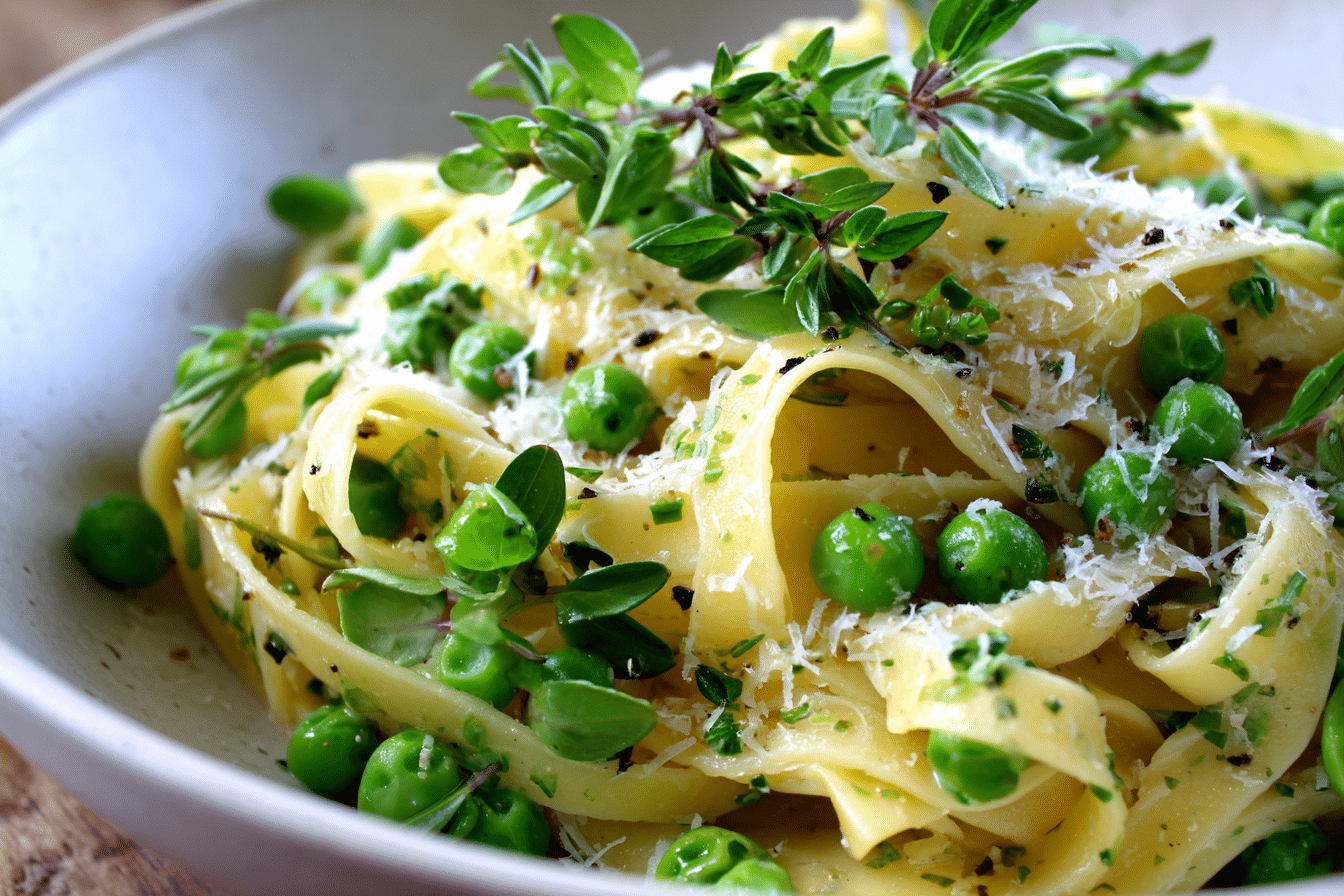
Begin by bringing a large pot of salted water to a rolling boil. Add the fettuccine and cook according to package directions until al dente. The pasta should remain slightly firm since it will finish cooking in the skillet later.
About two minutes before the pasta finishes cooking, add the peas directly to the boiling water. This brief cooking time warms them while preserving their bright color and tender texture.
Before draining, scoop out about half a cup of the pasta cooking water and set it aside. This starchy water helps create the light sauce that coats the noodles.
Drain the pasta and peas together and set them aside while preparing the sauce.
Place a large skillet over medium heat and pour in the olive oil. Once warm, add the minced garlic. Cook for about thirty seconds while stirring frequently. The garlic should become fragrant but remain pale in color.
Add the cooked fettuccine and peas to the skillet. Toss gently with tongs so the pasta becomes coated with the garlic and olive oil.
Stir in the lemon zest and lemon juice. The citrus aroma should brighten the pan and complement the sweetness of the peas.
Sprinkle the grated Parmesan cheese evenly over the pasta. Pour in two to three tablespoons of the reserved pasta cooking water. Toss continuously so the cheese melts and combines with the liquid and oil, forming a smooth coating around the noodles.
If the pasta appears slightly dry, add another small splash of pasta water and continue tossing. The finished texture should appear glossy and lightly coated rather than heavy.
Add the chopped parsley, basil, chives, and optional dill. Toss again so the herbs distribute evenly throughout the pasta.
Taste and adjust seasoning if needed. Because Parmesan already contains salt, only minor adjustments may be necessary.
Serve the Spring Pea and Garden Herb Fettuccine immediately while warm. Sprinkle extra Parmesan and a pinch of red pepper flakes on top if desired.
Avoid overcooking the peas or herbs. The herbs should be added at the end so their fragrance remains fresh and vibrant.
Tips, Variations & Substitutions
Using a mixture of herbs creates the most layered flavor. Parsley adds freshness, basil contributes sweetness, and chives introduce a mild onion note. Dill can bring an additional garden aroma when used sparingly.
Frozen peas should be added near the end of the pasta cooking process rather than sautéed directly in the pan. This method keeps them tender and bright.
If a creamier texture is preferred, stir in a tablespoon of ricotta cheese while tossing the pasta. The ricotta melts slightly and forms a soft coating that blends well with lemon and herbs.
For added protein, grilled chicken slices or sautéed shrimp can be folded into the pasta during the final step. White beans are another gentle addition that keeps the dish vegetarian.
Whole wheat fettuccine works well in this recipe and contributes a slightly nutty flavor. Gluten-free pasta can also be used; just cook it carefully according to package instructions.
Extra vegetables can easily be added. Baby spinach, asparagus pieces, or zucchini ribbons complement peas and herbs without overwhelming the dish.
If stronger citrus notes are desired, increase the lemon zest slightly instead of adding extra juice, which could make the sauce too acidic.
Serving Ideas & Occasions
Spring Pea and Garden Herb Fettuccine works beautifully as a light main course or a flavorful side dish. When served as the main meal, it pairs nicely with a crisp green salad dressed with olive oil and vinegar.
For larger meals or gatherings, this pasta can accompany grilled chicken, roasted salmon, or vegetable platters. The bright herbal flavor complements many simple proteins without overpowering them.
A side of roasted vegetables such as carrots, mushrooms, or zucchini adds warmth and color to the table. Warm crusty bread can also accompany the pasta to round out the meal.
Light beverages work best alongside this dish. Sparkling water with lemon, herbal iced tea, or chilled white grape juice complements the citrus and herb notes.
This pasta is particularly fitting for spring lunches, garden gatherings, and relaxed family dinners. Its fresh ingredients and quick cooking method make it ideal for seasonal meals when lighter dishes feel especially welcome.
Nutritional & Health Notes
Spring Pea and Garden Herb Fettuccine offers a balanced mix of carbohydrates, vegetables, and healthy fats. Pasta provides steady energy, while peas contribute fiber and plant-based protein.
Green peas contain vitamins such as vitamin C, vitamin K, and folate. They also provide antioxidants and fiber, which support a balanced diet.
Fresh herbs add small amounts of vitamins and natural plant compounds while bringing strong flavor without extra calories.
Olive oil supplies heart-friendly fats that help carry the flavors of garlic, lemon, and herbs throughout the dish. Using moderate amounts keeps the pasta light while still satisfying.
Parmesan cheese contributes calcium and protein while adding savory depth. Because the flavor is concentrated, a relatively small portion provides noticeable taste.
Using whole wheat pasta can increase fiber content and add a slightly fuller texture. Adding beans, chicken, or seafood can further increase protein for those seeking a more substantial meal.
FAQs
Can I use frozen peas instead of fresh peas?
Yes, frozen peas work very well in Spring Pea and Garden Herb Fettuccine. They are often frozen soon after harvesting, which helps preserve their natural sweetness and bright color. Add them directly to the boiling pasta water during the final two minutes of cooking. This warms them through without overcooking. Avoid thawing them too early or sautéing them for long periods, as that can make them soft. When cooked briefly, frozen peas provide nearly the same flavor and texture as fresh ones in this recipe.
What herbs work best in this pasta?
A combination of parsley, basil, and chives creates a balanced and fragrant mixture. Parsley provides a clean, fresh taste, basil adds mild sweetness, and chives contribute a gentle onion note. Dill can also be included for a slightly grassy flavor that pairs well with peas. The herbs should be chopped finely and stirred into the pasta just before serving so their aroma remains bright and noticeable.
Can I prepare this dish ahead of time?
This pasta tastes best immediately after cooking because the herbs remain vibrant and the sauce lightly coats the noodles. However, some preparation can be done in advance. The herbs may be washed and chopped several hours earlier, and the garlic can be minced ahead of time. If the pasta must be reheated, warm it gently in a skillet with a small splash of water or olive oil to loosen the sauce.
What protein can I add to make the dish more filling?
Several proteins complement the flavors of peas, lemon, and herbs. Grilled chicken breast sliced thinly blends well with the pasta. Sautéed shrimp is another popular option that cooks quickly and pairs naturally with the citrus notes. For a vegetarian addition, white beans or chickpeas provide plant-based protein and a creamy texture that works well with the light sauce.
How do I keep the sauce light instead of oily?
The key is using a small amount of pasta cooking water. The starch in this water helps blend the olive oil and Parmesan into a light coating that clings to the noodles. Add the water gradually while tossing the pasta so it forms a glossy texture rather than pooling at the bottom of the pan. This method creates a balanced sauce without excess oil.
Can I use a different type of pasta?
Yes, several pasta shapes work well in this recipe. Tagliatelle, linguine, and spaghetti all hold the light sauce nicely. Short shapes like penne or fusilli can also work because their ridges capture bits of cheese and herbs. The key is cooking the pasta until just al dente so it maintains structure when tossed with the sauce and vegetables.
How should leftovers be stored?
Store leftover Spring Pea and Garden Herb Fettuccine in an airtight container in the refrigerator for up to two days. When reheating, place the pasta in a skillet over low heat and add a small splash of water or olive oil. Stir gently until warmed through. A little fresh lemon juice or a sprinkle of herbs added just before serving can refresh the flavors.
PrintSpring Pea Fettuccine with Fresh Herbs – Light and Vibrant Pasta Dish
A fresh and light pasta featuring fettuccine tossed with sweet peas, garlic, lemon, garden herbs, and Parmesan.
- Prep Time: 10 minutes
- Cook Time: 15 minutes
- Total Time: 25 minutes
- Yield: 4 servings 1x
Ingredients
12 ounces fettuccine
1 1/2 cups green peas
3 tablespoons olive oil
3 cloves garlic, minced
1 teaspoon lemon zest
2 tablespoons lemon juice
1/2 teaspoon salt
1/4 teaspoon black pepper
1/3 cup grated Parmesan cheese
1/4 cup pasta cooking water
2 tablespoons chopped parsley
2 tablespoons chopped basil
1 tablespoon chopped chives
Optional chopped dill
Extra Parmesan for serving
Instructions
-
Bring salted water to a boil and cook fettuccine until al dente.
-
Add peas during the last two minutes of cooking.
-
Reserve 1/2 cup pasta cooking water, then drain pasta and peas.
-
Heat olive oil in a skillet over medium heat.
-
Cook garlic briefly until fragrant.
-
Add pasta and peas to the skillet and toss.
-
Stir in lemon zest and lemon juice.
-
Sprinkle Parmesan and add pasta water while tossing.
-
Mix in fresh herbs.
-
Serve warm with extra Parmesan.
Notes
Add herbs at the end of cooking so their fragrance remains bright and fresh.