
Blueberry Bark combines creamy chocolate with bursts of juicy blueberries in a chilled sheet that breaks into rustic pieces. The contrast between smooth chocolate and bright fruit creates a dessert that feels both refreshing and satisfying. Each bite offers gentle sweetness balanced by the natural tart character of blueberries.
This treat fits perfectly during warm weather when lighter desserts feel appealing. A thin layer of melted chocolate spread across a tray becomes the base, while fresh or dried blueberries add color, flavor, and pleasant texture. After chilling, the slab hardens into a crisp sheet that snaps into irregular pieces.
Blueberry Bark also works well for gatherings, snack trays, or casual desserts. The appearance alone stands out with deep purple fruit scattered across glossy chocolate. The combination looks elegant without requiring complicated kitchen techniques.
Because the preparation is straightforward and flexible, this dessert invites creativity. White chocolate, dark chocolate, or a mix of both pair beautifully with blueberries. Nuts, coconut flakes, or yogurt drizzle can also join the topping layer.
The result is a chilled chocolate bark that highlights blueberry flavor in a refreshing way, offering a simple dessert that feels special without complicated preparation.
Ingredients Overview
Chocolate forms the foundation of Blueberry Bark. Both dark chocolate and white chocolate work beautifully. Dark chocolate brings rich cocoa flavor that balances the gentle tartness of blueberries. White chocolate creates a creamy base with softer sweetness and a striking visual contrast against the purple fruit. Many cooks even swirl both varieties together for marbled patterns.
Blueberries bring natural brightness to the bark. Fresh berries provide juicy bursts and vibrant color. When fresh fruit is unavailable, dried blueberries are a reliable substitute. Dried berries offer a chewy texture that pairs well with the firm chocolate base and still deliver concentrated berry flavor.
Coconut oil sometimes joins the chocolate during melting. A small amount creates a smoother texture that spreads easily across parchment paper. It also helps the bark snap cleanly after chilling.
Sea salt is optional but highly recommended. A light sprinkle across the surface balances sweetness and highlights the fruit flavor. The contrast between sweet chocolate and subtle salt creates depth across each bite.
Additional toppings can personalize the bark. Toasted almonds add gentle crunch and nutty warmth. Pistachios provide color contrast and delicate flavor. Shredded coconut adds soft texture and tropical character.
Greek yogurt drizzle is another popular addition. A thin swirl across the surface introduces tangy creaminess that pairs nicely with blueberries. Freeze-dried berry powder can also be dusted lightly across the bark for deeper fruit aroma.
Parchment paper or silicone baking mats help with clean removal. The chocolate spreads easily across these surfaces and lifts away without sticking after chilling.
These simple ingredients come together to create a layered dessert where chocolate richness meets bright berry freshness.
Step-by-Step Instructions
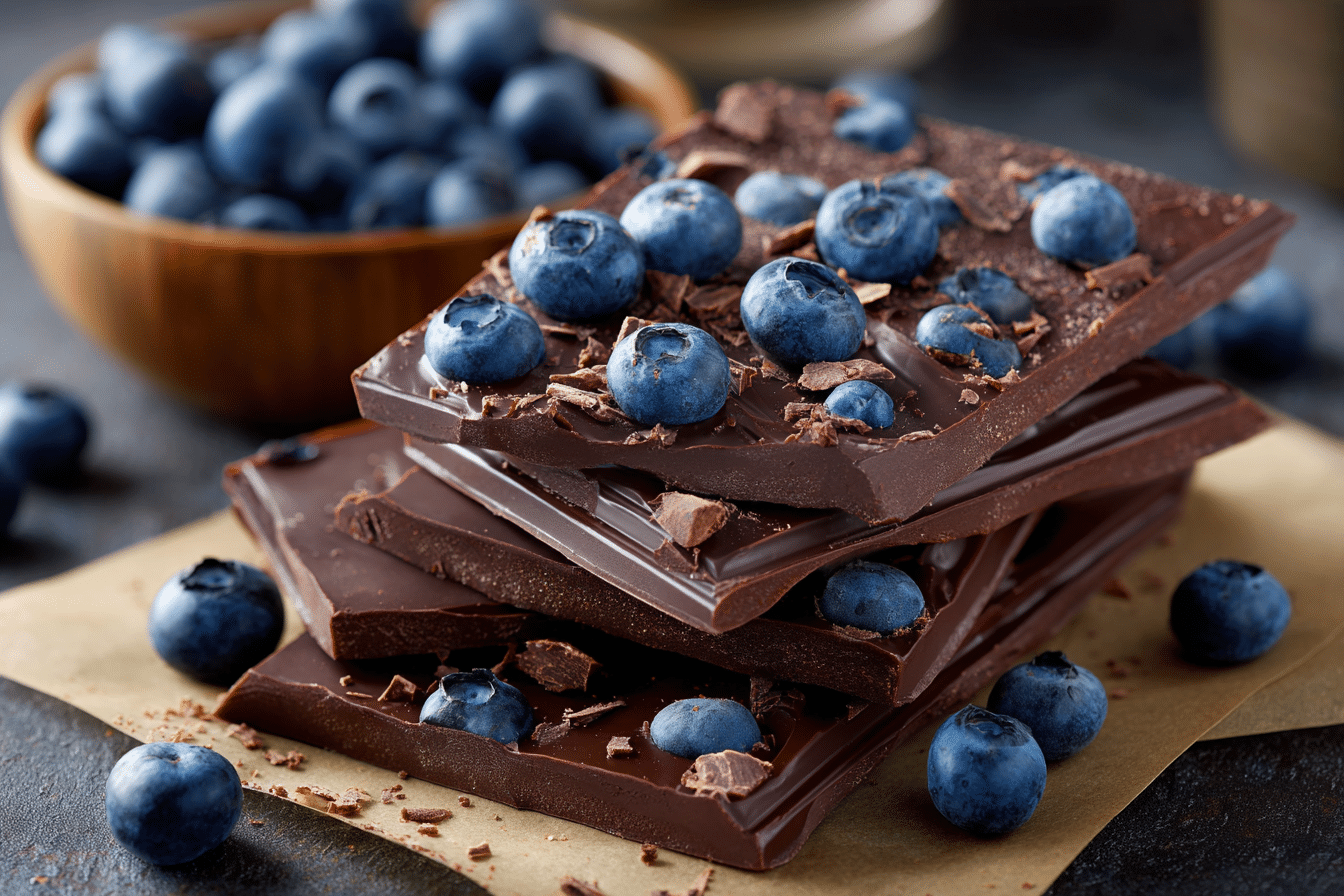
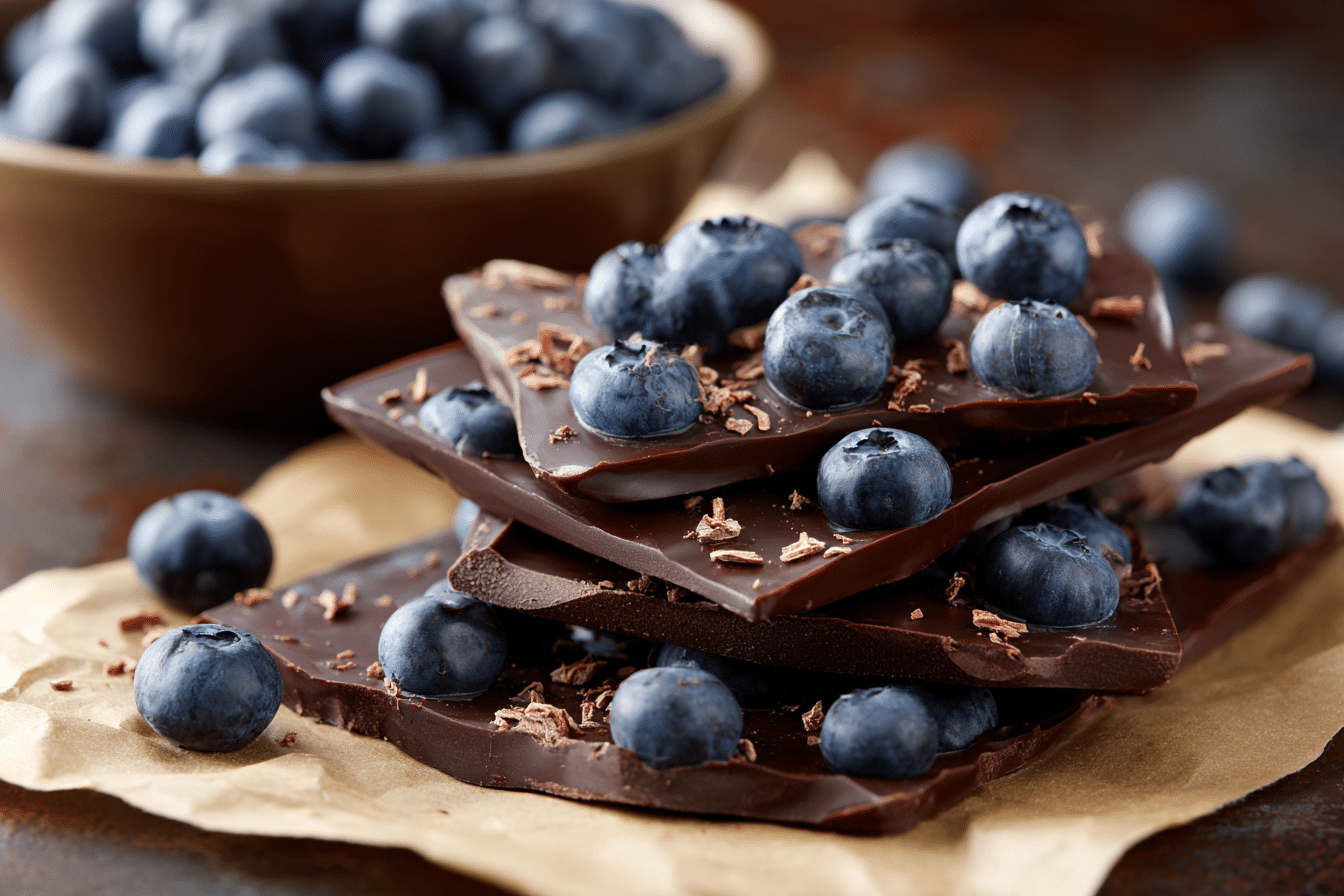
Begin by preparing a flat baking tray lined with parchment paper or a silicone mat. The lined surface allows the hardened bark to release easily later. Select a tray large enough for a thin chocolate layer; thin bark creates the most pleasant snap.
Chop chocolate into small pieces if using bars. Smaller pieces melt evenly and reduce the chance of scorching. Place the chocolate in a heatproof bowl set above a saucepan containing gently simmering water. This double-boiler approach melts chocolate slowly and protects its texture.
Stir the chocolate gradually as heat softens the pieces. When nearly smooth, add a teaspoon of coconut oil if desired. Continue stirring until the mixture appears glossy and completely melted.
Remove the bowl from heat and allow the chocolate to cool slightly. Extremely hot chocolate can soften fresh blueberries too quickly, which releases excess juice. A brief cooling period prevents this.
Pour the melted chocolate onto the prepared tray. Using a spatula, spread the chocolate into an even layer about a quarter inch thick. Try to maintain consistent thickness so the bark breaks evenly after chilling.
Scatter blueberries across the chocolate while the surface remains soft. Press the berries gently so they settle into the chocolate without sinking completely.
If additional toppings are planned, distribute them across the surface at this stage. Chopped nuts, coconut flakes, or yogurt drizzle can be added before the chocolate hardens.
A small pinch of flaky sea salt can also be sprinkled lightly across the surface. The salt crystals highlight sweetness and fruit flavor.
Transfer the tray to a refrigerator. Within about thirty to forty minutes, the chocolate will firm completely. The surface should appear matte and solid.
Once hardened, lift the bark sheet from the parchment. Break the slab into rustic shards using clean hands or a knife. Irregular shapes add charm and emphasize the homemade style.
Store the finished Blueberry Bark in an airtight container within the refrigerator. Chilled storage keeps the chocolate crisp and the blueberries fresh.
Tips, Variations & Substitutions
Chocolate quality strongly influences flavor. Bars containing higher cocoa content provide deeper taste and smoother texture compared with many chips. Selecting quality chocolate results in a cleaner snap and richer flavor.
If fresh blueberries release too much moisture, freeze-dried berries offer another excellent option. They provide concentrated fruit flavor and remain crisp against the chocolate surface.
White chocolate fans often enjoy adding lemon zest across the bark. The citrus aroma highlights blueberry flavor and brightens the entire dessert.
For a creamy layered style, spread a thin layer of vanilla yogurt across partially set chocolate, then scatter blueberries on top before chilling again. This creates a refreshing frozen dessert variation.
Nut lovers can add roasted almonds, hazelnuts, or pecans. Light toasting deepens nut flavor and creates a pleasant crunch.
A swirl pattern can also bring visual interest. Melt dark chocolate and white chocolate separately, pour both onto the tray, then drag a skewer gently across the surface to create marbled patterns before adding blueberries.
Plant-based versions are easy to prepare. Dairy-free chocolate combined with coconut yogurt drizzle keeps the bark fully plant-based while maintaining creamy flavor.
For festive presentations, mix blueberries with raspberries or chopped strawberries. The mix of red and purple fruit creates a colorful dessert tray suitable for celebrations.
These small adjustments allow Blueberry Bark to shift from simple snack to elegant dessert while maintaining its refreshing character.
Serving Ideas & Occasions
Blueberry Bark works beautifully on dessert platters. The colorful shards stand out beside cookies, brownies, and fruit trays. The crisp chocolate pieces also pair nicely with fresh fruit bowls.
For warm afternoons, chilled bark pieces provide a refreshing sweet bite alongside iced tea, lemonade, or sparkling water. The fruit brightness keeps the dessert from feeling overly rich.
Brunch gatherings also benefit from this dessert. A tray of Blueberry Bark pairs well with pastries, yogurt bowls, and coffee beverages.
During holiday celebrations, bark pieces can be packaged in small gift boxes or jars lined with parchment paper. The colorful blueberries scattered across chocolate create an attractive homemade gift.
Ice cream toppings offer another creative serving option. Crushed bark sprinkled over vanilla or blueberry ice cream introduces chocolate crunch and berry flavor in every spoonful.
Whether served casually during an afternoon snack or arranged neatly for guests, Blueberry Bark provides a versatile dessert that fits many occasions.
Nutritional & Health Notes
Blueberries contribute natural vitamins, fiber, and plant compounds commonly linked with balanced eating patterns. Their bright color signals the presence of antioxidants that support overall dietary variety.
Dark chocolate also contains cocoa compounds that add depth of flavor while contributing small amounts of minerals such as iron and magnesium. Selecting chocolate with higher cocoa content typically results in lower sugar levels compared with very sweet varieties.
Portion awareness remains helpful because chocolate desserts still contain calories from cocoa butter and sugar. Breaking bark into small shards naturally supports moderate servings.
Adding nuts can increase protein and healthy fats, while coconut flakes introduce additional texture and flavor. These additions can slightly raise calorie content but also contribute nutritional variety.
Using fresh fruit rather than sugary candy toppings helps maintain a balanced dessert profile. Blueberry Bark therefore offers a sweet treat that still incorporates real fruit and simple ingredients.
FAQs
How should Blueberry Bark be stored?
Blueberry Bark stays freshest when stored inside an airtight container within the refrigerator. Chilled storage keeps the chocolate firm and prevents fresh blueberries from softening the surface. Layers of parchment paper placed between pieces help prevent sticking. Properly stored bark typically maintains texture and flavor for about five days. If dried blueberries were used instead of fresh fruit, the bark may remain stable slightly longer because dried berries contain less moisture. Keeping the container sealed protects the chocolate from absorbing refrigerator odors.
Can frozen blueberries be used for Blueberry Bark?
Frozen blueberries can be used, though a small preparation step improves results. Allow the berries to thaw completely and gently pat them dry using paper towels. Removing excess moisture prevents water from forming ice crystals or streaking the chocolate surface. After drying, the berries can be scattered across melted chocolate just like fresh fruit. Some cooks even prefer frozen berries because their softer texture presses easily into the chocolate layer.
Which chocolate works best for this recipe?
Both dark chocolate and white chocolate produce excellent Blueberry Bark. Dark chocolate creates bold cocoa flavor that balances the bright tartness of blueberries. White chocolate produces a creamier base and dramatic color contrast with the fruit. Many dessert lovers enjoy combining both types to form a marbled pattern across the bark surface. High-quality chocolate bars usually melt smoothly and provide a cleaner snap compared with chocolate chips, which often contain stabilizers.
Why did the chocolate develop white streaks after chilling?
White streaks across hardened chocolate usually result from temperature changes that cause cocoa butter to separate slightly. This effect, often called bloom, does not affect flavor or safety but can alter appearance. Gentle melting and gradual cooling help reduce this effect. Using a double-boiler method rather than direct heat also helps maintain stable chocolate texture. Even when bloom appears, the bark remains perfectly edible and still delivers the same blueberry flavor.
Can Blueberry Bark be prepared in advance?
Yes, Blueberry Bark is well suited for preparation ahead of gatherings or events. After the chocolate layer hardens, the bark pieces can be stored in the refrigerator inside a sealed container. Preparing the bark a day before serving often improves texture because the chocolate fully stabilizes during chilling. If fresh berries were used, serving within two days provides the brightest fruit flavor. For longer storage, dried blueberries offer a slightly extended shelf life.
How thick should the chocolate layer be?
A thickness of roughly a quarter inch usually produces the best texture. Thinner layers create a pleasant crisp snap when broken, while thicker layers may feel overly dense. Spreading the chocolate evenly across the tray also helps maintain consistent texture. A spatula or offset knife works well for smoothing the surface before adding blueberries and toppings. Even thickness leads to bark pieces that break neatly without crumbling.
Can other fruits be added with blueberries?
Yes, combining blueberries with other berries creates colorful variation while keeping the refreshing character of the dessert. Raspberries, chopped strawberries, or freeze-dried berries blend nicely with the chocolate base. The mixture adds both flavor variety and visual contrast across the bark. When using very juicy fruit, lightly patting pieces dry before adding them helps protect the chocolate texture. The result remains a vibrant berry chocolate bark with layered flavor.
PrintBlueberry Bark Dessert with Rich Chocolate and Juicy Berries
Blueberry Bark is a chilled chocolate dessert topped with scattered blueberries and optional nuts or coconut. After spreading melted chocolate across a tray and adding fruit, the slab chills until firm and breaks into crisp shards filled with berry flavor.
- Prep Time: 10 minutes
- Cook Time: 5 minutes
- Total Time: 15 minutes
- Yield: 10 servings 1x
Ingredients
2 cups dark or white chocolate, chopped
1 teaspoon coconut oil
1 cup fresh blueberries or dried blueberries
2 tablespoons chopped almonds or pistachios (optional)
1 tablespoon shredded coconut (optional)
Pinch flaky sea salt
Instructions
-
Line a baking tray with parchment paper.
-
Place chopped chocolate in a heatproof bowl over gently simmering water.
-
Stir slowly until the chocolate melts completely.
-
Mix in coconut oil and stir until smooth.
-
Pour melted chocolate onto the lined tray and spread into a thin even layer.
-
Scatter blueberries across the chocolate surface and press lightly.
-
Add chopped nuts, coconut, and a light sprinkle of sea salt if desired.
-
Transfer the tray to the refrigerator for about 30 to 40 minutes until firm.
-
Lift the hardened sheet from the tray and break into rustic pieces.
Notes
Use high-quality chocolate bars for smoother melting and better texture. Fresh blueberries give juicy bursts of flavor, while dried blueberries create a chewy texture.