
A Hawaiian Charcuterie Board brings the bright spirit of island flavors to the table through color, texture, and refreshing tropical taste. Instead of traditional cured meats and cheeses alone, this board highlights sweet fruit, savory bites, and vibrant ingredients inspired by Hawaiian cuisine. The result is a spread that feels relaxed, welcoming, and full of sunny character.
At the heart of a Hawaiian Charcuterie Board lies contrast. Juicy pineapple balances salty meats. Creamy cheeses sit beside crisp vegetables. Fresh fruit introduces natural sweetness that keeps the board light and refreshing. Every section of the platter offers a new flavor combination that guests can enjoy at their own pace.
This style of charcuterie works beautifully for gatherings. Whether served at a backyard cookout, beach-style party, or casual family evening, the board invites everyone to sample different ingredients and build small bites. Its colorful presentation naturally draws attention and creates a centerpiece for the table.
Another appealing aspect is flexibility. A Hawaiian Charcuterie Board can be adjusted based on season, ingredient availability, or personal taste. Tropical fruit, savory snacks, and simple garnishes combine to produce a display that feels festive yet easy to assemble.
When arranged thoughtfully, the board becomes more than a snack platter. It turns into a vibrant collection of island-inspired flavors that celebrate freshness and balance.
Ingredients Overview
A successful Hawaiian Charcuterie Board depends on selecting ingredients that highlight both tropical sweetness and savory richness. Each component contributes texture, flavor contrast, and visual appeal.
Fresh pineapple usually serves as the central fruit. Its bright acidity cuts through salty meats and creamy cheeses. Pineapple also provides juicy texture and golden color that immediately signals tropical flavor. Cutting the fruit into bite-size wedges or cubes makes it easy for guests to pick up with toothpicks.
Mango adds smooth sweetness and soft texture. Ripe mango slices pair beautifully with cheese and cured meats. Their deep orange color also brings warmth to the board’s presentation.
Papaya offers another gentle tropical flavor. It has a mild sweetness that complements stronger ingredients such as smoked meats or tangy cheese. Removing seeds and slicing the fruit into thin wedges keeps the board neat and easy to serve.
For savory elements, cured meats such as prosciutto, salami, or smoked ham work well. These meats introduce saltiness that balances the sweet fruit. Folding slices into loose ribbons or rosettes adds dimension and visual interest.
Cheese brings creaminess and depth. Mild cheeses such as mozzarella pearls, Monterey Jack, or Havarti complement fruit without overwhelming the palate. Slightly sharper options such as aged cheddar add contrast.
Crackers or toasted baguette slices provide structure for small bites. Neutral crackers allow the fruit and cheese flavors to shine. Toasted bread also contributes crunch, which is important for texture balance.
Nuts such as macadamias fit naturally into a Hawaiian Charcuterie Board. Their buttery flavor and firm texture create pleasant contrast with soft fruit.
Small bowls of extras can also enrich the board. Coconut chips add tropical aroma, while honey or fruit preserves offer gentle sweetness. Pickled vegetables or olives provide tangy brightness.
Finally, garnishes play an important role. Fresh mint leaves, lime slices, or edible flowers bring freshness and color that make the board feel abundant and inviting.
Step-by-Step Instructions
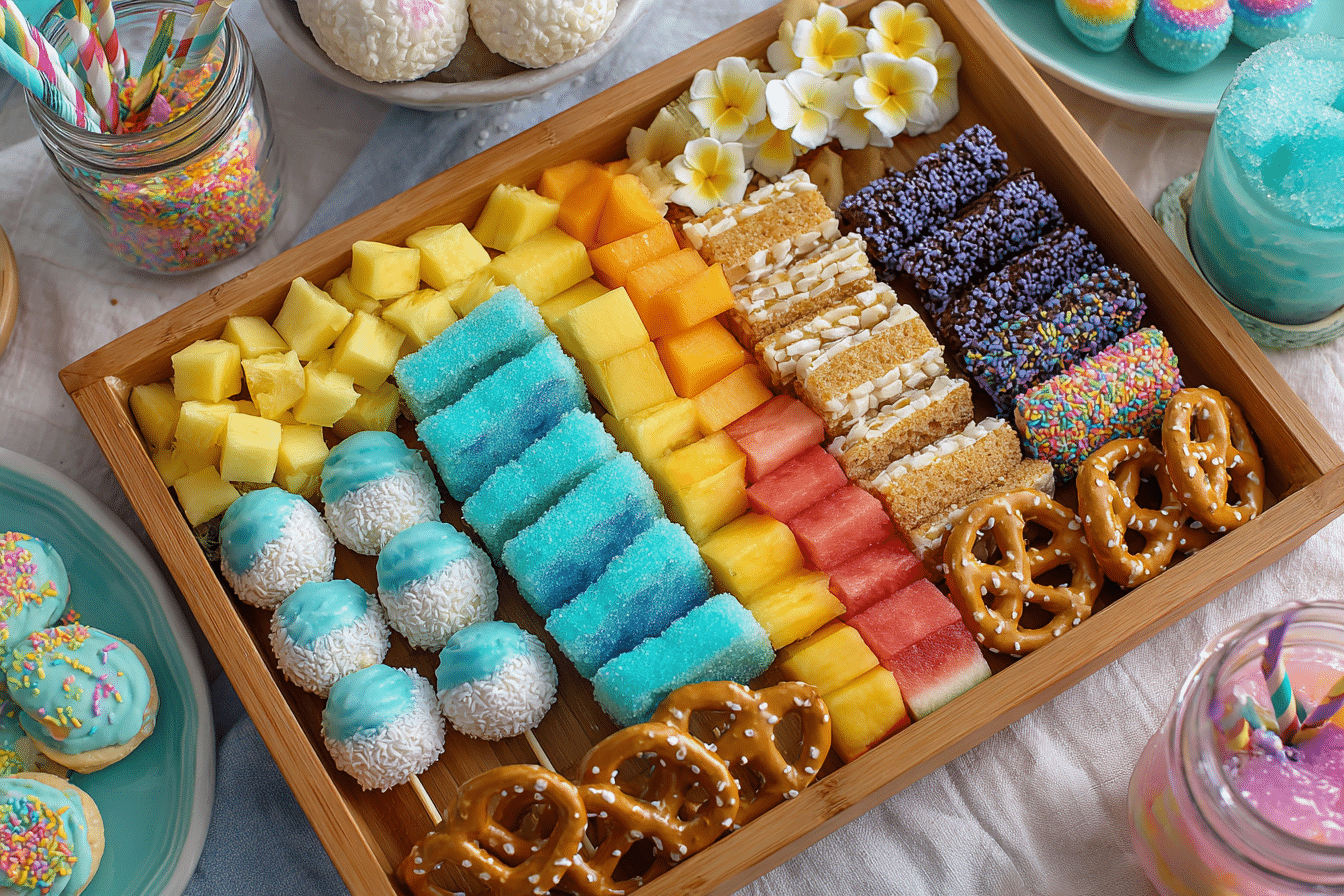
Creating a Hawaiian Charcuterie Board begins with selecting a large serving surface. Wooden boards, marble slabs, or wide platters work well because they provide enough room for multiple ingredients without crowding.
Start by preparing the fruit. Peel and core the pineapple, then cut it into wedges or cubes that are easy to grab. Slice mango by cutting along each side of the pit, then score the flesh and separate it into small pieces. Papaya should be halved, seeds removed, and flesh sliced into thin strips.
Place small bowls onto the board first. These bowls hold ingredients such as honey, olives, coconut chips, or dipping sauces. Position them across the board to create natural sections that guide the arrangement.
Next, add the cheeses. Cut larger blocks into slices or cubes before placing them near the bowls. Soft cheeses can remain whole or be portioned slightly. Spacing cheese portions around the board prevents overcrowding and allows guests to reach them easily.
After the cheese, arrange the cured meats. Instead of laying slices flat, fold or roll them loosely. Gentle folds create volume and make the board look more abundant. Position these meat sections near cheese so guests can combine them easily.
Now begin placing the fruit. Pineapple, mango, and papaya should be distributed across the board rather than grouped into a single section. This balanced arrangement keeps color and flavor evenly spread.
Add crackers or toasted bread next. These items often act as the base for building bites, so they should be easy to reach. Stack crackers in small clusters or fan bread slices in curved lines.
Once the primary ingredients are positioned, fill empty spaces with smaller items. Macadamia nuts, coconut flakes, berries, or cherry tomatoes can slip into gaps and create visual fullness.
Garnishing comes last. Tuck mint leaves or lime slices between ingredients to add freshness and color contrast. Edible flowers can also be scattered lightly across the board for a tropical touch.
Before serving, step back and check the layout. If large empty areas remain, add extra fruit or crackers until the board appears balanced. A well-filled board looks inviting and encourages guests to start tasting immediately.
Tips, Variations & Substitutions
Several practical tips can help produce a Hawaiian Charcuterie Board that looks appealing and tastes balanced.
Temperature plays an important role. Cheese and fruit often taste better slightly chilled rather than extremely cold. Removing ingredients from refrigeration about fifteen minutes before serving allows flavors to become more noticeable.
Cut fruit close to serving whenever possible. Freshly cut pineapple and mango retain their bright flavor and juicy texture much better than fruit prepared many hours earlier.
For variety, grilled pineapple can replace fresh pineapple in part of the board. Light charring introduces a subtle caramel flavor that pairs nicely with savory meats.
Protein alternatives also work well. Instead of cured meats, grilled chicken slices or teriyaki-style beef strips can appear on the board. These options bring deeper savory notes while keeping the island theme.
Vegetarian versions remain simple to assemble. Replace meats with roasted vegetables such as bell peppers or zucchini. Extra nuts, marinated tofu cubes, or seasoned chickpeas provide satisfying texture.
Different cheeses can change the character of the board. Creamy brie introduces richness, while smoked gouda adds gentle smoky flavor that complements tropical fruit.
For additional sweetness, include small bowls of passion fruit jam or guava jelly. These spreads pair beautifully with mild cheese and crackers.
Presentation variations also help. Serving the board on banana leaves or adding small wooden picks can strengthen the tropical atmosphere.
The goal of every variation remains balance: sweet fruit, savory bites, creamy elements, and crunchy textures working together across the board.
Serving Ideas & Occasions
A Hawaiian Charcuterie Board fits naturally into relaxed gatherings where guests can snack and socialize comfortably.
Summer cookouts provide an ideal setting. The refreshing fruit balances grilled foods while offering a lighter option between larger dishes. Guests often enjoy sampling fruit and cheese while waiting for main courses.
Beach-style parties also suit this board perfectly. The tropical ingredients match the setting and create a colorful centerpiece for casual dining outdoors.
Holiday brunch gatherings can benefit from this board as well. Fresh fruit, cheese, and bread allow guests to build light bites alongside other breakfast items.
For evening gatherings, pairing the board with tropical beverages adds another layer of enjoyment. Sparkling water with lime, pineapple juice, or coconut drinks complement the flavors without overpowering them.
Small appetizer portions can also appear before dinner. The mix of sweet fruit and savory elements gently stimulates the appetite while remaining light enough not to overshadow the main meal.
Because the board allows guests to combine ingredients freely, it encourages conversation and sharing around the table.
Nutritional & Health Notes
A Hawaiian Charcuterie Board offers a balanced mixture of nutrients when assembled thoughtfully. Fresh tropical fruit supplies vitamins, minerals, and hydration thanks to its naturally high water content.
Pineapple and mango provide vitamin C and other beneficial compounds that support general wellness. Papaya contributes additional vitamins along with natural digestive enzymes.
Nuts such as macadamias introduce healthy fats and plant-based protein. These nutrients support satiety and add richness to the board without relying entirely on heavier foods.
Cheese and cured meats provide protein and calcium, though their salt content should be considered. Keeping portions moderate helps maintain nutritional balance.
Including vegetables or additional fruit further improves the nutritional profile. Bell pepper strips, cucumber slices, or berries add fiber and color.
Since charcuterie boards encourage grazing, offering a variety of fresh ingredients helps guests create satisfying bites without relying heavily on processed snacks.
Balanced portions of fruit, protein, and crunchy elements make this board both flavorful and reasonably nourishing.
FAQs
What makes a Hawaiian Charcuterie Board different from a traditional charcuterie board?
A Hawaiian Charcuterie Board focuses on tropical fruit and island-inspired ingredients rather than primarily cured meats and aged cheeses. Pineapple, mango, papaya, coconut, and macadamia nuts often appear alongside cheese and savory items. The overall flavor profile leans toward bright, refreshing combinations rather than heavy or intensely salty foods. This balance between sweet fruit and savory bites gives the board a lighter feel while still offering plenty of variety.
Can the board be prepared ahead of a gathering?
Preparation can begin a few hours before guests arrive. Cheese, crackers, and nuts can be arranged early and kept covered in the refrigerator. Fruit should ideally be cut closer to serving to maintain freshness and color. When ready to serve, remove the board from refrigeration and add garnishes such as mint leaves or lime slices. This approach keeps the board vibrant and flavorful.
What cheeses pair best with tropical fruit?
Mild and creamy cheeses usually pair well with tropical fruit. Mozzarella, Havarti, Monterey Jack, and brie complement pineapple and mango without overpowering them. Slightly sharper cheeses such as aged cheddar can add contrast if used in moderation. The goal is balance so that fruit sweetness and cheese richness work together comfortably.
How large should the board be for a party?
Board size depends on the number of guests and whether it serves as a main appetizer or a small snack option. For a group of six to eight people, a large serving board around eighteen inches wide usually provides enough room for fruit, meats, cheese, and crackers. Adding a second smaller board can also help spread ingredients across the table and reduce crowding.
Can a Hawaiian Charcuterie Board be vegetarian?
Yes, a vegetarian version works very well. Simply replace cured meats with grilled vegetables, marinated tofu cubes, or additional nuts. Roasted bell peppers, cucumber slices, and avocado wedges also fit beautifully into the tropical theme. With fruit, cheese, nuts, and crackers already included, the board remains abundant and satisfying.
What drinks pair nicely with this board?
Light and refreshing beverages complement the flavors best. Sparkling water with lime, pineapple juice, coconut water, or tropical fruit punch pair nicely with the sweet and savory ingredients. For evening gatherings, lightly chilled white wine or sparkling wine can also work well alongside fruit and cheese.
How can the board look more visually appealing?
Color contrast and varied shapes greatly improve presentation. Arrange bright fruit pieces throughout the board instead of grouping them together. Fold meats into soft shapes and slice cheeses into cubes or wedges. Filling empty spaces with nuts or berries creates fullness. Garnishes such as mint leaves or edible flowers introduce vibrant color that makes the board feel festive.
PrintColorful Hawaiian Charcuterie Board for a Luau Party Table
A colorful appetizer platter featuring tropical fruit, savory meats, cheese, nuts, and crackers inspired by Hawaiian flavors.
- Prep Time: 20 minutes
- Cook Time: 0 minutes
- Total Time: 20 minutes
- Yield: 6 servings 1x
Ingredients
2 cups fresh pineapple chunks
1 large mango sliced
1 cup papaya slices
4 ounces prosciutto or smoked ham
4 ounces salami
6 ounces cheese such as Havarti or Monterey Jack
1 cup macadamia nuts
1 cup assorted crackers
1 small bowl honey or fruit jam
1/2 cup coconut chips
Fresh mint leaves for garnish
Instructions
-
Prepare pineapple, mango, and papaya by cutting into bite-size pieces.
-
Place small bowls for honey or spreads onto a large serving board.
-
Arrange cheese pieces around the bowls.
-
Fold or roll slices of prosciutto and salami and place them near the cheese.
-
Distribute pineapple, mango, and papaya across the board.
-
Add clusters of crackers along open areas of the board.
-
Fill small gaps with macadamia nuts and coconut chips.
-
Garnish with fresh mint leaves.
-
Adjust spacing so the board appears full and balanced.
-
Serve immediately for best freshness.
Notes
-
Prepare pineapple, mango, and papaya by cutting into bite-size pieces.
-
Place small bowls for honey or spreads onto a large serving board.
-
Arrange cheese pieces around the bowls.
-
Fold or roll slices of prosciutto and salami and place them near the cheese.
-
Distribute pineapple, mango, and papaya across the board.
-
Add clusters of crackers along open areas of the board.
-
Fill small gaps with macadamia nuts and coconut chips.
-
Garnish with fresh mint leaves.
-
Adjust spacing so the board appears full and balanced.
-
Serve immediately for best freshness.