
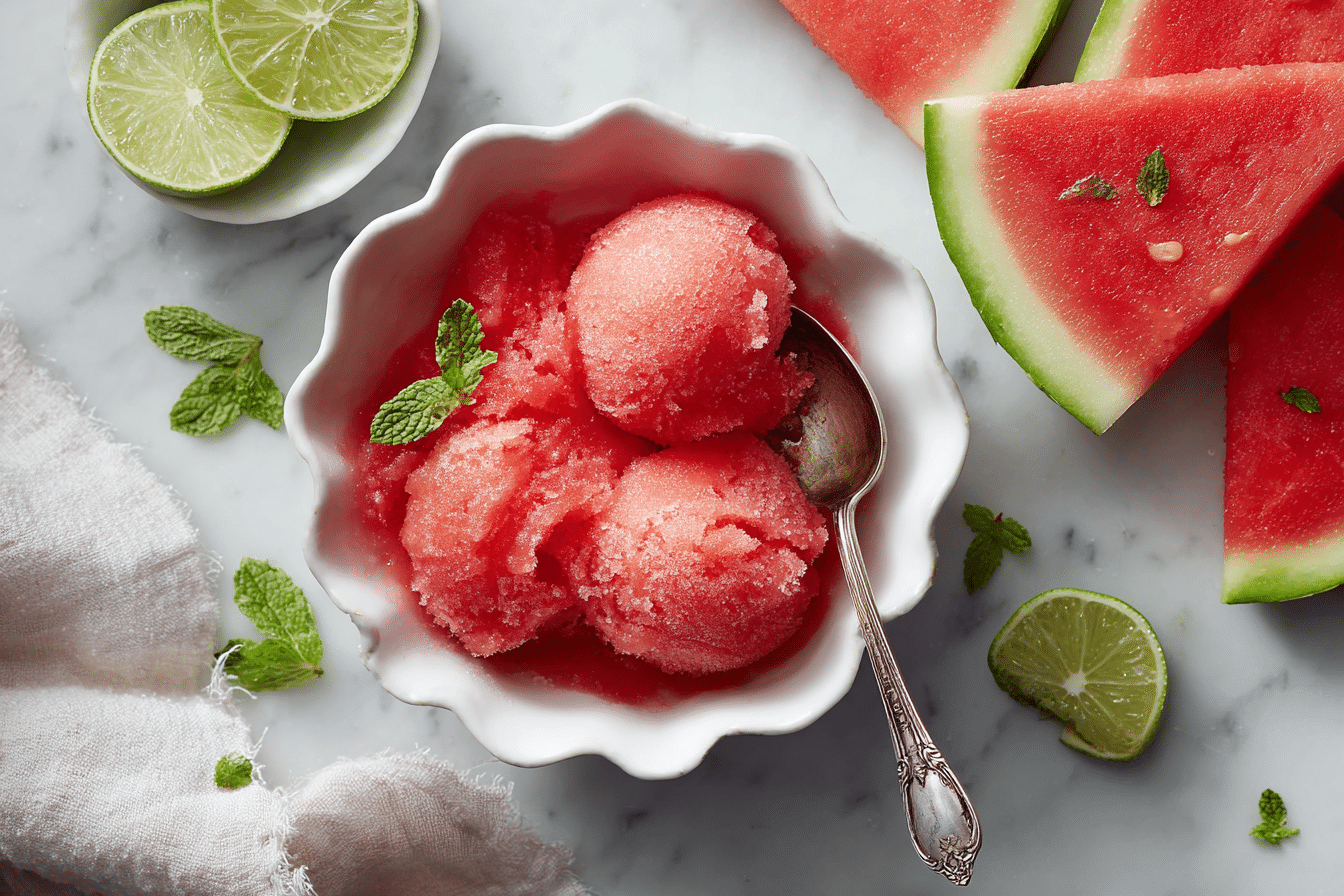
Easy watermelon sorbet captures the pure taste of ripe watermelon in a cold, refreshing dessert that feels light yet satisfying. During warm weather, few desserts feel as pleasant as a spoonful of icy fruit that melts gently across the tongue. This recipe focuses on clean flavor, natural sweetness, and a smooth texture that rivals frozen desserts from a specialty shop.
Watermelon carries a naturally high water content, which turns beautifully into sorbet when balanced with a small amount of sugar and citrus. The result is bright, vibrant, and deeply refreshing without feeling heavy. A well-prepared batch holds a silky consistency that scoops easily and delivers a burst of fruit flavor in every spoonful.
Another appealing aspect of easy watermelon sorbet lies in its simplicity. Only a handful of ingredients are required, and the preparation process remains straightforward even for beginner cooks. With a blender or food processor and a freezer, anyone can prepare a batch at home.
Whether served after a grilled meal, during a garden gathering, or as a cool afternoon treat, this dessert provides a clean finish that highlights the natural sweetness of watermelon while maintaining a light, crisp texture.
Ingredients Overview
The strength of easy watermelon sorbet depends largely on the quality of its ingredients. Because the recipe contains very few components, each element plays a significant role in flavor, texture, and balance.
Watermelon stands as the central ingredient. Choose a ripe watermelon that feels heavy for its size and produces a hollow sound when tapped. Deep red flesh typically carries richer sweetness and stronger fruit character. Seeds should be removed before blending, though seedless varieties simplify preparation considerably.
Granulated sugar provides sweetness while also improving texture. Sugar lowers the freezing point of the mixture, preventing the sorbet from becoming rock hard. The amount can shift slightly depending on the sweetness of the watermelon. Very ripe fruit may require less sugar, while milder watermelon might benefit from a small additional amount.
Fresh lime juice introduces acidity that balances sweetness. Without a touch of citrus, watermelon sorbet can taste flat. Lime sharpens the flavor and highlights the fruit’s natural brightness. Lemon juice also works as an alternative, though lime pairs particularly well with watermelon’s flavor profile.
A small pinch of salt deepens the fruit taste and rounds the overall profile. While optional, this subtle addition often improves the finished dessert.
Some cooks also include a tablespoon of honey or light corn syrup. These ingredients assist with texture and produce a smoother mouthfeel after freezing. They also reduce large ice crystal formation.
For optional garnish, fresh mint leaves complement the fruit beautifully. Mint adds a cool herbal aroma that pairs naturally with watermelon’s refreshing qualities.
Ingredient substitutions remain flexible. Coconut sugar may replace granulated sugar for a slightly deeper flavor, and agave syrup works well as a liquid sweetener. In every variation, maintaining a balance between sweetness and acidity keeps the sorbet lively rather than overly sweet.
Step-by-Step Instructions
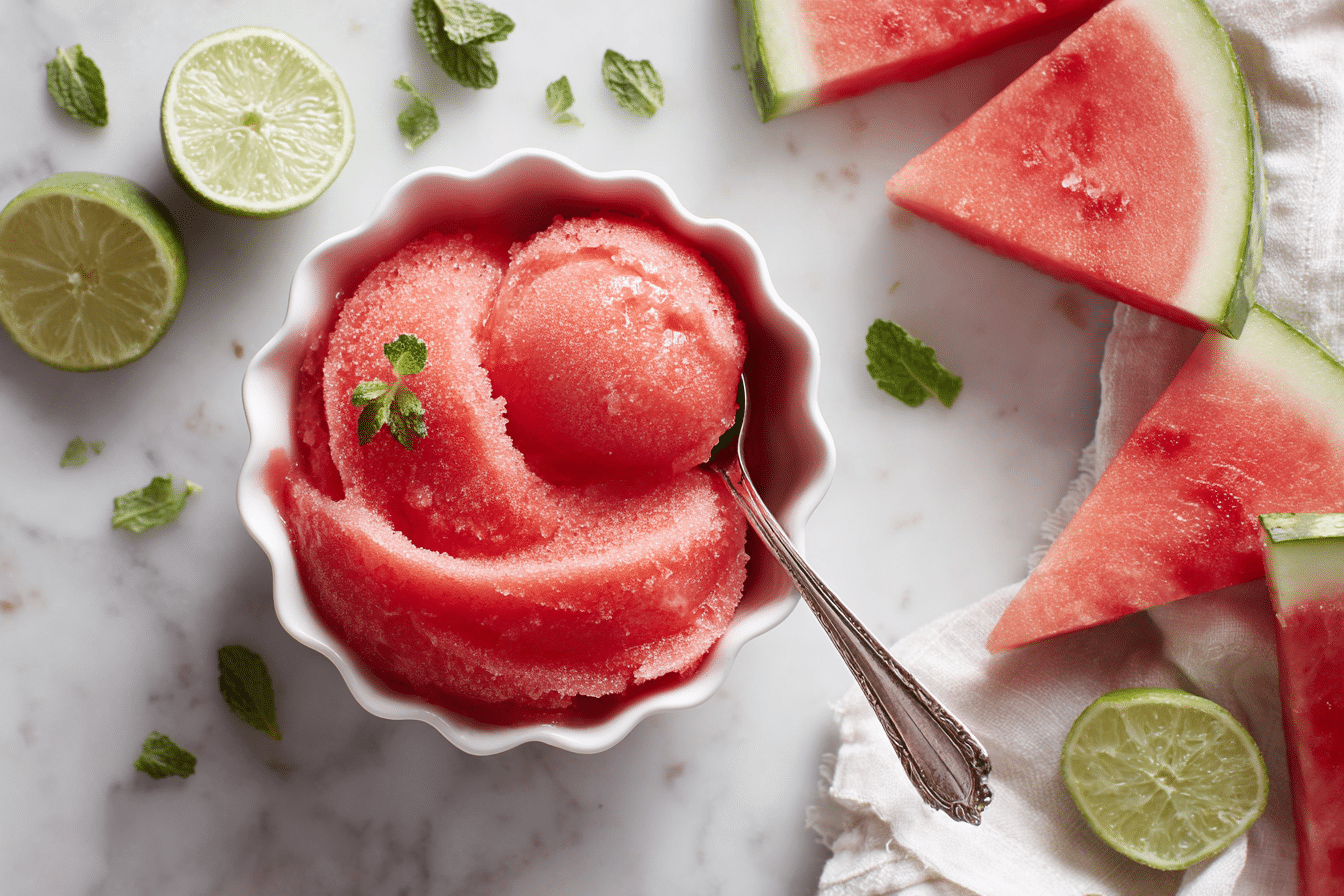
Preparing easy watermelon sorbet begins with selecting and cutting the watermelon. Start by slicing the fruit into manageable wedges. Remove the rind completely, leaving only the red flesh. Any visible seeds should be discarded to maintain a smooth final texture.
Next, cut the watermelon flesh into cubes roughly one inch in size. Spread the cubes across a parchment-lined baking sheet in a single layer. Place the tray inside the freezer for about two hours. Freezing the cubes before blending helps produce a smoother sorbet texture later.
Once the watermelon pieces become fully frozen, transfer them into a high-powered blender or food processor. Add the sugar, fresh lime juice, and a small pinch of salt. If using honey or corn syrup, add it at this stage.
Blend the mixture gradually, stopping occasionally to scrape down the sides of the container. Initially the frozen cubes may appear crumbly, but continued blending transforms the mixture into a thick, smooth puree. The texture should resemble soft frozen dessert.
Taste the mixture before freezing. If additional sweetness feels necessary, incorporate a small amount of sugar and blend again briefly. Flavor adjustments are easiest before the mixture fully freezes.
Transfer the blended sorbet mixture into a shallow freezer-safe container. Spread the mixture evenly using a spatula to prevent uneven freezing.
Place the container inside the freezer for approximately two to three hours. During this period, stir the sorbet every thirty minutes with a fork or spatula. This step breaks up ice crystals and contributes to a smoother final texture.
After the sorbet firms completely, allow the container to rest at room temperature for several minutes before scooping. This short resting period softens the mixture slightly, making it easier to serve.
Use a warmed ice cream scoop to form smooth rounds of sorbet. Each scoop should hold a silky consistency with vibrant watermelon color.
Common preparation mistakes often involve insufficient sweetness or skipping the stirring stage during freezing. Because watermelon carries so much water, stirring helps prevent large icy chunks from forming.
Following these steps results in a refreshing sorbet with balanced sweetness, bright citrus notes, and a pleasantly smooth texture.
Tips, Variations & Substitutions
Several helpful techniques can improve the final texture and flavor of easy watermelon sorbet.
Freezing the watermelon cubes before blending remains one of the most effective strategies. This step reduces excess liquid and produces a naturally creamy consistency without dairy.
If the mixture becomes too thick during blending, a small splash of watermelon juice or lime juice can loosen the mixture without diluting the flavor significantly.
For an extra smooth texture, strain the blended mixture through a fine mesh sieve before freezing. This removes any remaining pulp fibers and produces a silkier sorbet.
Flavor variations offer interesting possibilities while maintaining the refreshing character of the dessert. A small amount of fresh basil creates a subtle herbal note that pairs beautifully with watermelon. Simply blend two or three basil leaves along with the frozen fruit.
Another variation includes a small quantity of coconut milk. This addition produces a slightly creamy sorbet while preserving the fruit-forward taste.
A spicy twist can appear through a pinch of chili powder or finely grated ginger. These additions introduce gentle warmth that contrasts nicely with the cold sorbet.
For reduced sugar versions, the granulated sugar can be replaced with maple syrup or agave syrup. Both dissolve easily during blending and contribute mild sweetness.
Finally, presentation adjustments can transform the dessert visually. Serving sorbet inside hollowed watermelon halves or small glass bowls highlights the bright color and refreshing nature of the dish.
Serving Ideas & Occasions
Easy watermelon sorbet fits beautifully into many occasions thanks to its refreshing character and vibrant appearance.
During summer gatherings, this dessert acts as a cool finish following grilled foods such as vegetables, chicken, or seafood. Its bright fruit flavor cleanses the palate after savory dishes.
For garden parties or outdoor lunches, small scoops served in chilled bowls provide an elegant yet relaxed dessert option. Garnish with fresh mint leaves or thin lime slices for a colorful presentation.
The sorbet also works well between courses as a palate refresher during multi-course meals. A small scoop resets the taste buds before the next dish arrives.
Children and adults alike appreciate the natural fruit flavor, making this dessert suitable for family events, picnics, and casual celebrations.
Another pleasant serving approach involves pairing the sorbet with fresh berries or diced tropical fruit. The combination of textures adds visual appeal while maintaining a light dessert profile.
Because easy watermelon sorbet contains no dairy, it also suits guests who prefer lighter frozen desserts.
Nutritional & Health Notes
Watermelon sorbet offers a lighter dessert option compared with many traditional frozen treats. Watermelon itself contains high water content and naturally occurring vitamins, including vitamin C and vitamin A.
The fruit also carries antioxidants such as lycopene, which contributes to its deep red color. These compounds support general wellness when consumed as part of a balanced diet.
Because sorbet does not contain cream or butter, it typically carries fewer calories and less fat than ice cream. This characteristic makes it appealing for individuals seeking a refreshing dessert without heavy richness.
The sugar content depends on the quantity added during preparation. Adjusting sweetness based on the natural flavor of the watermelon can reduce added sugars while maintaining pleasant taste.
Hydration also plays a small role, since watermelon consists largely of water. Although sorbet should still be considered a dessert, its fruit base provides a refreshing alternative to heavier sweets.
Portion awareness remains important, as even fruit-based desserts contain sugar. Serving moderate scoops alongside fresh fruit can create a balanced and satisfying finish to a meal.
FAQs
Can I prepare easy watermelon sorbet without an ice cream machine?
Yes, easy watermelon sorbet works very well without an ice cream machine. The key lies in freezing the watermelon cubes before blending and stirring the mixture periodically during freezing. These steps break up ice crystals and create a smoother texture. A blender or food processor handles the blending stage easily. After blending, the mixture simply freezes in a container. Stirring every thirty minutes during the early freezing stage prevents the sorbet from becoming overly icy. This simple method produces a refreshing texture very similar to machine-churned sorbet.
How do I choose the sweetest watermelon for sorbet?
A ripe watermelon typically feels heavy for its size and carries a creamy yellow spot on the rind where it rested on the ground while growing. This field spot signals proper ripening. When tapped gently, the melon should produce a hollow sound rather than a dull thud. Deep red flesh usually indicates stronger sweetness. Because easy watermelon sorbet relies heavily on fruit flavor, selecting a fully ripe watermelon significantly improves the final dessert.
Why does sorbet sometimes freeze too hard?
Excess hardness often results from insufficient sugar or inadequate stirring during freezing. Sugar lowers the freezing point of the mixture, allowing the sorbet to remain scoopable. Without enough sweetness, the mixture may freeze into a solid block. Watermelon also contains significant water, which forms large ice crystals if left undisturbed. Stirring periodically during freezing helps break these crystals and leads to a smoother consistency.
Can frozen watermelon cubes be stored for later use?
Yes, frozen watermelon cubes store very well and allow quick sorbet preparation later. After cutting and freezing the cubes on a tray, transfer them into a freezer-safe bag or container. Properly stored cubes remain suitable for several months. When ready to prepare easy watermelon sorbet, simply measure the frozen cubes directly from the freezer and proceed with blending. This method shortens preparation and keeps fruit ready whenever a refreshing dessert sounds appealing.
Is it possible to reduce the sugar in this recipe?
Sugar levels can be adjusted depending on the sweetness of the watermelon. Very ripe fruit may require only a small quantity of added sugar. Liquid sweeteners such as agave syrup or honey also work well because they dissolve quickly and add smoothness. Completely removing sugar, however, may lead to a firmer texture due to the high water content of the fruit. Maintaining a modest amount helps preserve a scoopable consistency.
Can other fruits be combined with watermelon?
Yes, watermelon pairs nicely with several fruits in sorbet recipes. Strawberries, raspberries, and mango all blend smoothly with watermelon and add deeper flavor complexity. When combining fruits, maintain watermelon as the primary ingredient so the texture remains light and refreshing. Adjust sweetness and citrus slightly depending on the natural sweetness of the additional fruit.
How long does watermelon sorbet last in the freezer?
Easy watermelon sorbet generally maintains its best texture for about one to two weeks when stored in an airtight container. After longer storage, ice crystals may begin to develop, which slightly changes the texture. Pressing parchment or plastic wrap directly against the surface before sealing the container helps reduce ice formation. Allowing the sorbet to rest at room temperature for several minutes before serving restores a softer scoopable consistency.
PrintWatermelon Sorbet Recipe Without Gelatin – Light Homemade Frozen Treat
A refreshing frozen dessert made with ripe watermelon, lime juice, and sugar. This easy watermelon sorbet delivers bright fruit flavor with a smooth, icy texture perfect for warm weather.
- Prep Time: 15 minutes
- Cook Time: 0 minutes
- Total Time: 2 hours 15 minutes
- Yield: 4 servings 1x
Ingredients
4 cups seedless watermelon cubes
1/3 cup granulated sugar
2 tablespoons fresh lime juice
1 tablespoon honey or light corn syrup (optional)
Pinch of salt
Fresh mint leaves for garnish (optional)
Instructions
-
Cut the watermelon into cubes and remove any seeds.
-
Spread the cubes on a baking sheet lined with parchment paper.
-
Freeze the cubes for about 2 hours until solid.
-
Transfer the frozen watermelon into a blender or food processor.
-
Add sugar, lime juice, honey if using, and a pinch of salt.
-
Blend until the mixture becomes smooth and thick.
-
Taste and adjust sweetness if necessary.
-
Transfer the mixture into a shallow freezer-safe container.
-
Freeze for 2 to 3 hours, stirring every 30 minutes to break ice crystals.
-
Let the sorbet soften slightly before scooping and serving.
Notes
Use fully ripe watermelon for the best natural sweetness.
Stirring during freezing helps create a smoother texture.
A small amount of honey improves scoopability.