
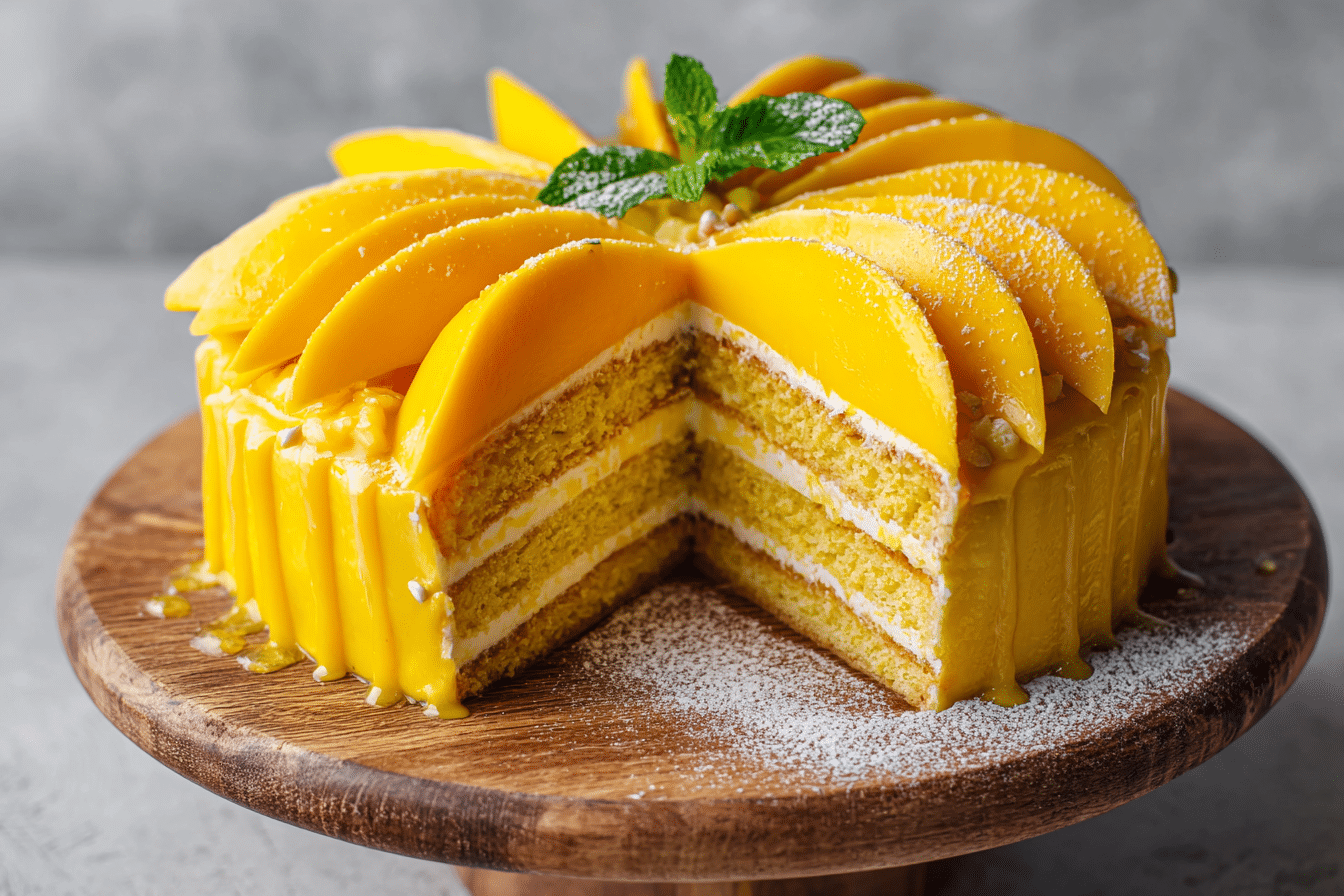
There’s a certain elegance and lightness to a mango mousse cake that makes it stand out among other desserts. With its vibrant color, airy texture, and fresh tropical flavor, it’s the kind of treat that instantly lifts your mood and brightens any table. Whether you’re baking for a summer party, a birthday, or just because you love mango, this cake delivers a beautiful balance of flavor and finesse.
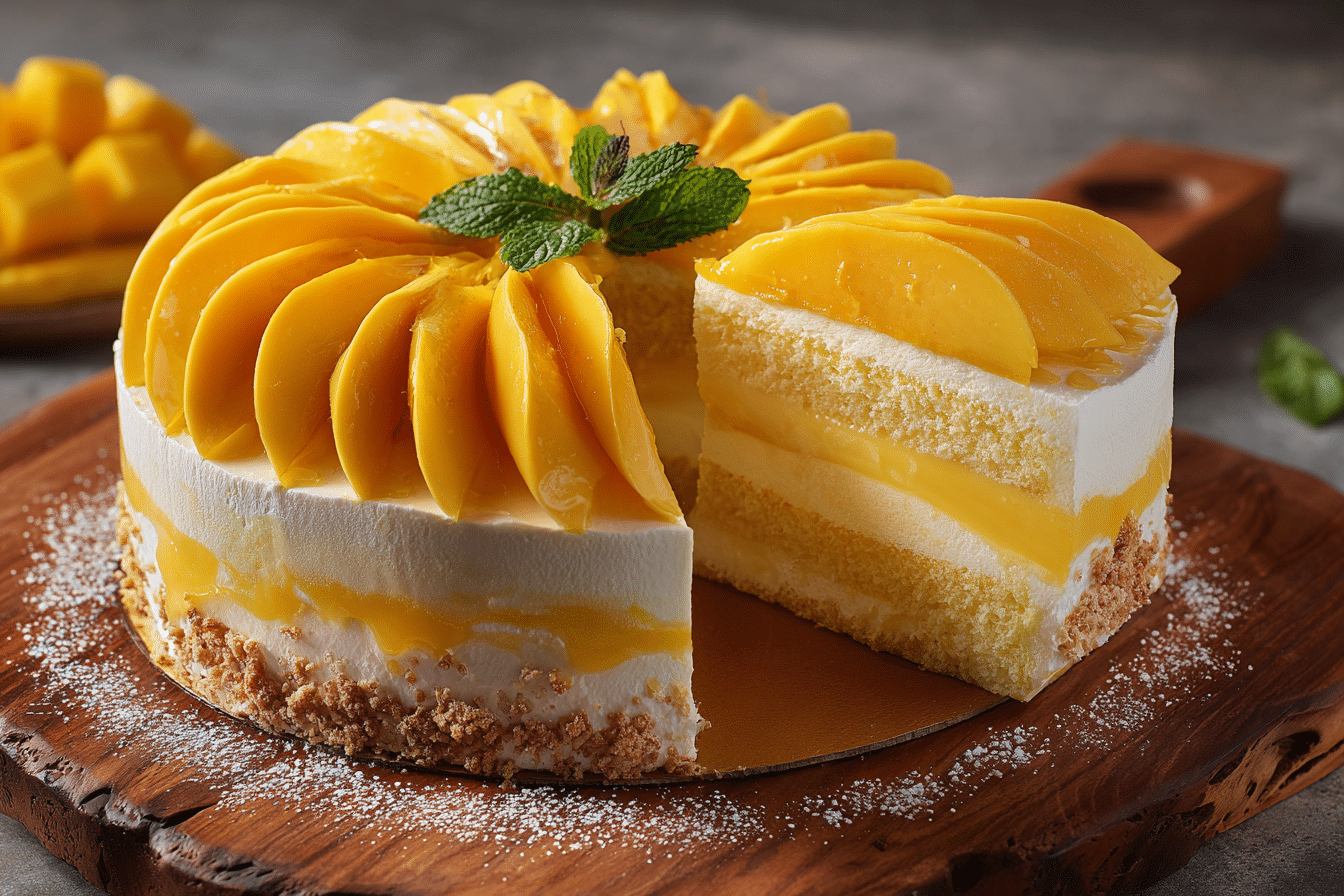
Mango mousse cake typically has three layers: a soft sponge base, a velvety mango mousse, and a glossy mango glaze on top. Each layer offers something different—moist and tender cake, fluffy mousse that melts in your mouth, and a jewel-like finish that’s as delicious as it is striking.
Made with fresh mangoes or mango puree, real cream, and a whisper of gelatin for structure, this cake is as refreshing as it is indulgent. It’s light enough for warm weather but rich enough to satisfy a sweet craving. Best of all, it looks far more complicated than it really is.
Ingredients Overview
Each component of this mango mousse cake plays a specific role in its flavor, texture, and structure. Let’s look at what you’ll need and how each ingredient contributes.
Fresh Mango or Mango Puree – The heart of the dessert. Use ripe, juicy mangoes for a naturally sweet, fruity taste. Canned mango pulp (like Alphonso mango pulp) is a great alternative and ensures consistency year-round.
Heavy Whipping Cream – This gives the mousse its airy, creamy texture. It should be whipped to soft peaks and gently folded in to maintain lightness.
Gelatin (Powdered or Sheet) – Essential for helping the mousse and glaze set. You’ll need to bloom powdered gelatin in water first. Agar-agar can be used as a vegetarian alternative.
Sugar – A modest amount is added to both the mousse and sponge to balance the mango’s natural acidity and enhance its sweetness.
Eggs – Used in the sponge base, eggs create structure and lightness. Room temperature eggs whip up better and incorporate more air.
All-Purpose Flour or Cake Flour – This forms the sponge base. Cake flour gives a lighter texture, but all-purpose flour works just fine.
Butter – A small amount in the sponge for moisture and richness.
Vanilla Extract – Just a hint in the sponge base helps round out the flavor and complements the mango.
Lemon Juice (optional) – Just a splash enhances the mango’s brightness and balances sweetness in the mousse and glaze.
Water – Used to bloom gelatin and thin out the glaze if needed.
These ingredients come together to form a tropical dessert that’s both light and luscious, with layers that feel as good as they taste.
Step-by-Step Instructions
Step 1: Prepare the Sponge Base
Preheat your oven to 350°F (175°C). Line the bottom of an 8-inch round cake pan with parchment paper.
In a mixing bowl, beat 3 large eggs with 1/3 cup (65g) sugar until pale and fluffy, about 5–7 minutes. Gently fold in 3/4 cup (90g) sifted cake flour, then drizzle in 2 tablespoons of melted butter and 1 teaspoon vanilla extract. Fold gently until just combined.
Pour into the prepared pan and bake for 20–22 minutes or until the top springs back when touched. Let cool completely in the pan, then remove and place the sponge in the bottom of a springform pan.
Step 2: Make the Mango Puree
If using fresh mangoes, blend 1 ½ cups of chopped mango flesh until smooth. Strain if necessary to remove fibers. Set aside 1 cup for the mousse and reserve 1/2 cup for the glaze.
Step 3: Prepare the Mango Mousse
Bloom 2 teaspoons (7g) of powdered gelatin in 3 tablespoons cold water. Let sit for 5 minutes.
Gently heat 1/4 cup of the mango puree in a small saucepan, then stir in the bloomed gelatin until fully dissolved. Remove from heat and mix with the remaining mango puree (about 3/4 cup).
In a separate bowl, whip 1 cup (240ml) of heavy cream with 2 tablespoons sugar until soft peaks form. Fold the whipped cream into the mango-gelatin mixture in batches, using a spatula and working gently to keep it light and airy.
Pour the mousse over the cooled sponge in the springform pan. Smooth the top with a spatula. Chill for at least 3 hours, or until set.
Step 4: Make the Mango Glaze
Bloom 1 teaspoon (3g) of powdered gelatin in 2 tablespoons cold water. Let it sit for 5 minutes.
Warm 1/2 cup of mango puree in a saucepan, then stir in the gelatin until dissolved. Optionally, add 1–2 teaspoons of lemon juice for brightness. Let the glaze cool to room temperature (but not set), then gently pour over the chilled mousse layer.
Tilt the pan to spread the glaze evenly. Chill the cake again for 1–2 hours until the glaze is fully set.
Step 5: Unmold and Decorate
Run a warm knife around the edges of the springform pan, then gently release the sides. Transfer the cake to a serving plate.
Decorate with fresh mango slices, mint leaves, or whipped cream rosettes. Keep chilled until ready to serve.
Tips, Variations & Substitutions
-
Don’t Overmix: When folding whipped cream into the mango, use slow, sweeping motions to keep the mousse airy.
-
Fruit Options: Replace mango with passionfruit, strawberry, or peach puree for seasonal twists.
-
Vegetarian Version: Swap gelatin with agar-agar powder. Use half the amount and dissolve fully in boiling liquid.
-
No Sponge? Use a graham cracker or biscuit base instead for a no-bake option. Just mix crushed biscuits with melted butter and press into the pan.
-
Sweetness Level: Taste your mango puree—adjust sugar in the mousse and glaze accordingly, especially if using sweetened canned pulp.
Serving Ideas & Occasions
Mango mousse cake is perfect for summer gatherings, birthdays, bridal showers, or light holiday desserts. Its vibrant yellow-orange color brings brightness to any table.
Serve chilled with a side of fresh berries or a fruit coulis. It pairs beautifully with a glass of sparkling wine or iced green tea.
Because it’s light and not overly sweet, it’s a crowd-pleaser even after heavy meals. Its elegant layers make it suitable for both casual and formal occasions.
Nutritional & Health Notes
Mango mousse cake is lighter than buttercream-heavy cakes, especially when made with fresh fruit and whipped cream instead of rich frosting.
Each slice (1 of 10) comes in at around 250–300 calories, depending on the base and toppings. It’s a good source of vitamin C thanks to the mango, and it contains calcium from the cream.
For a lower-sugar version, reduce sugar in the cream or glaze. You can also use low-fat cream, but the mousse may not be as stable. The cake is naturally nut-free and can be made gluten-free with a flourless sponge or alternative base.
FAQs
1. Can I use canned mango pulp instead of fresh?
Yes. Canned Alphonso mango pulp is smooth, sweet, and ideal for mousse cakes. Just make sure it’s unsweetened or adjust sugar levels accordingly.
2. How long does mango mousse cake last?
It keeps well for up to 3 days in the refrigerator. Cover it tightly to prevent it from absorbing other odors.
3. Can I freeze mango mousse cake?
Yes. Freeze the set cake (without glaze or toppings) wrapped in plastic for up to 1 month. Thaw in the fridge overnight and glaze before serving.
4. Why didn’t my mousse set properly?
The gelatin may not have dissolved fully or was not bloomed correctly. Always bloom in cold water and dissolve completely before adding to cold ingredients.
5. Can I make it without gelatin?
You can use agar-agar as a vegetarian alternative. For the mousse, dissolve agar in boiling puree and use immediately as it sets quickly.
6. Can I make it in cups instead of as a full cake?
Absolutely. Layer sponge, mousse, and glaze in dessert cups or glasses for an individual, no-fuss option.
7. What’s the difference between mango mousse cake and mango cheesecake?
Mango mousse cake uses whipped cream and gelatin for a light, airy texture, while mango cheesecake has a denser, cream cheese–based filling. Mousse is fluffier and more delicate.
Mango Mousse Cake Recipe – Fancy Yet Easy Dessert
A light, elegant mango mousse cake with sponge base, creamy mousse filling, and glossy mango glaze. Refreshing, tropical, and perfect for warm-weather celebrations.
- Prep Time: 40 minutes
- Cook Time: 20 minutes
- Total Time: 5 hours (including chilling)
- Yield: 10 slices
Ingredients
Sponge Base:
3 large eggs
1/3 cup (65g) sugar
3/4 cup (90g) cake flour
2 tbsp melted butter
1 tsp vanilla extract
Mousse:
1 ½ cups fresh mango or 1 cup mango puree
2 tsp (7g) gelatin
3 tbsp cold water
1 cup (240ml) heavy cream
2 tbsp sugar
Glaze:
1/2 cup mango puree
1 tsp (3g) gelatin
2 tbsp cold water
1–2 tsp lemon juice (optional)
Instructions
-
Preheat oven to 350°F (175°C). Prepare an 8-inch cake pan with parchment.
-
Beat eggs and sugar until fluffy. Fold in flour, butter, and vanilla. Pour into pan and bake 20–22 minutes. Cool completely.
-
Place sponge in springform pan base.
-
Bloom gelatin in cold water. Warm some mango puree, dissolve gelatin, then mix with remaining puree.
-
Whip cream with sugar to soft peaks. Gently fold into mango mixture. Pour over sponge and chill 3 hours.
-
Bloom glaze gelatin. Warm puree, dissolve gelatin, stir in lemon juice. Cool slightly.
-
Pour glaze over mousse. Chill 1–2 hours until set.
-
Unmold and decorate with fresh mango or whipped cream.
Notes
Use canned mango pulp for ease. Chill overnight for best texture. Agar-agar can replace gelatin.