
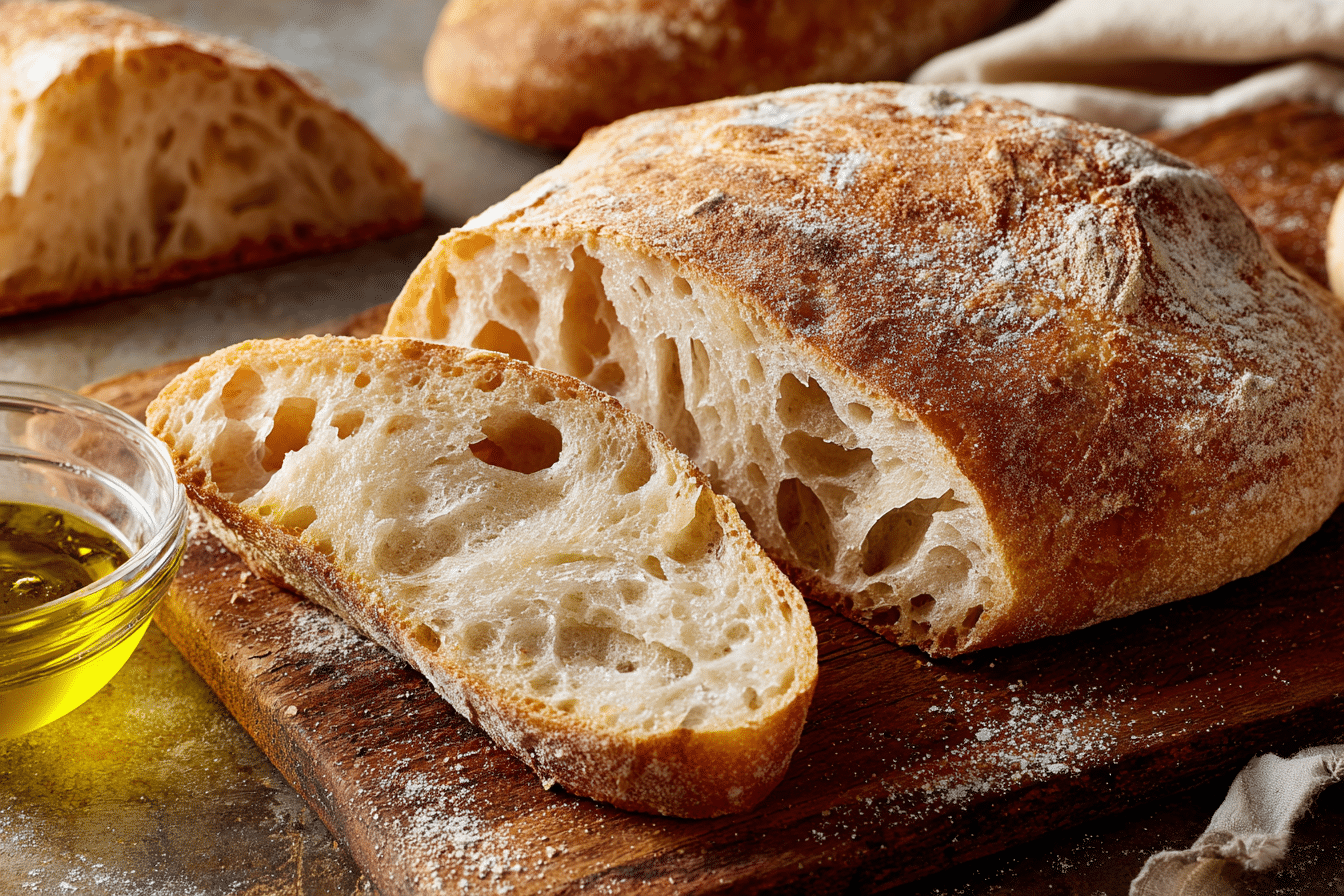
Ciabatta, the rustic Italian bread known for its elongated shape and airy interior, was first developed in the 1980s by a baker in Veneto, Italy. Translating to “slipper” due to its flat, slipper-like appearance, ciabatta quickly gained international popularity thanks to its chewy crust, open crumb, and versatility.
This no-knead ciabatta recipe makes achieving that classic light, hole-filled texture possible right at home — without any mixer or hand-kneading required. With just a few simple ingredients and time doing most of the work, you’ll produce bakery-quality loaves with a golden crust and delicate interior.
Perfect for dipping into olive oil, building sandwiches, or serving alongside soups, this no-knead ciabatta is a bread lover’s dream — chewy, crusty, and beautifully open-crumbed.
Ingredients Overview
No-knead ciabatta relies on minimal ingredients, but each plays a key role in flavor, structure, and texture:
-
Bread Flour: The high protein content in bread flour develops strong gluten strands, helping the dough trap gas and form those signature air pockets. You can substitute all-purpose flour in a pinch, but the crumb will be slightly denser.
-
Instant Yeast: Just ¼ teaspoon is enough when given enough time. The long fermentation boosts flavor and helps the dough rise slowly. Active dry yeast can also work, but it should be proofed in water first.
-
Water: Use room temperature or slightly cool filtered water. Hydration is crucial for ciabatta — this is a high-hydration dough (around 80%), which leads to the open, holey structure. Avoid reducing the water amount.
-
Salt: Enhances flavor and strengthens the dough’s gluten network. Fine sea salt or kosher salt are ideal.
Optional ingredients:
-
Olive Oil: Not traditional but sometimes added to the dough for a slightly softer crust.
-
Cornmeal or Semolina: Used to prevent sticking when transferring the dough to the oven.
Ingredient Tips:
-
Always measure flour by weight (grams) for best accuracy.
-
Avoid cold water, which slows fermentation; lukewarm water (around 75–80°F) is ideal.
-
Fresh yeast can also be used — use about three times the amount of instant yeast.
Step-by-Step Instructions
1. Mix the Dough
In a large mixing bowl, combine 500g bread flour, 1½ tsp salt, and ¼ tsp instant yeast. Stir to combine. Pour in 400g (just under 1¾ cups) lukewarm water. Mix with a wooden spoon or dough whisk until no dry flour remains.
The dough will look shaggy, wet, and sticky — this is normal for ciabatta.
2. First Rise (12–18 hours)
Cover the bowl tightly with plastic wrap or a damp towel. Let it rest at room temperature (around 70°F) for 12 to 18 hours. Overnight is ideal.
After fermentation, the dough should be bubbly, doubled in size, and very jiggly when you shake the bowl.
3. Shape the Dough
Generously flour your work surface and your hands. Scrape the dough onto the floured surface. Be gentle — you want to preserve the air bubbles.
Dust the top of the dough with more flour, then fold the dough over itself like a letter (top third down, bottom third up). Rotate and do one more gentle fold. Don’t knead.
Let rest for 10 minutes to relax the gluten.
Cut the dough in half and gently stretch each portion into a rough rectangle. Transfer to a heavily floured proofing cloth or parchment-lined baking sheet, seam side down.
Let rest uncovered or lightly covered with a floured towel for 45 minutes.
4. Preheat the Oven
Preheat your oven to 475°F (245°C). Place a baking stone, steel, or inverted baking sheet in the center of the oven to heat up. Place an empty tray on the bottom rack (for steam).
5. Bake with Steam
Dust a baking peel or cutting board with flour or semolina. Gently flip each dough piece onto the peel (so the seam is now up), then slide onto the hot stone.
Quickly pour a cup of hot water into the tray below and shut the oven door to trap the steam. This helps the crust stay flexible and expand during oven spring.
Bake for 20–25 minutes or until golden brown and hollow-sounding when tapped.
Cool on a wire rack before slicing.
Tips, Variations & Substitutions
Baking Tips:
-
Resist the urge to add more flour — the dough should remain wet and sticky.
-
Flour your hands, tools, and surfaces generously to prevent sticking.
-
If shaping is too difficult, simply bake the whole batch as a single rustic loaf.
Variations:
-
Whole Wheat Ciabatta: Replace up to 30% of the bread flour with whole wheat flour. Expect a slightly denser texture and nuttier flavor.
-
Olive Ciabatta: Gently fold in chopped olives before shaping for a savory variation.
-
Herb Ciabatta: Add fresh rosemary or thyme into the dough during mixing.
Dietary Substitutions:
-
Gluten-Free: A 1:1 gluten-free bread flour blend can be used, but results will vary. High-hydration gluten-free doughs are much trickier.
-
Vegan: This recipe is naturally vegan.
-
Low-Sodium: Reduce salt to ½ teaspoon if watching sodium intake.
Serving Ideas & Occasions
Fresh ciabatta shines when served simply or as part of a shared meal:
-
Slice and dip into extra virgin olive oil and balsamic vinegar.
-
Use for panini, grilled sandwiches with mozzarella, tomato, and basil.
-
Pair with Italian soups like ribollita or minestrone.
-
Serve on a cheese and charcuterie board.
-
Toast and top with smashed avocado or roasted vegetables for brunch.
Perfect for family gatherings, holiday dinners, or prepping in advance for sandwiches all week. Its crusty texture and tender interior create an irresistible contrast that suits any season.
Nutritional & Health Notes
Ciabatta, though made with simple ingredients, is relatively light and airy thanks to the high hydration. A single slice (about 50g) contains:
-
Around 130–150 calories
-
2–3g of protein
-
0.5g fat
-
28g carbohydrates
-
Less than 1g fiber
For more protein, serve with eggs, hummus, or nut-based spreads. To reduce carb impact, slice thinner or pair with low-carb dishes like leafy salads or grilled fish.
Ciabatta has no added sugars or fats unless modified. It fits well in Mediterranean-style diets when eaten in moderation alongside whole foods.
FAQs
Q1: Why is my ciabatta dough so sticky?
A1: Ciabatta dough is meant to be extremely wet and sticky — that’s what gives it an open crumb. Use flour on your hands and tools, but avoid adding too much to the dough itself.
Q2: Can I use all-purpose flour instead of bread flour?
A2: Yes, but expect slightly less volume and fewer air holes. Bread flour’s higher protein content supports more gluten development, which creates a stronger structure for those airy pockets.
Q3: Can I refrigerate the dough overnight instead of a long room-temperature rise?
A3: Absolutely. Refrigerating slows the fermentation, allowing flavors to develop even more. Let it come to room temperature for 1 hour before shaping and baking.
Q4: What if I don’t have a baking stone or steel?
A4: Use an inverted heavy-duty baking sheet preheated in the oven. It won’t retain heat quite as well but will still give good results.
Q5: How do I store leftover ciabatta?
A5: Wrap loosely in paper or a bread bag and keep at room temperature for up to 2 days. For longer storage, slice and freeze in a zip-top bag. Toast directly from frozen.
Q6: Why is my crust too soft?
A6: The crust may soften if the bread is cooled on a non-ventilated surface or stored before it cools completely. Let it cool on a wire rack, and avoid wrapping while still warm.
Q7: Can I double the recipe?
A7: Yes. Use a larger bowl and extend the baking time slightly if making bigger loaves. Make sure your oven and baking surface can accommodate the size.
No-Knead Ciabatta Recipe for a Light, Airy, Bakery-Style Loaf
A no-knead version of classic Italian ciabatta, this recipe produces a golden crust and light, airy crumb with minimal effort. Perfect for sandwiches or dipping.
- Prep Time: 10 minutes (plus 12–18 hour rise)
- Cook Time: 25 minutes
- Total Time: 13–19 hours
- Yield: 2 small loaves 1x
Ingredients
-
500g bread flour
-
400g water (lukewarm)
-
¼ tsp instant yeast
-
1½ tsp fine sea salt
-
Extra flour for shaping
-
Cornmeal or semolina for dusting (optional)
Instructions
-
In a large bowl, mix flour, salt, and yeast. Add water and stir until no dry spots remain.
-
Cover and let rise at room temperature for 12–18 hours, until bubbly and doubled.
-
Turn dough onto a floured surface. Fold gently, rest 10 minutes.
-
Divide into two pieces. Shape each into rough rectangles. Rest 45 minutes.
-
Preheat oven to 475°F with a baking stone or steel. Place a tray for steam on bottom rack.
-
Transfer loaves to the hot stone. Pour hot water into tray for steam.
-
Bake 20–25 minutes until golden and hollow-sounding. Cool on a rack.
Notes
-
Use a high-hydration dough for best results.
-
Add olives or herbs for variation.
-
Store at room temp for 2 days or freeze for up to 1 month.